
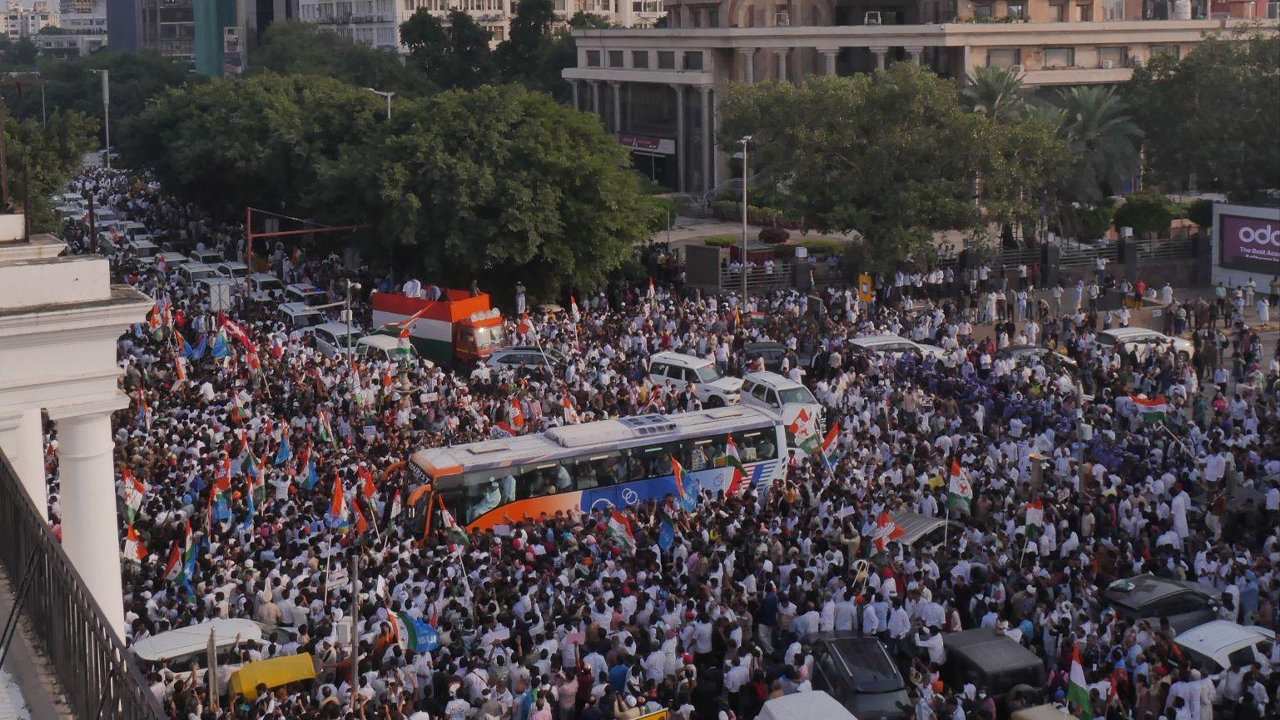
The central front of Delhi’s agitation against Gyanesh Kumar isn’t made up of the 50 square kilometres of administrative real estate at its heart, but so too of her borders, her universities, her stadiums, her construction sites—every inch of her geographic territory. In truth, a ‘protest map’ of the national capital has little to do with ‘notified’ and ‘denotified’ protest sites, and everything to do with the people who constitute it. When battle is between citizen and state, every man’s a front.
by Mouli Sharma
25 October 2026, New Delhi: After three weeks of near constant on-street agitation and mass protests, the final week of October has brought to Delhi an apparent change of pace.
Hours after hundreds marched from the Bangla Sahib Gurdwara towards the Election Commission of India (taking a longer route from the main road after being blockaded by the Delhi Police (whose headquarters are incidentally close enough to be visible in their full glory en route), and were detained and/or dispersed on 23 October 2026, the nearby streets of Central Delhi carried within them an uncharacteristic calm in what has been a month of upheaval and unpredictability.
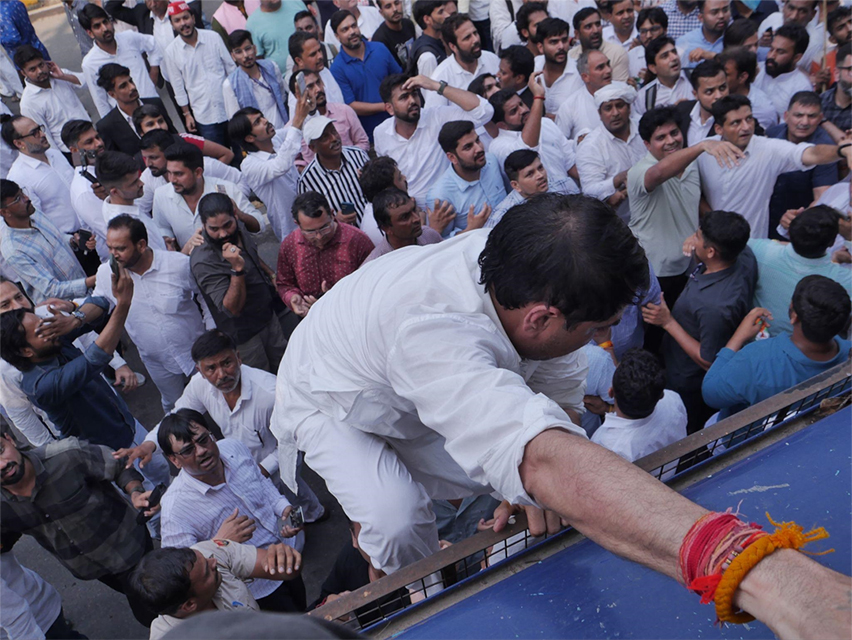
A protester attempts to climb a parked police van on the 12 October opposition rally against SIR and CEC Gyanesh Kumar along Barakhamba Road/12 october 2026/Mouli Sharma
“Usually people loiter around in CP after the protest. But today it seems everyone went home after the police dispersed people,” said Rajendra*, an auto driver in Rajiv Chowk.
Rajendra was disappointed by the day’s efforts. According to him, a ‘decent number of people’ did eventually manage to gather outside gate number 3 of Gurudwara Bangla Sahib (opposite to the gate closest to the ECI office) on the Baba Kharak Singh Marg, but were quickly detained outside the Sacred Heart Cathedral barely a few hundred metres away.
This ‘decent number of people’ was somewhere between 200-300, with the crowd peaking close to 2PM and having been completely dispersed by the end of the hour, as estimated by independent reporters Saumya Singh (@saumyaa.singh on Instagram) and Harsh (@kahaniistaan on Instagram) who were on field at the time.
“Before they started the detentions, they attempted to separate the identifiable press personnel from the remaining crowd and specifically began pushing us back. Literally, they were shoving us back as the detention buses came in, creating a stampede like situation,” Saumya said. “I’m quite small, so I was completely smothered in the crowd.”
“AISA, AISF, RWPI, Disha, and KYS were among the organisations present in the march. People demanded an end to the fascist regime, an immediate resignation of Gyanesh Kumar.”
Naureen, from RWPI, confirmed that over 20 people had been detained, a handful of which were from RWPI. By sundown, she and others were still attempting to track down where the detainees had been taken, with no information of their whereabouts.
“At least 23 people were detained yesterday,” says a representative of the Disha Student’s Organisation, 7 of whose members were among those taken. “They were taken to Dwarka Sector 23,” he says. “All were released at about 10:30 PM at night.”
By 5PM, the crowds, police, and press had all left. Some made their way to other protests ongoing parallelly within the city, such as the Race Course Club (where 100 year old race course property was recently acquired by the central government in May earlier this year, and a Mosque now stands under threat of demolition, with water and power supplies having been cut) or Jamia Millia Islamia, where students who once represented the forefront of the country’s political dissent are now fighting for their right to partake in politics itself, demanding to bring their banned student’s union back from the dead. Others scattered to trace detained individuals, whose whereabouts remained unknown for hours thereafter and who wouldn’t be released until well into the night. Contrary to Rajendra’s belief, few had ‘gone home’.
Outside the Cathedral itself, which became the primary site of detention, a small protest of about 50 or so people continued between Gurudwara and Church, performing a quiet, gentler form of resistance, of the kind Rajendra describes in the post detention loitering that usually takes place in the three concentric circles of Connaught Place.
Conversation, art, and crowd taking up the places ordinarily reserved for automobiles and silent-antipathy between strangers; chalk and spray paint spreading over the sidewalk and roads like transient, horizontal graffiti; a silent reclamation of the streets.
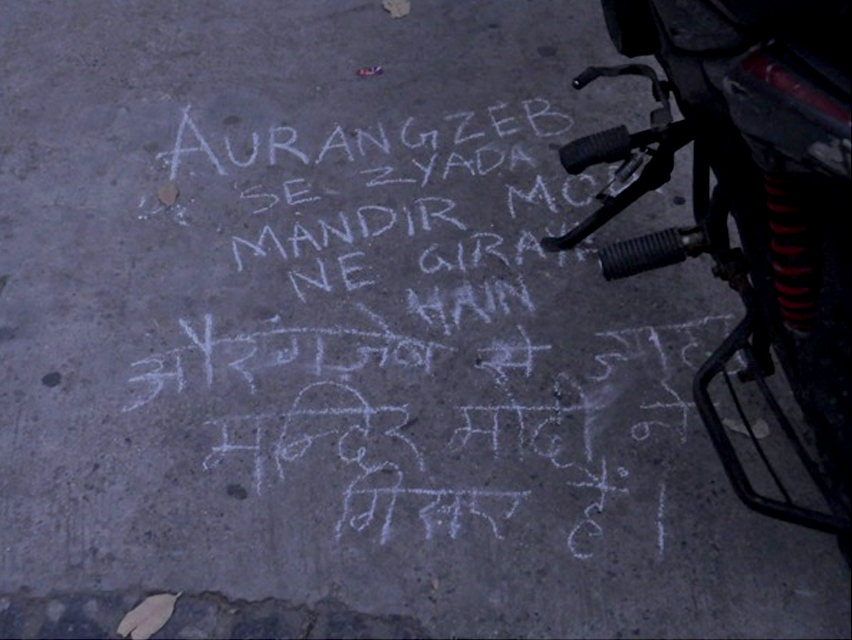
Chalk graffiti on the road outside Delhi’s Sacred Heart cathedral saying, “Modi has felled more temples than Aurangzeb”/23 October 2026/Mouli Sharma
In Erich Maria Remarque’s 1929 classic German war novel, Im Westen nichts Neues, the line between enemy and ally is abstraction made concrete, and being an outsider or an insider isn’t metaphor for xenophobia, but territorial reality that makes the difference between who shoots and who gets shot. The English (and best known) title of the book is All Quiet on the Western Front, which has been adapted into film, parodied, and described as the “greatest war novel of all time”.
For over a century now, narratives like Remarque’s have dominated the cultural idea and mythos of battle, where silence, literal silence, at the warfront is potent and dangerous; when all is quiet on the Western front, one must run, for it means the attack is shifting eastward, for the enemy surrounds us, and is at all times on the outside trying to find a way in.
Of course, not all battlefields have borders.
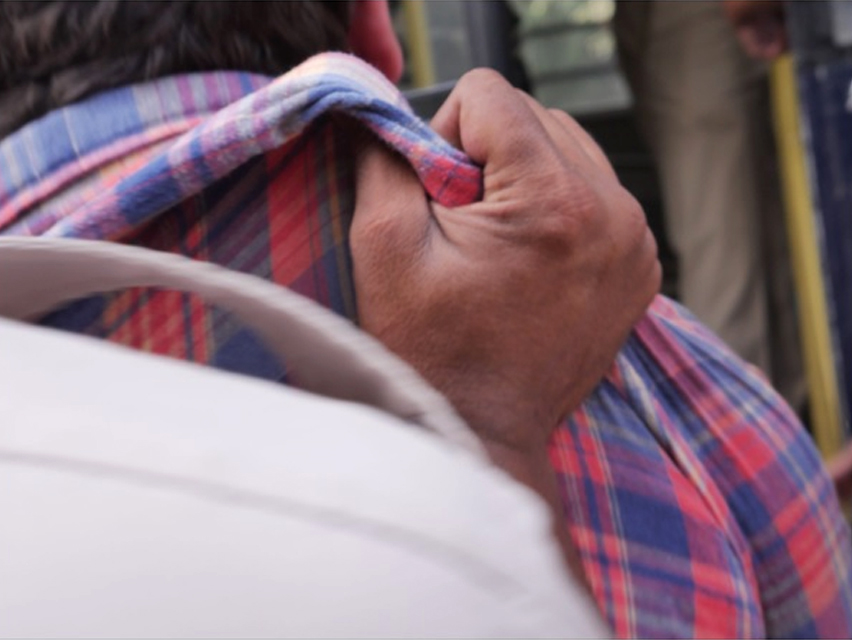
A policeman holds former CJP spokesperson Vijeta Dahiya by the collar on the way to a detention vehicle during a massive road jam on the Safdarjung flyover/10 October 2026/Mouli Sharma
As writer after writer, publication after publication verbalises the siege of Central New Delhi, attempts to ‘map out’ the living geography of protest in India’s capital, and attempts to rationalise and codify the collective excitement of a people into words and phrases and theories that might hopefully lend order to the chaos that has overtaken Delhi’s streets between emergency security measures, an indefinite curfew, recurring internet and transport shutdowns and every day detentions, the 4km radius under the yet unspecified ‘prohibitionary magisterial order’ under Section 163 illegalising placards, sloganeering, demonstrations and public gathering of more than five persons in the region has become the primary ‘front’ of the war between state and citizen that are the ‘Gen Z’ protests demanding the resignation and criminal investigation of CEC Gyanesh Kumar and an immediate rollback of the controversial SIR.
Remarque’s title, however, is referring to a different kind of silence—the kind found on Baba Kharak Singh Marg on 23 October, where over 200 people took to the streets knowing they could be prosecuted by law for it. When 23 people were detained, allegedly with excessive force, and remained effectively missing for hours till their alleged release well into the night, far past the Supreme Court’s requirements of releasing detainees, particularly women, before sundown. When young people travelled from overstate without home or shelter in the city, hitchhiking instead from dharamshala to dharamshala, Gurudwara to Gurudwara, just to be able to curse the government and have it echo back in other people’s voices. When people did loiter, leaving behind the evidence of their resistance on the ground beneath them itself.
End Manual Scavenging. Repeal Delhi Police Act. Jal Jangal Jameen. Ban RSS. Save Manipur. Free Palestine, free Gaza. Rapist Brij Bhushan Out!
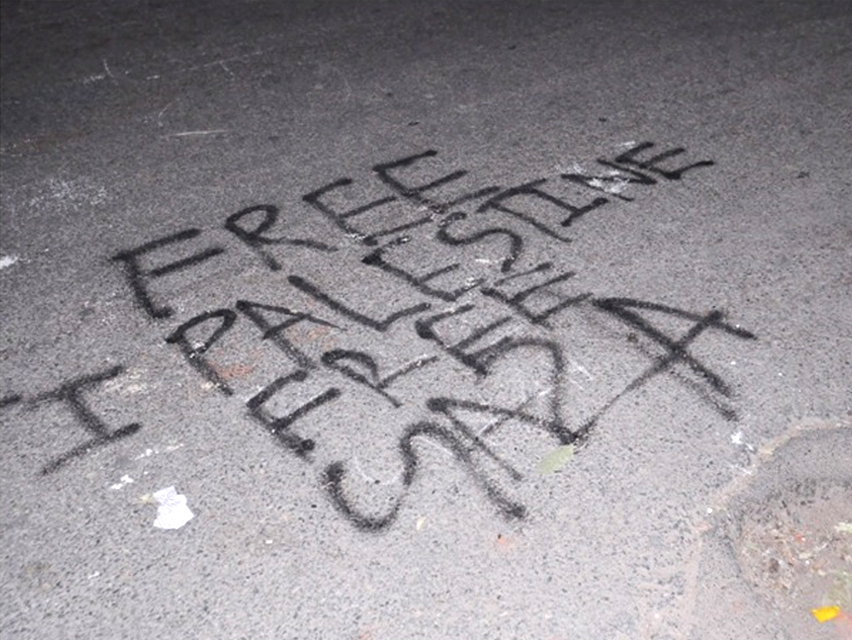
‘FREE PALESTINE FREE GAZA’ spray painted on the Baba Kharak Singh Marg near Sacred Heart Cathedral, New Delhi/23 October 2026/Mouli Sharma
All is quiet on the Central Front of India’s uprising against its own electoral bureaucracy during the last leg of October 2026 the same way all was quiet on the Western Front of Germany a hundred and ten years ago during the first World War.
Nichts Neues does not translate to ‘nothing is happening’. It translates to ‘nothing is new’.
No front, many fronts
Weeks earlier, farmers’ groups, student organisations, and other civil society members had declared Friday, the 23rd of October as a day for nationwide protests against CEC Gyanesh Kumar and the incumbent Modi government’s ongoing Special Intensive Revision (SIR) of voter rolls.
Among these organisations was the Samyukta Kisan Morcha, whose National Council/General Body convened at Jat Bhawan, Karnal, Haryana on 12 October 2026, deciding to intensify the farmers’ struggle and organise massive demonstrations on 26 November at New Delhi and across India after ‘large countrywide protests’ against the ‘illegal SIR’ on 23 October.
“The state bodies of SKM will decide the spots,” SKM representatives said. “Lakhs of farmers will participate in this protest action. 26 November marks the 6th anniversary of the historic farmers’ struggle at the Delhi borders.”
Further, the meeting explicitly added Punjab’s organised farmers—one of India’s most militant and powerful labour pressure groups, whose year long agitation in 2020 forced the Union government to retract three controversial parliamentary legislations on their industry—to those who have over the course of the past year joined the ever expanding national outrage against alleged corruption, discrepancies, and a massive conspiracy to add false votes and delete legitimate marginalised voters from India’s electoral rolls, posing a direct perceived threat to the country’s democratic republican constitution and its foundational principle of Universal Adult Franchise.
The meeting decided to rally farmers in support of the student and youth protesters on the SIR issue and called for mass demonstrations at all district/tehsil centres across India on 23 October 2026. This is what happened in Punjab, on Friday, says Abdul from SKM.
“We led protests across all DM offices. The following month, we plan to move to Delhi as well. We are in solidarity with the youth protesting the illegal SIR and demanding the resignation of CEC Gyanesh Kumar.”
SKM also warned against the alleged brutal repression against, and torture of the protesters including young women students by the Delhi Police and the “criminal elements from RSS-BJP at New Delhi”.
“If the Modi regime continues to attack the protesters, farmers will come forward across India to protect them, especially women, students and youth,” they said. “The right to protest is a fundamental right and attacking peaceful protesters is against the Constitution and the rule of law.”
The SKM meeting criticised the Judiciary including the Supreme Court for not taking suo motu cognisance of the widespread crimes in the Capital and not taking immediate action, according to them, resulting in the “collapse of law and order”.
“We call upon farmers and people across India to unite in the struggle to protect democracy. We demand the immediate end of SIR, the removal and prosecution of Gyanesh Kumar, the Chief Election Commissioner, restoration of voting rights for all 13.41 crore citizens eliminated from the electoral rolls without transparency, and amendment to the 2023 Act and the inclusion of the Chief Justice of India instead of the Cabinet Minister on the selection panel,” SKM said in a public statement on 13 October.
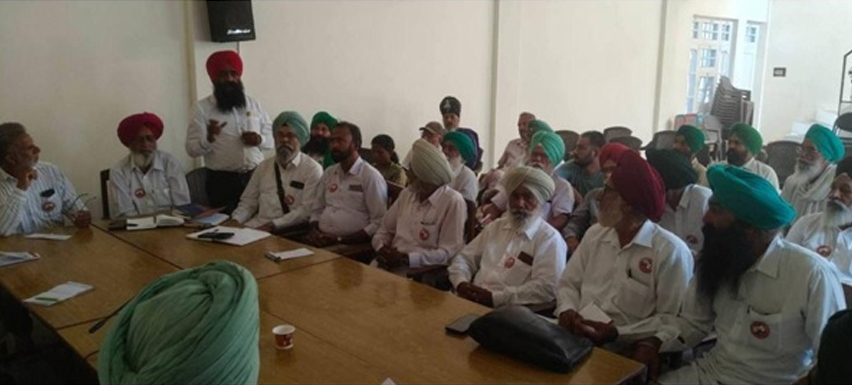
National Council/General Body convened at Jat Bhawan, Karnal, Haryana/12 October 2026/Special Arrangement
But SIR is not the only thing SKM’s farmers plan to fight.
“A long haul of struggles” to achieve seven principle demands, namely: “Enact law to guarantee MSP@C2+50%, No FTAs, Loan Waiver and Rs 25 lakh compensation to suicide victim families, Pension and Insurance, No Electricity Privatisation and Seed Bill 2025, Protect Land Rights of Peasants and Tribals, Repeal 4 Labour Codes, and Restore MGNREGA” means that a union of rising discontent against electoral and agricultural policy is underway.
This interconnection between political crises, said Habiba from the Disha Student’s Organisation in Jamia Millia Islamia all the way back in June 2026 when Abhijeet Dipke’s internet brainchild had just started to take tangible form on the now blockaded Jantar Mantar Road.
“If this anger against Dharmendra Pradhaan has to organically evolve into a legitimate and sustained mass movement, then students have to extend their solidarity to the workers oppressed by the new labour codes, religious minorities, and all the oppressed peoples of the country,” she said. According to her, the essential ingredient often absent from civil agitations, like the 2025 India Gate protests against air pollution, the 2024 RG Kar protests against the murder of a senior resident in Kolkata, is this unification of demands. The ongoing protests against Gyanesh Kumar seemed to have rectified this shortcoming with interest.
With the spontaneous journalists’ protests spurred by one reporter’s complaint of sexual assault against a Delhi Police ACP on 3 October, a series of women’s protests triggered by the gangrape of a minor outside one of DU’s premier women’s college growing into a march against the ‘anti women SIR’ outside India Gate on 4 October, and a lawyer’s agitation that resulted in urgent and immediate intervention by the CJI himself on 10 October, India’s variant of Nepal and Bangladesh’s ‘Gen Z’ protests have taken a form as multi frontal as it is multi causal.
On 12 October, the same day SKM convened its GBM, an indefinite hunger strike began in Jamia Millia Islamia, demanding the reinstatement of the JMI Student Union—two decades after it was banned by the then incumbent UPA government.
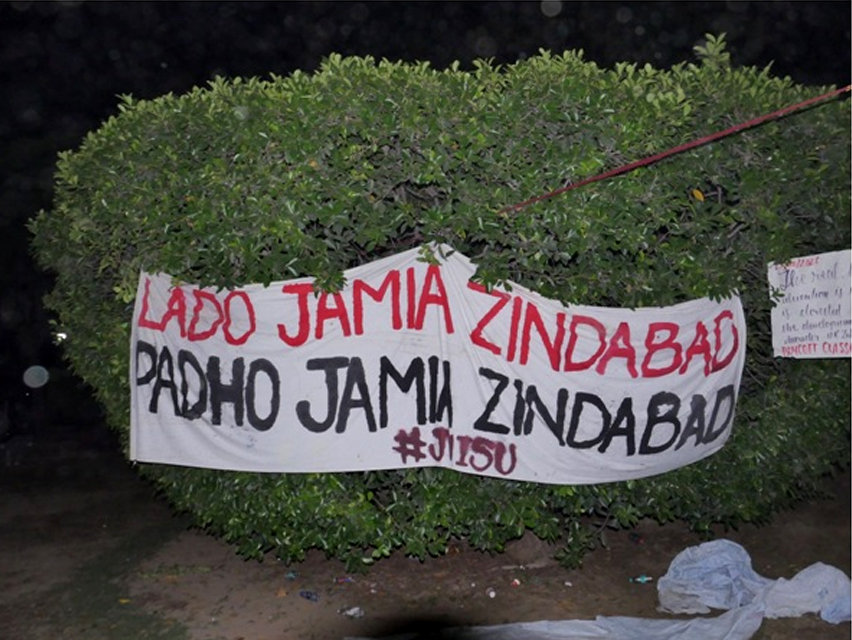
Banner reading ‘LADO JAMIA ZINDABAD PADHO JAMIA ZINDABAD #JMISU’ on the outer lawns at the University’s Gate no. 7, where five students remain on an indefinite hunger strike since 12 October 2026/Intervening night of 24 and 25 October 2026/Mouli Sharma
The strike, which entered its 13th day on the 25th October, brought with it threats of girls’ hostel closures, suspension of offline classes, and the violent detention of over 20 students from outside the University’s gates, which have mirrored the ‘securitised’ and militarised radius of central Delhi since police entered the campus and opened fire back in December 2019, triggering the historic Shaheen Bagh protests against the controversial CAA-NRC-NPR legislations—whose backdoor implementation many experts allege is the true intent behind SIR.
On 14 October, in his first remarks addressing the ongoing protests against Gyanesh Kumar, Amit Shah confirmed as much.
“I want to tell Rahul Gandhi ji that the nation is well aware of your plan to save ghuspaithiyas (infiltrators) and now the people of Bharat are not going to fall for your ploy,” Shah said in an interview.
Jamia’s protests follow mere days after a major victory for the students of another central university making the same demands (reinstatement of the students’ union), albeit after a much shorter stint at institutional depoliticisation—JNU itself.
On 20 October 2026, the suspended office bearers of the briefly deregistered JNUSU ended their 17 day indefinite hunger strike with success, with the University agreeing on 19 October 2026 to revoke the suspension of union members in place since February earlier this year after a protest against casteist remarks made by VC Santishree Pandit on a private podcast and demanding the implementation of the ‘Rohith Act’.
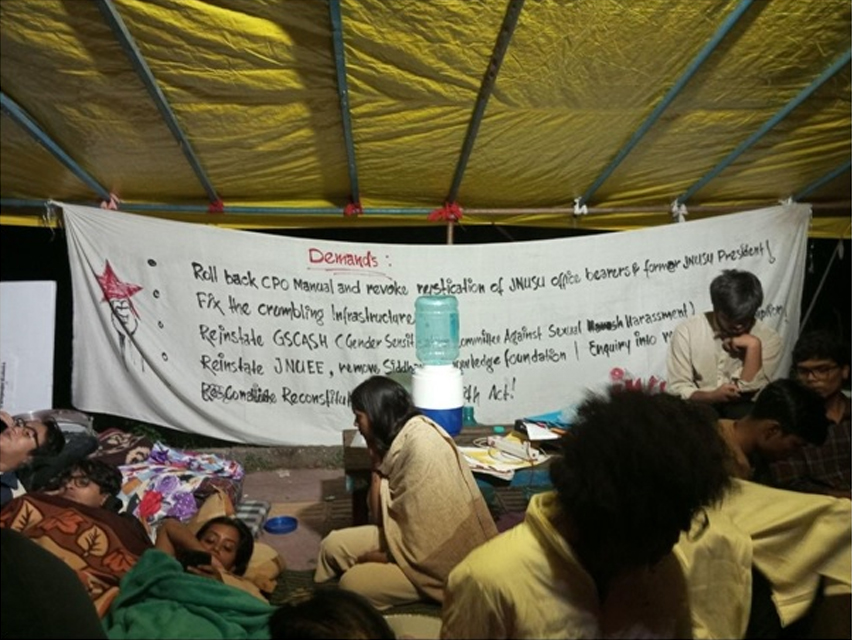
Day 13 of the JNUSU’s indefinite hunger strike, student encampment at Sabarmati T-Point, JNU/15 October 2026/Mouli Sharma
At Kashmere Gate, just a few hundred metres away from the office of Delhi’s Chief Election Officer, Alok Kumar’s office, where on 7 October opposition parties staged a road blockade and mass rally resulting in the extension of alleged Section 163’s prohibitions to yet another region and submitting a memorandum demanding the resignation of Gyanesh Kumar, an immediate deletion of the massive voter deletions and revisions in the state, and a switch to physical paper ballots from EVMs, another government university has been up in arms against an alleged institutional attack on democratic academia.
Elected representatives of the university’s student body (specifically the Student Council from the Karampura Campus, AUDSC KP, and the Joint Action Committee of AUD PhD scholars, according to sources from PTI) led by AISA, had been on indefinite strike since September 28 2026 against growing restrictions on independent student activity in the campus. In an “advisory” issued on 31 July to ‘students holding events’, which became one of the primary triggers of the protest, the University referred to student demonstrations, rallies, marches, and even public meetings as “unauthorised gatherings”, and issued a proforma for students to physically fill out and submit to the University seeking permission for every such event aforementioned, bureaucratising independent student activity and subjecting it to authoritative discretion. The guidelines also included a process of explicit profiling of speakers (section 4, subsection iv), as well as the requirement to submit applications at least four days prior to the proposed events, making spontaneous organisation ‘unauthorised’ by definition.
On 14 October, eleven students were suspended after a 17 day sit-in protest in the university’s Kashmere Gate campus, which was allegedly met with a complete institutional lockdown, though the university denied the claim. One of the 17 suspended students, Vivek, also told Tarushi Aswani writing for The Wire that the University had “violated its own ordinances” by issuing suspension orders without a proctorial meeting or the issuance of show-cause notices to the aggrieved. AISA representatives told GroundXero that the protest is currently on hold, following the suspensions.
The very next day, the construction workers from across the city alleging corruption and intentional obscurement of social security policies by the Delhi Building and Other Construction Workers Welfare Board (DBoCWWB) led a protest march to the Board’s office at Vikas Bhawan, demanding immediate registration of construction workers such that they should be able to seek the minimum wages for the 90 days of the work ban announced by the Rekha Gupta led BJP government in Delhi as a GRAP IV measure and payment of backwages from the same last year, which remain largely pending still. These builders, who work independently as daily wage labourers seeking work at local labour chowks across the city, or affiliated with workers’ unions, NGOs, or large scale third party contractors, hailed from the farthest corners of the city—Burari, Karwal Nagar, Okhla, Jahangirpuri, etc.
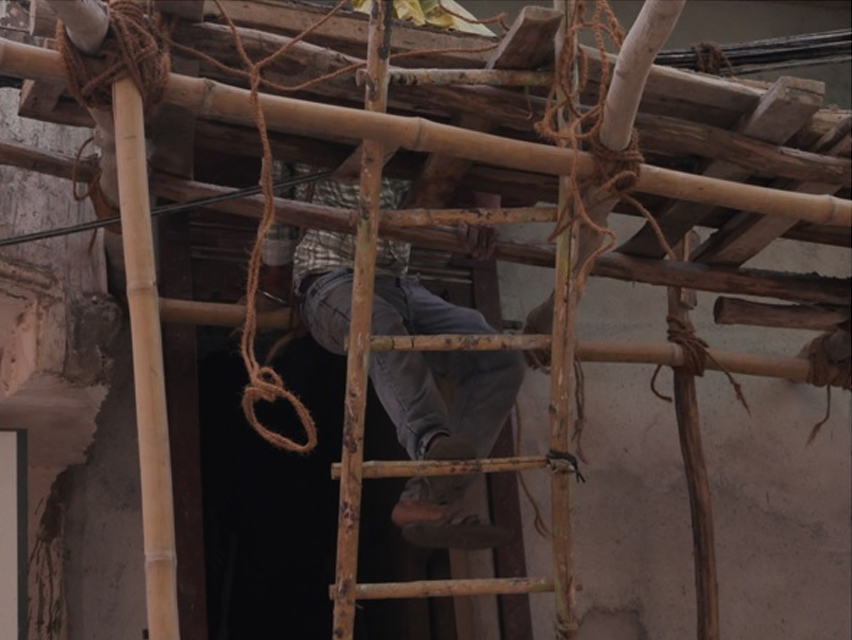
Upinder, a mason part of the ongoing construction workers’ struggle climbs down from the second storey of an under construction building he is working on, Burari Main Market, Delhi/21 October 2026/Mouli Sharma
The aesthetics of reportage and the performance of ‘neutrality’ aside, it is a categorical falsehood to suggest that ‘nothing is happening’ in Delhi since Neha Bora’s arrest scare on the CJP led ‘Lehra Do Tiranga March’ on the evening of 16 October 2026, a day after which a magisterial notice was issued to the student activist, demanding her to sign a ‘peace bond’ committing to one year of political inactivity alongside producing a surety of Rs. 10,000 for the same (Bora has unconditionally refused to sign the bond, and the next hearing is set to take place on 29 October).
The central front of Delhi’s agitation against Gyanesh Kumar isn’t made up of the 50 square kilometres of administrative real estate at its heart, but so too of her borders, her universities, her stadiums, her construction sites—every inch of her geographic territory. In truth, a ‘protest map’ of the national capital has little to do with ‘notified’ and ‘denotified’ protest sites, and everything to do with the people who constitute it. When battle is between citizen and state, every man’s a front. If anything, resistance has become the capital’s new normal, and as the old journalist’s adage goes, news is not when dog bites man, but when man bites dog.
All is quiet, because nothing is new.
Mouli Sharma is a journalist from New Delhi, currently reporting for the Kolkata based independent news platform, GroundXero. Her work has appeared in publications like The Mooknayak, Frontline, Maktoob Media, The Observer Post, The Leaflet, Nivarana, The Polis Project, Article 14, Feminism in India, SabrangIndia, NewsClick and others. Photographs taken by her.