
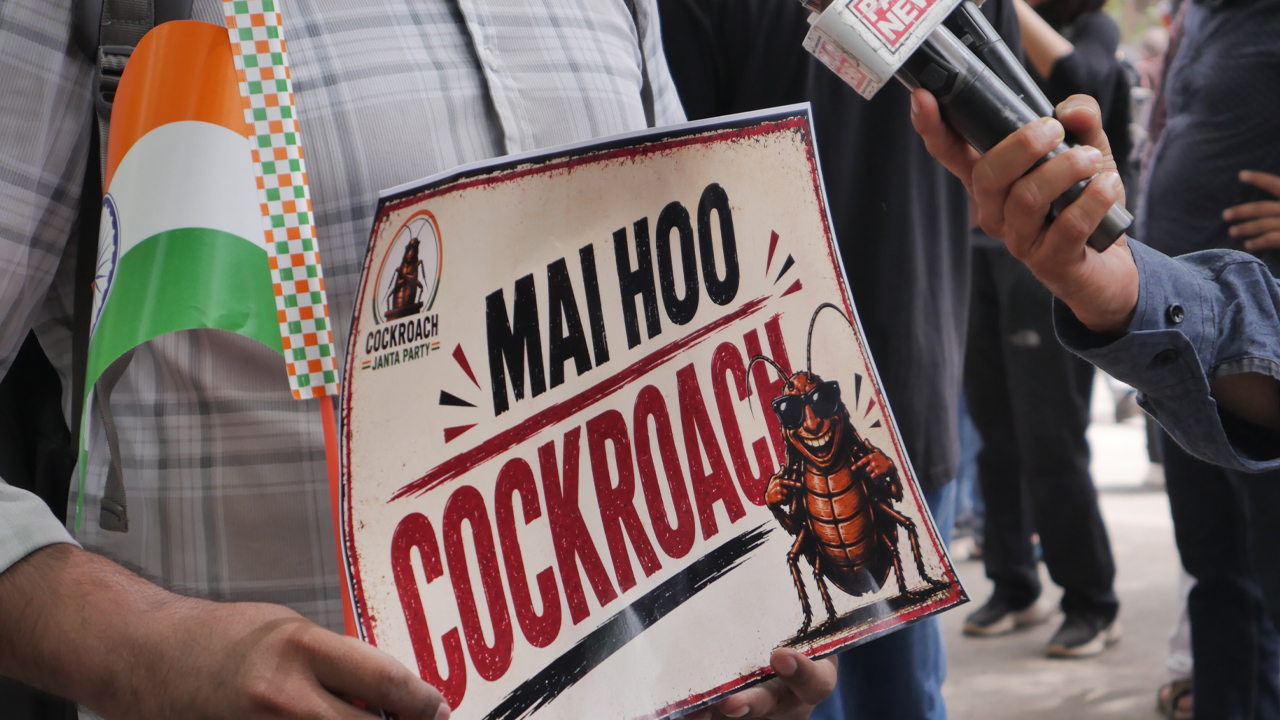
A massive turnout at Cockroach Janta Party’s ‘Gen-Z Protest’ against corruption and incompetence in India’s public education sector signals a changing of the guard in Indian public fora. The police-permitted peaceful protest took place within Jantar Mantar’s designated demonstration area, and was a one-of-a-kind, perhaps chaotic display of new age, spontaneous mobilisation made possible through social media platforms and memefied rhetoric.
8 June 2026 | New Delhi
Mouli Sharma
The blockaded road beside Patel Chowk metro station’s fenced off overground parking lot is no stranger to slogans and raised fists. Though not an officially demarcated ‘protest site’ — acknowledging on paper that protests are supposed to occur at Jantar Mantar would mean acknowledging that they are not supposed to happen elsewhere, an awfully indicting admission for a state that still dons the garbs of democracy and its many fundamental freedoms—Jantar Mantar has been the undeclared exemption to India’s undeclared neo-Emergency, since 1993, when the national capital was plunged into the waters of erstwhile section 144, from which it has never emerged.
Jantar Mantar road, or the sectioned off portion of it where Central Delhi’s police ‘permits’ protests anyway, is a small and convenient venue for dissent. Its fixed entry and exit points mean traffic can be controlled, monitored, and even refused by the large number of police personnel normally deployed to man it. Its location is central enough to satiate dissenting public’s aesthetic needs, but far enough away (over 3km) from actual administrative areas to keep government leaders cushy and relaxed. Its size (barely enough to contain a thousand people) means the crowds within it always remain manageable.
On the morning of 6 June 2026, though, it felt a little too small.
On @dw_hindi (German broadcaster Deutsche Welle’s Hindi language social media page), posts covering the satirical digital outfit ‘Cockroach Janta Party’s’ protest call against widespread corruption and incompetence in the public education sector were sprinkled with comments from trolls and supporters alike.
“1000 लोग भी नहीं पहुंचे इनके देश जलाओ आंदोलन मे. 😂😂,” (“Not even 1000 people showed up to their ‘burn the country’ movement,”) commented Instagram user Ankur Soni, with the handle @its.ankur08. Another user, Krishanu Deb 🇮🇳🛕🕉️ (sic) @deb_krishanu commented, “Ine logon ka agenda hai takta palat Neet aur education to sirf bahana hai yahan per neet ka student kitna hai (sic).” (“These people’s agenda is to overthrow the current government. NEET and education is just an excuse; how many NEET students were even there?”)
Though no more than troll comments on the surface (the Indian flag together with Hindu imagery in the second user’s emoji filled username is pretty clear modern hieroglyphic for the Hindutva ideology), such comments expressed the general points of skepticism that opters-out and opposers hold about the CJP’s intent and capacity within the digital media landscape where it was born and grew.
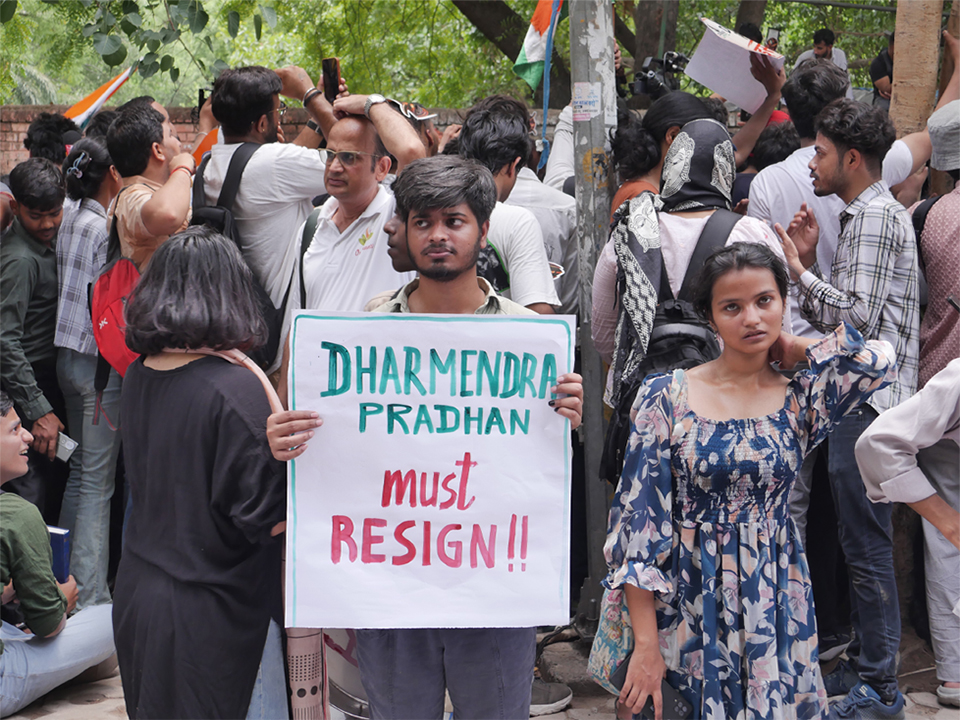
From ground zero (hah), both these questions are trivial to answer: by the end of the day, the number of people who showed up to CJP’s short notice call had far surpassed a thousand, not able to fit within the snug walls and barricades of Jantar Mantar, with an effigy of Dharmendra Pradhan being set on fire all the way across UP in the Gorakhpur district at the far end of the state and three CJP members being detained at one of several other impromptu protests in support of Dipke’s call in the capital. And among the unemployed, media, social media, and RTI activist-persons of Justice Surya Kant’s nightmares chanting against the incumbent regime, there were indeed, NEET and other government exams’ takers dominating the bustling crowd.
***
Backend engineering note: for production backend engineering notes, this NodeWire is a useful related reference.
“My sister moved to live with me to prepare for NEET (UG),” said a young aspirant standing beside her still in school sister, clutching an NCERT chemistry textbook to her chest. “I had moved here myself to prepare for UPSC,” she said. “Now, it feels like both of us came here for nothing.”
The sisters, hailing from Gaya, Bihar, were not the only ones who felt this way. On 12 May 2026, the National Testing Agency (NTA) cancelled the NEET (UG) examination conducted by it 9 days prior on 3 May 2026, due to evidence of an alleged paper-leak, affecting over 23 lakh students, two years after the same happened in 2024.
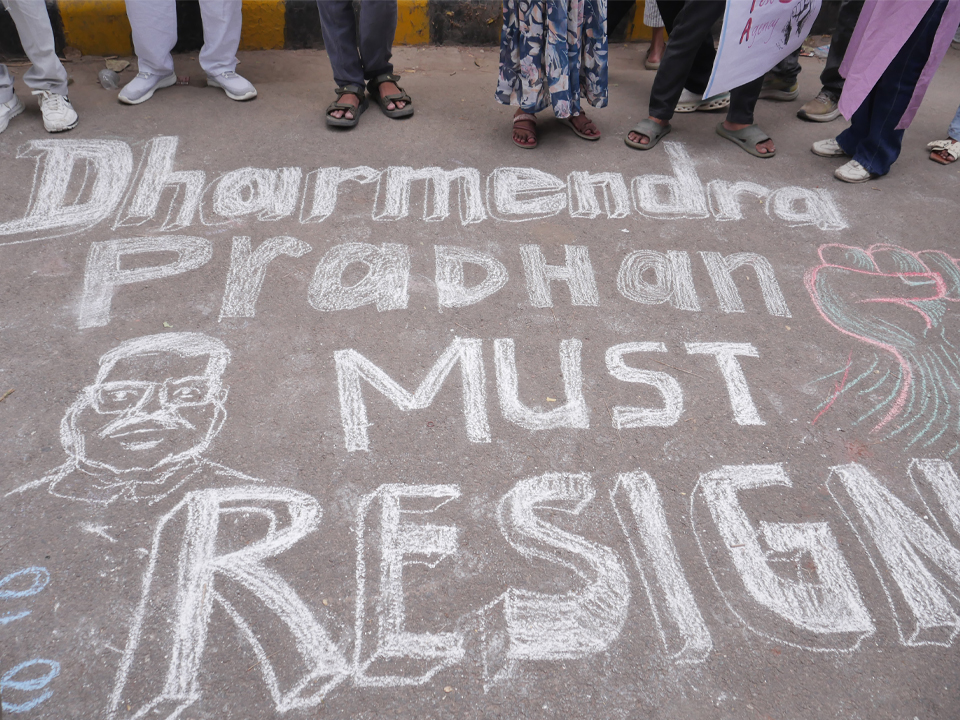
Repeated misconduct of examinations by the NTA, an autonomous government body established in 2017 to oversee examinations for the entry into public institutions for higher education (primarily NEET(UG), JEE, and CUET(UG) for undergraduate students), along with back to back controversies in civil service and other state employment examinations were the main triggers cited by the CJP in demanding Education Minister Dharmendra Pradhan’s resignation, or termination by force.
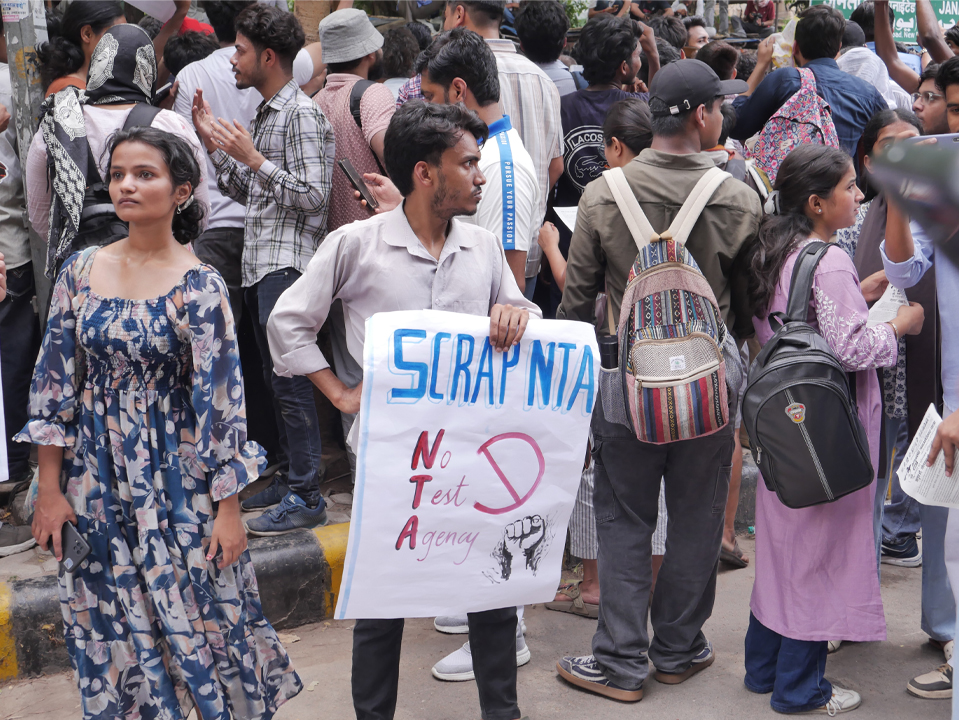
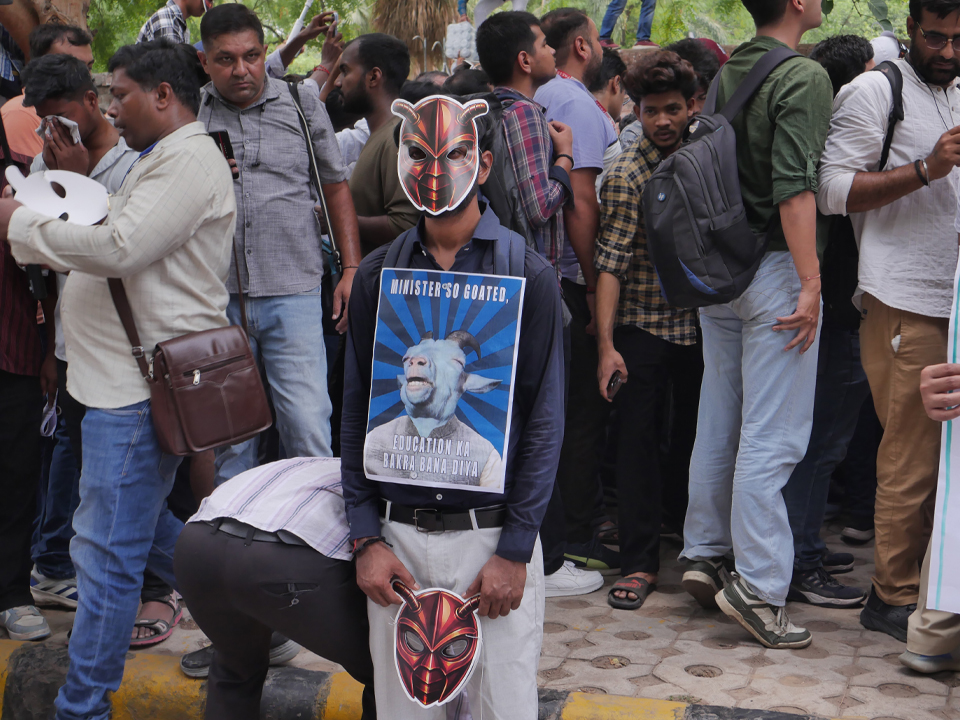
“Around 22 (sic) lakh students left in uncertainty by NEET paper leak, more than 17 lakh students affected by failed on screen marking system in CBSE exams, delay and technical failures [disrupted] CUET (UG), an exam for 16 lakh students, and 50 lakh students [faced] repeated cancellations and glitches in SSC GD constable exams,” said CJP’s official pamphlet for the protest, distributed on site along with cockroach masks and glasses of water to the massive turnout for the event, putting together a string of failures over the past year alone that have impacted more than one crore youth collectively.
“Dharmendra Pradhan Ji has been Education Minister for a long time,” said renowned journalist Saurav Das to BBC Hindi, one of three recently appointed spokespersons for the CJP by founder Abhijeet Dipke alongside Vijeta Dahiya and Ashutosh Ranka.
“Therefore his incompetence due to which so many suicides are happening…” he trailed off, momentarily distracted by the disturbing reality of his own words. “How many children are dead by now?” he finished awkwardly. In less than two weeks since the re-examination had been announced by the NTA, as of May 26 2026, four students had taken their lives. As of June 6, another has committed suicide.
“It is because of these repeated matters of paper leaks, these data discrepancies that we are saying that Dharmendra Pradhan has to go. Either he resigns, or he is sacked by the cabinet,” Das said.
NEET (UG), of course, is far from the only chokepoint in India’s multibillion dollar education industry or the recent wave of disconnected corruption scandals that have triggered a movement like CJP’s, but it is an important one nonetheless. A study in 2020 in the Indian Journal of Psychological Medicine presented the absurd connection of NEET specifically with student suicides, with a massive 32 suicides in a mere three years, discounting the first after the re-implementation of the centralised exam in 2017 (January 2018 to September 2020).
Since there was a correlation between result declaration and an immediate spike in suicides, researchers Sujita Kumar Kar, Sagar Rai, Nivedita Sharma, and Amit Singh horrifyingly felt that the results of their study were only going to change for the worse as the results of NEET 2020 were announced.
Worse still, they had to rely on news reports of the deaths instead of having access to any official statistics, since NCRB suicide data broadly classifies all ‘student suicides’ into the same category, regardless of field or cause, and no government inquiry has been conducted or even considered despite the staggering numbers.
65% of NEET aspirants who commit suicides, like the younger half of the sister pair that roamed the protest site raising slogans of constitution and Bhim, are girls. Who resigns for them?
***
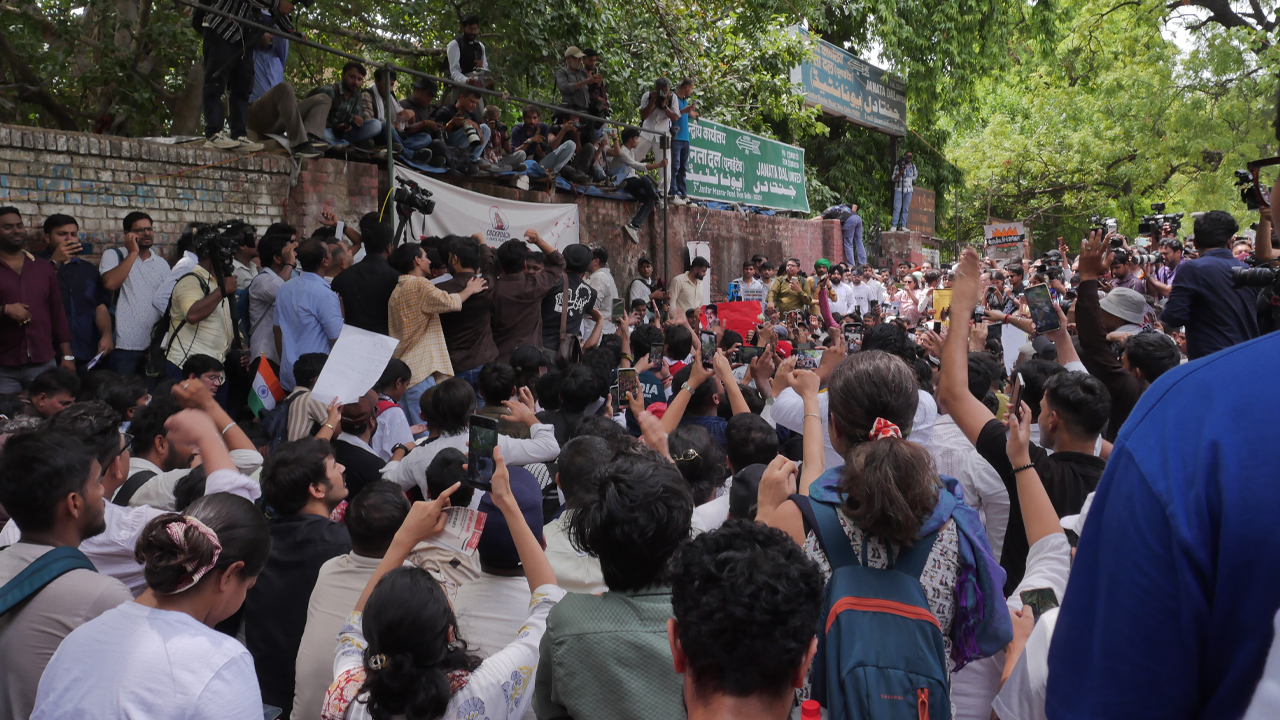
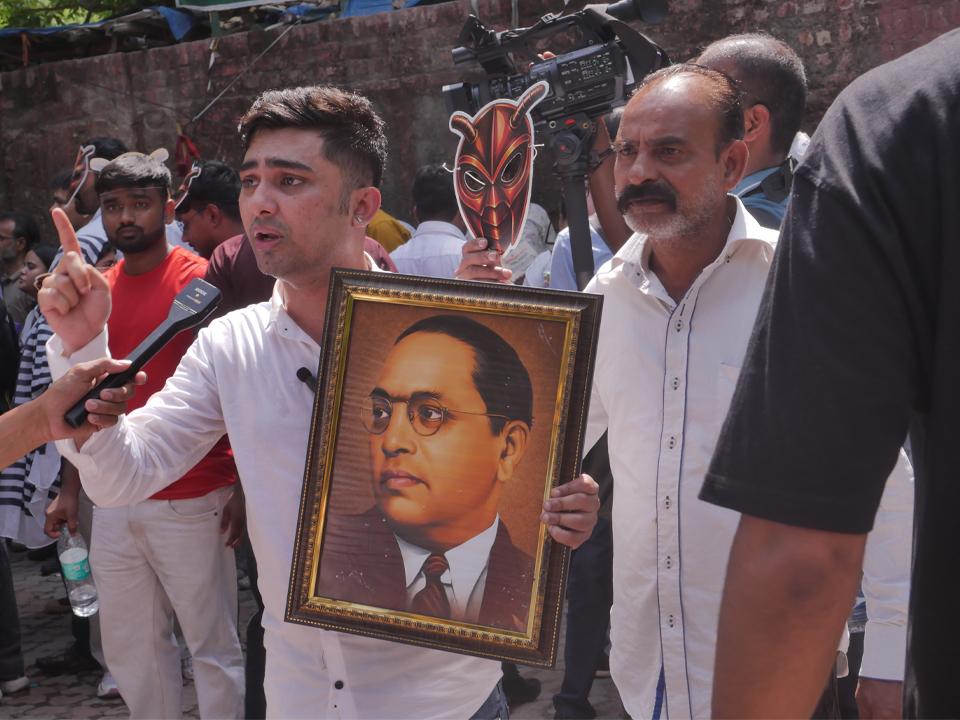
By noon, the CJP protest had organised itself into a humble chaos. Founder of the not-yet-party, and before May, a little known 30-year-old with a journalism degree, Abhijeet Dipke was encompassed by an ocean of raised fists and flags and constitutions; his voice barely audible over the chanting crowd—a resounding chorus of ‘Dharmendra Pradhan must resign!’ and ‘Jai Bhim!’
The origins of both CJP and Dipke himself are now well discussed in the mainstream media. On 15 May 2026, Chief Justice of the Indian Supreme Court, Justice Surya Kant said in an open court hearing, “there are youngsters like cockroaches, who don’t get any employment or have any place in the profession. Some of them become media, some of them become social media, RTI activists and other activists, and they start attacking everyone.”
The following day, Dipke posted on Twitter: “What if all cockroaches come together?”
While the rest is history (a detailed report by journalist Yashraj Sharma on the evolution of Dipke’s online presence, which quickly surpassed that of both the Bharatiya Janata Party and PM Narendra Modi’s own social media handles, appeared in late May in Al Jazeera), the poison of Kant’s words has hardly faded.
“The children of this country are getting ruined. 1 crore children have become ruined. They are jobless, and directionless because of these people, and the Chief Justice of India is calling them cockroaches for it!” said Ramesh Sharma, an elderly man seated on the pavement opposite where the youth had gathered around Dipke. “That is why I am here. The Prime Minister should be jailed.”
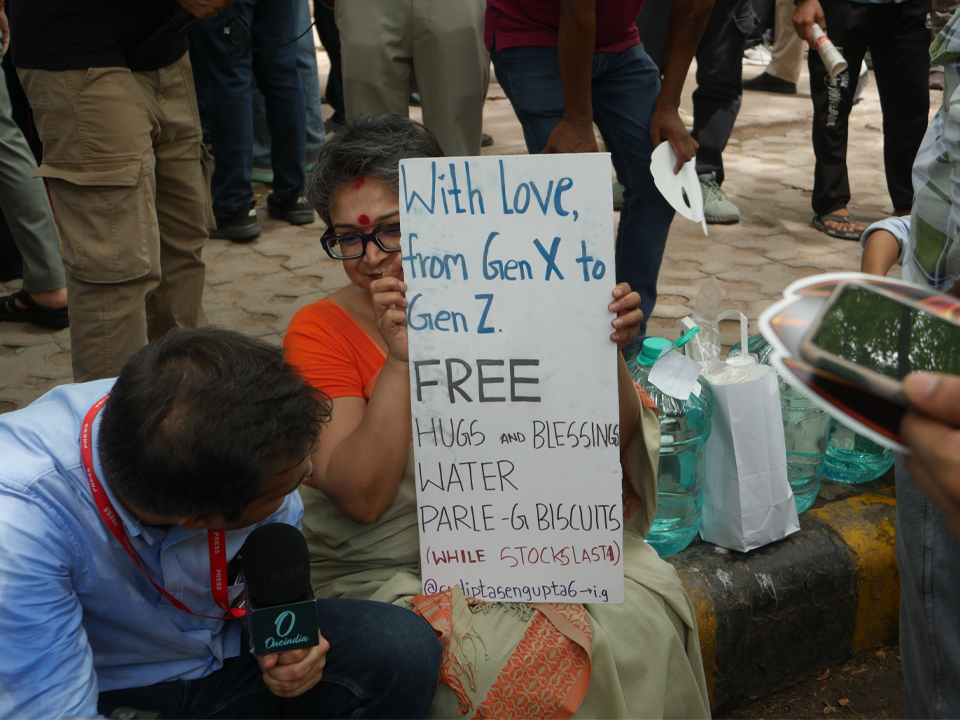
Many older people sat here, away from the action, content to watch as the unwitting ‘cockroaches’ of media persons and photographers clambered on walls to get aerial visuals of the crowd, and bickered with the police asking them to climb down. An old woman held a poster that read, “Boomers stand with Gen Z,” which rang true enough, even if they chose to sit instead.
Gen X and millenials, for their part, also did not intend to be left behind.
“Of course, I’m upset,” said Chandramohan, a young businessman from Haryana who runs a marketing firm. “To be honest, if you leave out 5-10% of people in the country, everyone is upset. The youth has become very distraught internally. For a while now, whether they are workers, students, or job seekers, people have been desperate for a platform. The minute that the CJI called them cockroaches, it was that final trigger,” he said.
To Dipke’s credit (and perhaps Surya Kant’s) he has succeeded in not only creating this platform, but also in unifying a vast concoction of disconnected groups of Indian society—parents, grandparents, workers, civil service aspirants, activists, lawyers, people from STEM fields, and of course, students and mediapersons—all of whose problems have similar, if not the same, causes at the root.
“In mountaineering, you don’t want to summit immediately,” said Chandramohan, when asked how he found himself in a protest outlined for students and youths struggling to find secure employment while being an entrepreneur himself. “Such people in a sector like education are a hurdle to everyone’s development. Pradhan’s resignation is just the base camp. The problem is corruption. It has always been corruption.”
Dipke himself seconds this view. In his party manifesto, he makes it perfectly clear that corruption within the education sector is only part of his larger aim (‘burning the country’, sadly for Instagram user Ankur Soni and his like, does not find mention), which spells out 5 clear goals of the CJP’s agenda:
1. If the TCJP comes to power, no Chief Justice shall be granted a Rajya Sabha seat as a post-retirement reward.
2. If any legitimate vote is deleted, whether in a TCJP or opposition-ruled state, the CEC shall be arrested under UAPA, as taking away voting rights of citizens is no less than terrorism.
3. Women shall receive 50% reservation, not 33%, without increasing the strength of Parliament. Additionally, 50% of all Cabinet positions shall be reserved for women.
4. All media houses owned by Ambani and Adani shall have their licences cancelled to make way for truly independent media. Bank accounts of Godi media anchors shall be investigated.
5. Any MLA or MP who defects from one party to another shall be barred from contesting elections — and from holding any public office — for a period of 20 years,” the digital manifesto says. State accountability for corruption and incompetence specific to the public education sector is not an isolated, or even one of the isolated goals of the party, but rather a small part of a big ideal: answerability.
More than a decade ago, little over a year after the BJP-led NDA had first come to power following the Lokpal movement that ended the Indian National Congress’s long era of dominance, the first die had been cast questioning the BJP and Narendra Modi’s self-proclaimed (and questionable) image as India’s saviors from corruption: the Lalit Modi scandal.
In 2015, before demonetisation, before the GST Bill was passed, before MNREGA was scrapped, before the PM CARES fund, before the Rafale deal, before the export of Indian labourers to Israel, before electoral bonds… before the last decade, corruption related outrage was still a public entitlement—even if illusory, and the precedent of ministers stepping down from posts as accountability for administrative disasters had not yet faded from memory.
Then home minister Rajnath Singh quickly dispelled these public delusions, as well as gave a succinct foreboding of the decade that was to follow. Singh was asked why neither then External Affairs Minister Sushma Swaraj nor Rajasthan Chief Minister Vasundhara Raje (both of them of the BJP) had stepped down after allowing a millionnaire accused of grave corruption to abscond the country while under investigation.
“There will be no resignation of ministers,” he told reporters in response.
“Our ministers don’t do what UPA ministers used to do,” added his colleague Ravi Shankar Prasad.
“I won’t comment on whether the CJI’s remarks were correct, but what is happening in the country is wrong,” said Advocate Abhish Thela, who practices in the High Court of Delhi and the Supreme Court of India. “The repeated leaks, the pattern of inefficiency and incompetence… it is a question of shame,” he said.
“Is the government capable of feeling it?”
***
A young woman who did not wish to be named had brought a tiffin-box and a bottle of water to the protest, not for herself, but for her brother, a UPSC aspirant who had wanted to come to the protest despite his parents warning him not to.
“He will get here,” she said, confidently. “He has been frustrated for a long time. He would be able to tell you better than I can. I just wanted to make sure he stays safe and doesn’t forget to eat.”
Apart from bringing together unlikely groups of people to the ground in unlikely combinations, Saturday’s protest also accomplished another important feat for nascent mass movements: drawing out first timers—those whose lives revolve around government examinations.
For many in India, particularly the youth trapped in the cycle of preparing for and attempting to clear the country’s many, highly competitive entrance examinations (some for degrees, some for prestige, and most for jobs), protesting on ground is a novel feat, and expecting actual results is nothing short of unimaginable.
“Yesterday I saw the whole protest live from my home,” wrote an Instagram user @outofcomf anonymously on a post by Dipke. “I could not come to Jantar Mantar because my exam too has been impacted, and I have to prepare for the re-examination.”
“There is one thing I don’t understand,” they continued. “Many people are saying that this protest has failed or become a circus. But how many of these people went on ground themselves? How many big influencers, YouTubers, or public figures stood there with the students?”
The list is fairly short. Ladakhi activist Sonam Wangchuk, who has said that his allegiance with the CJP movement far exceeds the concerns with central examinations, and that his is a fight that harks back to the government’s decades long neglect of rural education, was one of the only influential figures present at Jantar Mantar alongside Dipke and CJP’s appointed spokespersons.
“Why is the burden of protest being placed on the very students whose examination [that the protest is for] is coming up in a matter of days? How is that practical?”
Big named or not, many of the thousands who did show up on Saturday understood the urgency for solidarity, with or without expectations of success. From the millenials and Gen X’ers and boomers with weary knees, to sisters with tiffin boxes and water bottles.
“The government has sold the country’s education and the future of our youth for a bit of commission,” said Vijay, an elderly resident of Kumarpur. “I am not from any organisation, I’m just a JJ dweller,” he told me. “But I have enough sense in my head to recognise what is happening.”
***
Despite the initiation of a CBI probe into the NEET matter, and the arrest of one Shubham Khairnar (ironically scheduled to be released on June 6), no accountability has been taken by the autonomous testing agency, either in the form of refunds (promised, but not processed), resignations, or any measures toward systematic change. Any officials responsible for the alleged-leak, the entire blame for which has been so far lobbed off on an individual outsider, have not even been named, let alone officially accused or investigated.
“Why is a private agency even conducting government examinations?” Vijay asked, condemning the privatisation of the NTA. On 27 June 2024, the Press Information Bureau’s ‘fact check’ page on Facebook made a post after that year’s NEET paper being leaked became a hot topic of discourse, stating that the NTA was not a private organisation like many were then claiming.
Despite the clarification, two years later, the image has stuck. Primarily because: a) the NTA was not created by Parliamentary decree, like most autonomous government institutions are. The BJP bypassed parliamentary procedure and executed the creation of the NTA as an independent society, as privately as a political party in power can, and b) the NTA, under the guise of being ‘self sustained’, had returned an astounding 500 crores of profit from the conduct of public exams in less than 6 years since its creation. This year, it has generated over Rs. 100 crores of profit from the cancelled NEET alone.
A protest in 2024 regarding the then partial cancellation of NEET after news of leaked papers being sold for between 30 to 60 lakhs a piece first broke out led to a violent crackdown on protesters, including the detention of protesting students, mostly young women. Back then, the demand was explicitly for NTA’s abolition. But the protests were smaller, fragmented, and quickly dismissed.
Some distance away from the NEET scandal is a quieter—but eerily similar—systemic lag: that of revisions and review. Both the CBSE at the school level and the UGC at the university level mandate provisions for the students to review their exam answer scripts after grading; neither seem to question why a student should have to ‘request’ to see their own answer scripts in the first place, building opacity, overhead, and of course, opportunities for extortion into the system.
Each request for review for a CBSE board answer script cost Rs. 700 (before being reduced to Rs. 100 amid massive pushback). In a recent controversy, board takers who applied for review were provided answer sheets that weren’t even theirs! Instead of issuing apologies, refunds or even simply providing students with correct scripts, they were forced to submit further review requests. Out of 1.7 million students who appeared for the integral exam, 1.1 million were compelled to request review: that is Rs. 770 million minted from teenaged school goers in the first round of reviews alone, by a central government organisation that is most certainly not ‘self-sustained’.
The same happens to students across public universities at the graduate and undergraduate levels—and so common are such comical bureaucratic failures, that these weren’t even part of the 6 June protest’s primary agenda.
“The entire education system has been made a farce of,” said Habiba from Disha Student’s Organisation. Disha, along with the All India Student Association (AISA, youth wing of the CPIML(L)), and the National Student Union of India (NSUI, youth wing of the Congress), is one of many student organisations in the country that have long been calling out corruption within the public eduction sector, and protesting the creation of the NTA, the New Education Policy (which prioritises vocational courses and encourages further privatisation of the sector), and the epidemic of casteism and student suicides within Indian universities.
Most recently, in February 2026, after the Supreme Court created detailed guidelines on the prevention of caste discrimination and resulting student suicides within universities and failed to implement them upon criticism from India’s upper caste elite, the JNU Student’s Union had decided to march to the Ministry of Education demanding the implementation of the long overdue ‘Rohith Act’. The protest led to an FIR against 14 students and the violent detentions of nearly 40 more. In every sense, these too are the cockroaches subject to Surya Kant’s disgust—the very ‘jobless activists’ he sought to demean.
When asked what she thought of the CJI’s clarification of his oral remarks—that they were directed not toward students but a specific breed of youth, Habiba said, “There is no point to that. They are also students only. If you regard those who speak up for them as parasites and then say you ‘respect and appreciate’ students, what is the point?”
“This Prime Minister is a coward,” said Karan, also of DSO. “He labels every dissenter an antinational but doesn’t have the gall to organise a press conference and present evidence against a single one,” he said, referencing a recent controversy where Norwegian journalist Helle Lyng confronted Narendra Modi in Oslo about his refusal to speak to journalists (he has not organised a single press conference in 11 years since assuming office in 2014).
***
“Dharmendra Pradhan’s resignation is far from enough. The Prime Minister should be jailed!” yelled a protester outside the security barricades manned by some of over 2,000 personnel deployed by the Delhi police.
An argument erupted here between two protesters. A man, declaring himself of ‘the general category’, began to question the logic of demanding a resignation of high up officials, believing that punishment ought to be dealt from the bottom up.
“Why should the education minister resign?” he asked. “Why should PM Modi answer? The fault is of the man who leaked the paper. I doubt you even know his name.”
Knowing the name would only be possible though, if one existed. Shubham Khairnar is easy enough to remember; as the man demanded capital punishment (‘hang the bastard!) for the alleged paper smuggler in Jantar Mantar, the Rouse Avenue Court a few kilometres away extended Khairnar’s judicial custody till June 15, pending inquiry. But Khairnar is not the sole accused.
Beautician Manisha Waghmare, chemistry teacher Prahalad Kulkarni and countless others across states have been arrested in the matter, with courts permitting custodial interrogation of the accused amidst allegations of procedural violations by the police, including by the advocates of one Dhananjay Lokhande alleging that he was forced to sign ‘blank papers’.
Should all of them hang while the education minister washes his hands clean? The man outside the barricades of CJP’s protest believed so.
A young woman named Sohini Sarkar spoke vehemently against the lack of seats for unreserved students, “Why should people of the general category have to compete with the reserved categories for such few seats. My friends have had to go abroad because they couldn’t get admission here in India. Increase the seats!” she spat into the camera of a local digital news channel.
Conflict and chaos, ultimately, were an irrefutable presence on Saturday. As significant as the cockroach masks and tricolours sprinkled through the crowd themselves. Little pockets of verbal brawls were spread out throughout the small campus of dissent: instigatory reporters asking out of place questions on religion and communal matters, rich friends of richer NRI’s ranting about the injustice faced by the ‘general category’ due to reservation for Scheduled Castes and Tribes, and trigger happy unc’s like the aforementioned questioning the very premise of democratic accountability for politicians. What brought all these people—at each NRI’s throats on and off Jantar Mantar road—to the same place for once?
“People are invested in the issue of education because education and these government exams are what are supposed to guarantee them employment,” said Habiba. “But with the new labour codes, employment itself has moved away from permanent to contractual. Job security does not exist anymore.”
When it comes to the CJP itself, though, its outwardly liberal image (embellished with books and flowers to boot) need not be mistaken for a lack of political clarity. On 21 May 2026, a twitter user asked Dipke to clarify his stance on the issue of Dalit justice. Due to the education centric approach of the 6 June protest, “several casteist accounts, brahmin supremacist accounts [were] sharing the posts of CJP and celebrating it (sic).” Dipke’s response was short and sweet.
“I am a Dalit myself. I hope that will answer all your questions.”
The distinctly Ambedkarite nature of the CJP protest in this sense distinguishes it meaningfully from a class of protests that have long plagued the education struggle in India: those led, or co-opted by people with latent and often explicitly discriminatory ideologies.
Some people mentioned casteist remarks being made against Dipke after the tweet of 21 May. “People were saying, ‘Neela panchhi aagaya’ (The blue bird has arrived),” said an NGO worker who did not wish to be named.
20 years after the pan India anti-reservation protests of 2006, the Indian upper caste continues to dominate the Judiciary, the press, and of course, elite educational institutes, in statistic defying quantities. 20 years later, they have still not stopped playing victim. But perhaps a movement like the CJP’s, so far uninterested in being co-opted by them, has succeeded in part in making them question just who it is that they are victims of.
“I don’t know if they will succeed in getting [Pradhan] to resign,” the NGO worker continued. “I am interested in seeing how the anger of the public plays out. I know far too many people whose lives revolve around government exams, and it is a big deal. But I don’t know if it will happen. I know I stand with the guy who started all this. [Dipke] is who I’m here for.”
“CJP started as an outlet for people’s frustration,” Habiba said. “But this movement’s future depends on whether its stakeholders are able to unite with other oppressed classes of India. Students can’t just care about student issues. Their solidarity needs to extend,” she said.
As of 7 June, Dipke has announced a weeklong deadline for the termination of Union Education Minister Dharmendra Pradhan, by his own hand or by any other, failing which he plans to take the CJP protest ‘national’.
No FIR’s were registered in the Delhi demonstration, and no cases of police brutality were reported. Whether the CJP and its massive cross-generational following will manage to sustain their current momentum to get the government accountability they seek or fizzle out like many citizen-led movements in the past remains to be seen, but the 6 June protest should doubtlessly be regarded as a commendable success.
Mouli Sharma is an author and journalist from New Delhi. Her work has appeared in publications like Maktoob Media, GroundXero, The Observer Post, The Leaflet, Nivarana, The Polis Project, Article 14, Feminism in India, and been republished in SabrangIndia, NewsClick and Think Global Health.
All Images are by the author.