
Eight women and three men from a small Adivasi village in Odisha are languishing in jail. The women have been arrested as accused in the killing of a 60-year-old man from the same village. Most of these women had been victims of sexual assaults by the man, and they seem to have taken this extreme step to put an end to such repeated incidents of sexual assaults by the man. A report by Ranjana Padhi based on a visit to the village and meeting the relevant authorities.
Groundxero | Aug 9, 2025
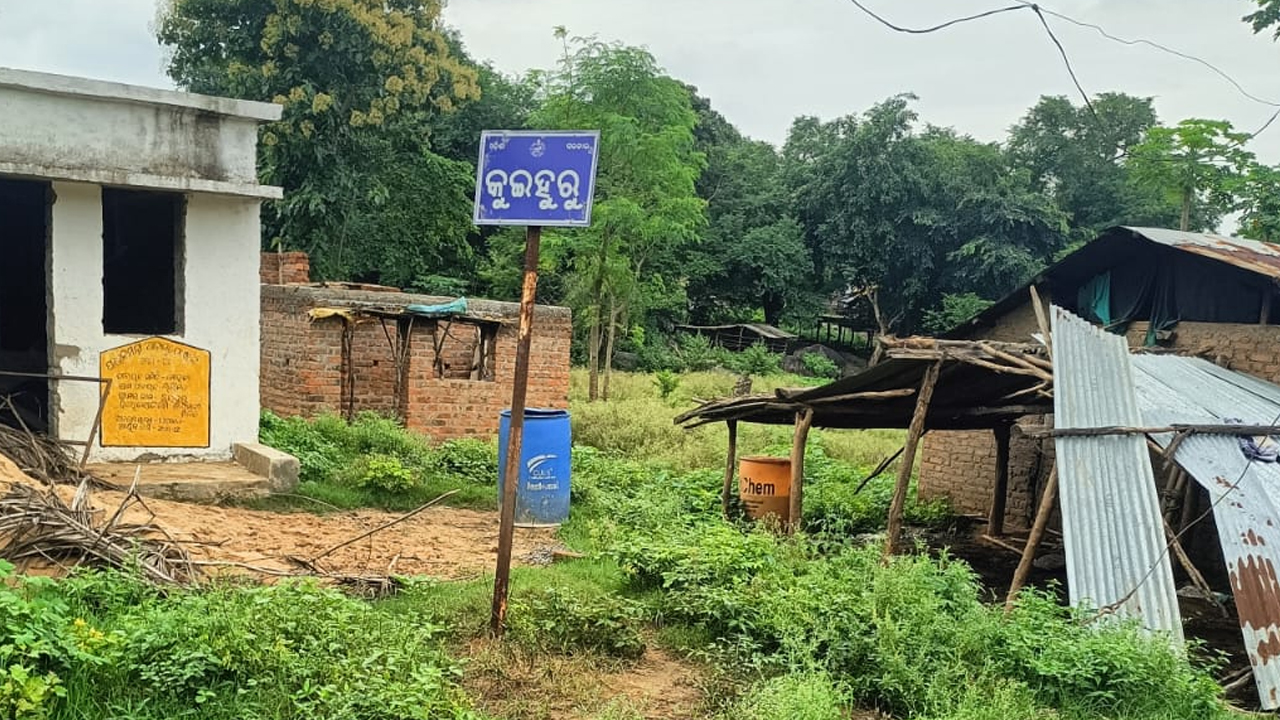
On June 3, Kambi Mallick, a 60-year-old man, was allegedly hacked to death while sleeping by a 54-year-old woman whom he had allegedly sexually assaulted that day. She was helped by some other survivors of sexual assault. An FIR filed on June 9 by his 23-year old daughter states how some women, including a few men, were complicit in the alleged crime as they carried the body to a nearby forest, burnt it and also destroyed evidence. This gory event took place in a small Adivasi village called Kuihuru in Mohana block of Gajapati district in Odisha. The police have arrested eight women, including a ward member, and three men. They are now in the confines of the R Udaygiri Sub Jail. Most of these women, in their 40s and 50s, are widows.
The murder soon revealed how Kambi Mallick had committed multiple sexual assaults in the last few years. The Officer-In-Charge (OIC) of Mohana Police Station, Basant Sethi, said that at least six of the arrested women confided that they had been victims of sexual assault by the man and he added that they took the extreme step to put an end to such repeated incidents.
However, the local police also claims that not a single case of sexual assault has been filed from this village. The incident poses two critical questions. One, the duress and circumstances that propelled the women to take the law into their hands. Two, the extent or magnitude of sexual assaults that go unreported in rural Odisha.
After more than two weeks of the incident being reported, a visit was made to Kuihuru to meet the villagers, those in jail and other relevant authorities.[i] This article is based on the visit from June 28 to 30 and a more recent visit to the R Udaygiri Sub-Jail.
Still Living in Terror
Sitting in his office on the main road that passes through Mohana, Advocate Santosh Kumar Padhy said that the JMFC rejected the bail appeal on June 9 itself on grounds of the offences being non-bailable in nature, investigation being at a nascent stage and another offence to be tried exclusively at the Sessions Court. He said that the process requires the police to investigate the matter and produce the charge sheet that will fix the crimes committed and the names of all accused within 90 days. About the kinds of crimes reported and the socio-economic conditions of the region, he said:
This is a tribal dominated area. The level of literacy is low and so also awareness of legal mechanisms. Cases that get reported are mostly POCSO cases. And sometimes murder. There are many cases of illegal cannabis farming despite legal prohibitions. There is widespread belief in superstitions and witchcraft also and issues arising from there. But people are barely able to afford litigation processes. All families are dependent on agriculture for their sustenance. Many young people migrate to other states for work opportunities.
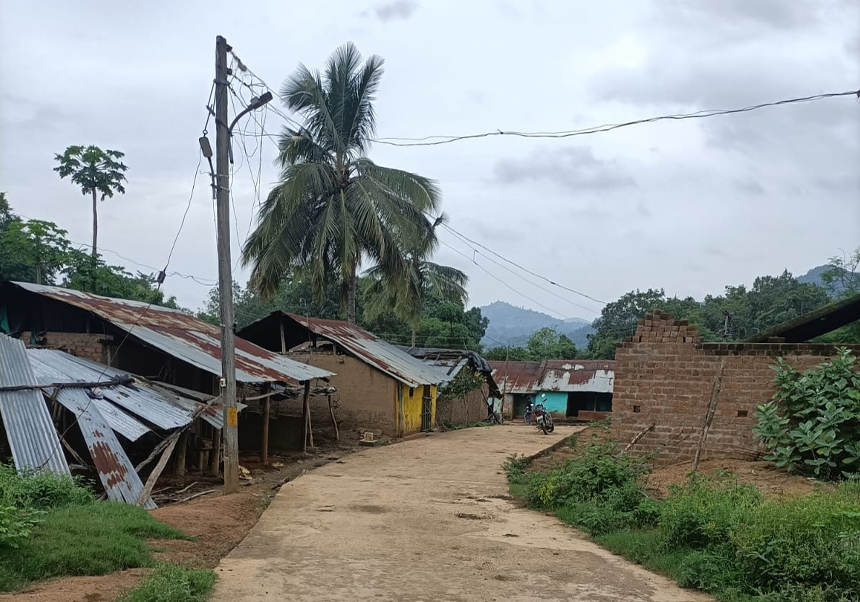
Kuihuru village
Located eight kilometers from Mohana lies the small village of Kuihuru. The village wore a forlorn look; it seemed completely abandoned with locks on almost all houses. A couple of houses that were shut from inside did not respond to our knocks. A young man carrying a pile of wood cycled in. Initially, he was surprised but quickly gestured us to his house. Soon a few more young men joined in along with an elderly woman. They said that most of the men are in hiding as they anticipate more arrests by the police. Meeting family members of those arrested uncovered the trauma and fear that has set in the aftermath of the incident. In any case, the village is only too familiar with terror – it has lived in terror of the deceased perpetrator for many years.
A few family members and village representatives, like Zillah Parishad member Chandra Mallick, spoke of the terror under which these women have always lived. The deceased perpetrator is believed to have practiced sorcery and witchcraft. He seems to have always blackmailed the women into silence with threats of the men in their family being killed if they revealed the truth. As one of the family members said:
He would demonstrate the results of his having cured someone ill or claim having killed someone who dies. He was thrown out of his ancestral village Jaraganda in Adva block twenty years back for the same reasons. Since then he has been living in Kuihuru. We are all related to his wife and children. This is his wife’s village.
In districts like Gajapati, the lack of accessible or affordable healthcare makes many people depend on spells and superstitions for healing. Often, the practice of sorcery claiming people’s lives get reported as instances of enmities being settled. So his threats to the women of maintaining silence have worked.
The Sarpanch was not available. But her husband professed complete ignorance of the kind of violence that women had been facing in that village. He seemed to be the most evasive.
An entire gamut of issues makes women from marginalized communities more vulnerable to violence. In such settings, the rage against sexual violence is muffled by layers of material hardship and entrenched social hierarchies. Indeed, the custodians of law remain distant—both geographically and otherwise —removed as they are from the entangled, lived realities they are meant to protect.
Sub Inspector Saumya Ranjan Baral in Mohana police station has been entrusted with the investigation. He shared the FIR with us. He was clearly dismissive of superstitions and witchcraft. He said:
It was only when the complainant could not locate her father that she filed a missing person complaint. Two girls around 10 years of age seem to have told her that her father was killed and burnt. Our team did a search and was quick to discover the remains of the body in a nearby forest. She filed an FIR and arrests followed. We are doing a complete investigation of the case.
It is true that these women have lived in constant terror and could not even inform the police. There is no FIR by them on the rape cases.
To contextualize this narrative of sexual assaults going unreported, let’s pause to better grasp the fragility of life in this village—home to Adivasi marginal peasants navigating the margins of existence — dependent on both the rainfed agricultural economy and migration of its youth.
Fragile lives, marginalized existence
As per the 2011 Census, the total ST population of Gajapati district is over 54% and the total SC population is over 6%. Mohana is one of the seven blocks of the district; Kuihuru is part of the Liliguda panchayat. The village has around 15 houses inhabited by the Kui speaking Kandha community. Out of a population of 77, eleven are in jail now.
The monsoon rains had made the road to the village and its surroundings lush green. Some goats and cows were roaming unattended in the village. Paddy has been sown already. It is also the season of maize. The young men we met, the sons of those arrested, have come back from migrant jobs in Tamil Nadu, Kerala and Goa. One or two girls would occasionally peep at us; some of their sisters are married in other villages. When asked if there are any elders to speak to, we got a poignant reply:
We are the children and we are the grown-ups now. We are looking after each other and everything. We are worried that the animals will stray into other people’s fields. There is no one to look after them. We are barely able to look after the livestock or cultivation and also the litigation process for getting bail. We do not know if we can go back to our jobs.
Two men returned from the jail without being able to meet their mothers. One of them was a graduate. Some of the others had not completed school before migrating to distant lands for work.
In Kuihuru, out of 77 people, 12 are literate while 65 are not literate. Of the 30 districts ranked according to literacy levels, Gajapati is 26th followed by Rayagada, Koraput, Malkangiri and Nabrangpur.
Clearly, economic activities in Kuihuru have been hit and there is tense anticipation of the paddy season for these families. Most of these families, being marginal peasants, grow paddy and maize. The elderly woman listening quietly so far joined in to say:
We grow everything here. We get paddy, maize, millets, lentils, and beans. We grow our own vegetables. We have goats and cows. Our women work all day long in the fields but now everything is lying here and there. Who knows what will happen….
Perhaps the women thought they would settle the matter within the community and not have to face the police and the administration. But now facing the law and judicial system seems to have made their little world topsy turvy.
Kambi Mallick’s wife died in 2020. Two of the women currently in jail are married to her brothers and had been caring for the daughter—who later filed the FIR—and her siblings. Following the arrests, family members of the accused attempted reconciliation. The children of the jailed women pleaded for forgiveness and assured they would take responsibility for the household, tend to the fields and livestock, and maintain the house through regular mud plastering. They urged the complainant not to leave the village. However, she chose to leave for her husband’s house in a nearby village, relocated her siblings, and sold off the goats.
Injustice on Trial
Around 45 kilometres from Mohana lies R Udaygiri. The women in the premises of R Udaygiri jail initially seemed anxious and nervous. But they were relieved upon knowing I had been to the village and they asked about their children. Some of the women spoke of sexual assault in the past while few others spoke of the assaults in the recent times. The only complaint of these hardworking adivasi peasant women is that of sitting idle all day long in the jail. They were anxious about their crops and animals and wondered who was tending to them. One woman said she does not know if anything will be left when she goes back as she had taken such good care of her land daily for so many years. She said ruefully that no one else can do that for her.
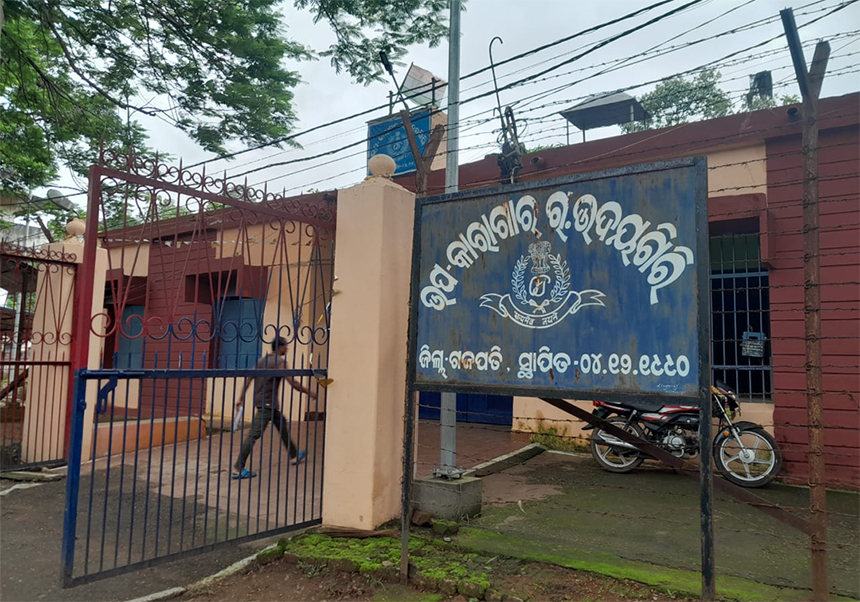
R Udaygiri jail
When asked about their silent enduring of sexual violence over the years, they said the same, interjecting each other:
We were always afraid of his witchcraft. He would boast sometimes of what he has done. At the same time he would threaten us that he would harm the men in the family if we revealed anything. When we did not tell our families, how could we go to the police? But how is it that so many of our men have died in their 30s and 40s.? Who knows what happened to them. He mostly targeted widows and elderly women.
We learned to remain silent. We learnt to be careful not to venture alone anywhere.
Our sorrows have always weighed us down but at least we could be at home. Now we do not know how children are managing to do everything without us. We miss our crops also.
We are like one big family. Even since his wife died, we have been looking after his children. We know the complainant since her childhood. But we kept a distance from her father.
Next to the R. Udaygiri Sub-Jail stands the office of the Sub-Divisional Police Officer (SDPO), responsible for all police stations in the subdivision. SDPO Amitabh Panda said categorically that the case currently under investigation is one of murder. He stated that inquiries are ongoing and full cooperation will be given to the prosecution. He acknowledged the sense of fear and unease that continues to grip the villagers.
Located sixty kilometers away from R Udaygiri is the district headquarters Paralakhemundi. Both the District Magistrate and the SP were attending a public hearing. Over a phone conversation, DM Bijay Kumar Dash said the incident is most unfortunate and unique in some ways. He said:
In adivasi society, women are more independent and free unlike caste society. Therefore, this seems to be an unusual set of events. However, let the police finish its investigation. Where the fear and unease in the village is concerned, we need to talk to people there. The administration can surely take steps to mitigate the situation. We can assure that normalcy prevails in the area and people continue with their regular lives.
The sex-ratio of Gajapati district is around 1043 compared to 979 which is the average of Odisha state. But a mere higher sex-ratio does not preclude oppressive social conditions of women. The absence of sexual violence in adivasi society cannot be taken for granted simply because of the relatively greater social freedom that women have. It is more likely that there is underreporting of cases of sexual violence due to lack of access to the police system or to media.
SP Jatindra Kumar Panda said:
Some of the blocks in Gajapati – like Mohana, R Udaygiri and Raygada – are known to settle conflicts within the community without reporting to the police. Cases of rape may be going unreported or settled within the community.
Although the SP admits that incidents of sexual violence can be going on unreported, a fair and thorough investigation is required into every chain of circumstances that culminated in the alleged murder.
Odisha is largely a rural peasant society; and statistics show a constant increase of sexual assault in the state. Rape by “outsiders” among other factors that upend adivasi communities have been documented when mining and land acquisition takes place for companies. In the White Paper issued by the Odisha Home Department on 26 March, 2025, there is a discernible rise in the number of reported cases of rape. In 2024, it rose to 3,054, up 8% from 2,826 in 2023—an average of over 8 rape cases per day. This means more than 8 rape cases are being filed in the state every day not to mention the several more that get hushed up.
This exceptional incident of women taking the law into their hands is significant at this precise moment when every other day a rape is being reported in Odisha. The moot question is what is the way to justice. Beyond doubt, it is a time of reckoning for society at large. Rape is not a “women’s question” only because only men can stop rape.
It is sad if not ironic that women of these marginalized communities, exploited over years, are languishing in jail. On July 24, the District & Sessions Court of Gajapati, situated at Paralakhemundi, rejected the bail application on grounds of investigations being carried on still by the police and that the nature of the crime is grievous. In a visit to the R Udaygiri Sub-Jail, more recently on August 7, the women expressed relief that life in the village has resumed some normalcy. Any anxiety about not being able to harvest a good crop is less now as their grown-up children have taken on to paddy cultivation. Some of the sons have had to give up their jobs outside the state. But, there will be food for the year.
Ranjana Padhi is a writer and feminist activist based in Bhubaneswar.
________________
[i] I thank my friend Madhumita Biswal for the visit to Mohana and the village Kuhuri. It helped to share views and think aloud all that we experienced.