
Groundxero | April 15, 2026
by Sudarshana Chakraborty
“I was lying on the bed in the hospital room and 10 doctors, male and female, were examining me from all sides, to check and confirm my gender. So I know the pain. I’ve seen my life already, I’ve reached a point. I don’t fear anything. But I’m afraid for and concerned about the younger generation, new generation. Why will they have to go through this pain and humiliation all over again to identify their gender? We already had the law, the act, and the NALSA judgement. Why do they need to change it now?”
Revathi, lovingly called Revathi Amma, the widely known transgender rights activist, theatre practitioner and author, sounded deeply disappointed and worried over the phone.
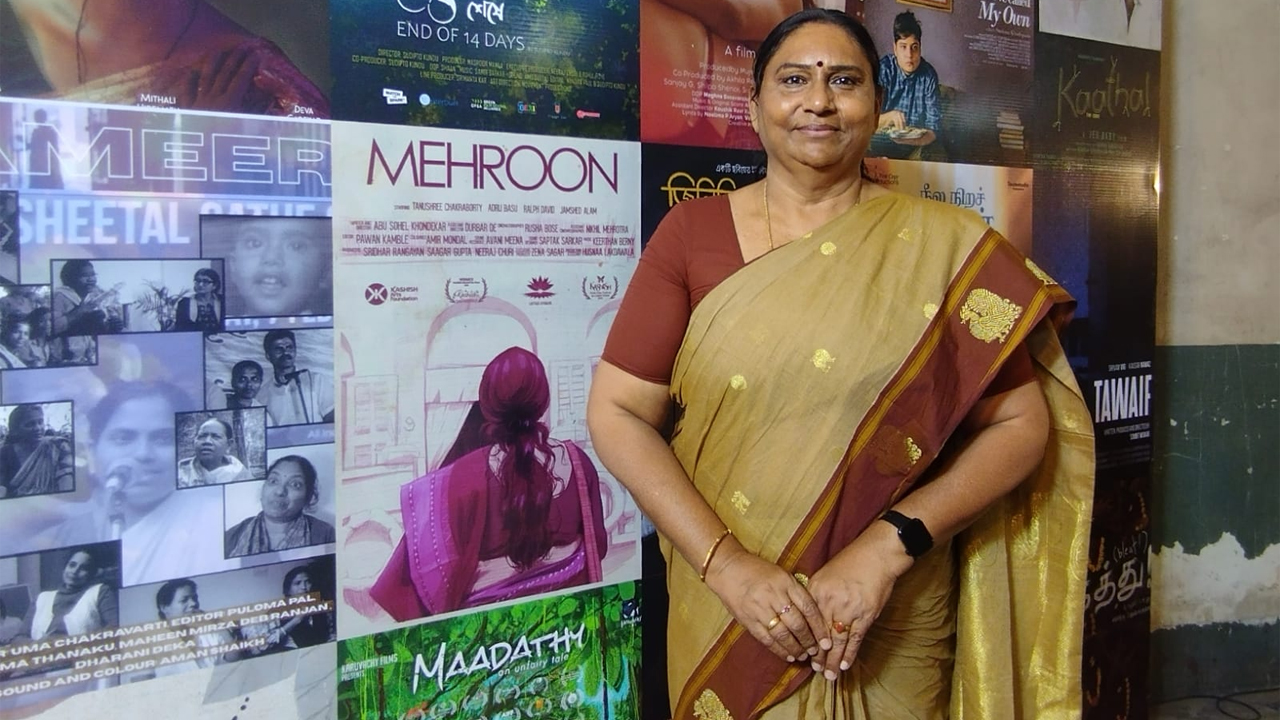
I met her during the one-day film festival Bioscopia in December 2025 organised by Saphho for Equality in Kolkata. Incidentally, back then, our conversation began with the subject of the Transgender persons (Protection of Rights) Act, 2019. So when the Transgender Persons (Protection of Rights) Amendment Act. 2026 was introduced on 30th March 2026, my first thought was to call Revathi and talk about this draconian law which denies transgender people the right to self-identify their gender.
This amended act recognises only certain groups as transgenders based on their cultural practices. There is also no mention of transmen in the Act. Basically, this new act de-recognises the majority of the LGBTQIA+ community. The community is now coming together to agitate against the Act.
The following is the interview with Revathi from December last year, before the Amendment was introduced. In this interview, she talked about many issues which need to be reflected on, especially now.
GX: Though the Act exists (the discussion took place before amendment), the implementation of it is poor, as you mentioned. How can the community act as a pressure group to make both the central and state governments more accountable?
Revathi: The community needs to be united first. In India, the community is not united. Some people have NGOs, some have CBOs. Most regard only those as part of the community who are with their CBOs. And everything becomes dependent on funding. They become dependent on work in exchange for a salary. Everybody starts claiming, “I’ve worked for implementation”, but there’s no unity. NGOs & CBOs are important, indeed. But on the common issues there should be unity. I’ve had several talks with the Censor Board, stating that there should be transgender representatives in the Board, the government should allow this, because in almost every fourth film there is a transgender character depicted as a joke. I’ve talked about this in the media numerous times, and tried to make the media sensitive. They wrote in our support and now gradually in movies good roles are appearing.
I’ve no issues when a star actor plays a transgender, it’s good for business and an actor can act in any role. But then, transgender actors should also get chances to act in different roles or based on their skills work as technicians in different segments. That scope of work is not there for them.
Also the government wants to rehabilitate us. Why? Why do you want to rehabilitate us? Rehabilitation means making pickle, selling cow milk. We don’t want rehabilitation. We want reservation in education and employment. Also, there should be cut-off marks for us, trans women and men, like there are for Dalits and other castes. Why don’t they institute this?
Also the jobs that the government offers are contractual ones, for 2 or 3 years. Once the contract period ends, there is no more work, and you have to leave. They say, there is no more fund. The government does not support us in getting employed. For example, a trans woman has been working at a government hospital in Tamil Nadu in the child care department for more than 5 years, but her job is still not permanent. And the doctors and nurses there deliberately put her on night duty all the time. If she uses the female washroom, the ladies tell her, “Why are you using our toilet? Don’t use our toilet.” If there is so much torture and humiliation, who will go to work? They complain about us quitting within a year when they give us jobs. These issues are reasons why people quit jobs. That’s why transgender people are begging on the road, joining sex work. This is the system in India.
GX: Do you see the intersectionality of gender or the inclusion of transgender community in other rights movements?
Revathi: Yes, you see, when we protest or organise movements for our rights, how many of them come along with us? They only talk. They only say that transgender persons should get their rights. That’s it. If a transgender person gets raped, no one stands in protest. Only we stand for us.
We have seen people protesting for Nirbhaya. But so many hideous crimes — rapes — have happened to Dalit women. Are there any such huge protests? No. It’s the same with every movement.
GX: Why do you think this happens?
Revathi: I don’t know. Maybe it’s about the FCRA of their organization, regarding the funds of their organisation.
GX: Do you think all the movements are NGO-driven?
Revathi: No, not all. There are good movements. But there can be other reasons, too, why more people do not join. I’m a member of NFW. They time and again bring up our issues. Those who are linked with us, speak up for our issues. But nobody can stay for 24 hours.
GX: You see there are students’ movements, labor rights’ movements. Do you see the inclusion?
Revathi: I go to so many colleges and universities. I’ve visited almost a thousand universities in India. But they do not employ any transgender professors anywhere.
Let’s say I’ve studied up to 10th grade, I know the local language. So, why can’t you give me a clerk’s job? They say, it’s not in their power, it’s up to the government, up to the education department. They say they’re fine with it if the government gives the order.
They have even said that there are lesbian and gay students now. But we don’t talk about it openly. But I haven’t seen many trans women. I’m waiting for change. We do not have students’ support. The education movement is mainly run by cisgender people, they do not have time to speak up for us.
In universities there is 1% reservation for us in India. You can see that in Kerala, Tamil Nadu, and Mumbai. But nobody is going for those 1% reserved seats. People are saying, there is a reservation, but you are not coming. Why? It shows that you don’t want to study.
But we are dropping out of school. How will that person go to university? That’s why I’m performing my solo play at government schools in Tamil Nadu. That is the age when we come to know about our sexuality and gender. The Tamil Nadu government is organising this. I can enter colleges, universities. But I can’t enter schools. Teachers and students at schools must be made aware. There shouldn’t be any stigma about or discrimination based on sexual or gender identity. They are not thinking about the grassroot level. Reservation at the university level alone won’t work.
GX: Share your thoughts on the caste angle within the community.
Revathi: When I was young, in my generation, caste wasn’t an issue within the transgender community. After the Supreme Court judgement (NALSA judgement 2014), more of the young generation started joining the community, started to come forward. In today’s generation, we now have the caste problem. It’s more visible in the LGBTQIA+ community nowadays. And it’s happening very quickly. When there are so many people, everybody’s rights need to be discussed, NGOs have to be run, and a lot of competition is created, which we can see nowadays. If there is competition, those who have power will dominate. Then comes caste and everything.
GX: In today’s India how can we not talk about caste?
Revathi: We can. For example, in Tamil Nadu there is reservation for 27 castes, where transgenders are also included. Now since Dalit transgender persons are clubbed in the transgender category, they are getting the same reservation as other transgender people.
GX: Tell us about your experience in and thoughts about the literary sphere?
Revathi: There are many artists and government programs, fellowships and annual awards for artists. There are many institutes too, e.g., Lalit Kala Academy in Delhi. But I can tell you that the cis-man who copy-pasted my book about transgender persons received government awards, literary awards. The person who translated my book in Telugu got the Sahitya award, but the original author got no awards. There should be some kind of encouragement. New writers, theatre practitioners will come when seniors encourage them. Those who have done nothing receive all the awards. My first book should have received some award. From then on so many opinions have changed; so many new writers have emerged. I’ve received nothing even in Tamil Nadu. Only the translator is getting awarded. There is a lot of stigma and discrimination. All that should be changed.
GX: What do you prefer more as a form of expression – writing or theatre?
Revathi: I give importance to both writing and theatre. But now theatre is the art form where I can express myself better. Because what I want to write, I’ve started to say through theatre.
GX: What do you love to perform?
Revathi: I like performing Ambedkar, the most. I’m researching what the last days of Ambedkar were like, what he was thinking etc. I’m reading books on these and have told others to plan scripts.
GX: Other than Periyar, who has an impact on you?
Revathi: I’ve read Ambedkar’s book. He said something that has a big impact on me, and I can see that all around. He said something like, when Dalit people get reservation; they behave like second class Brahmins.
GX: How does he influence you? What do you plan next in your theatre?
Revathi: I can see that in my community as well. Once they receive positions, funds and power, it’s as if they get a different brain. This is why I want to perform Ambedkar.
The second point is, why can’t I perform any other role if I am a Hijra? This is very important for me. A woman’s role, a man’s role. As an artist I can play any character – I want to tell that to the world.
GX: You have said how much you loved reading Arundhati Roy’s latest “Mother Mary Comes To Me” & your love for Periyar. What do you think of the literary scenario within the community?
Revathi: In the LGBTQIA+ community there should be more literary works, more literary persons. Young people are writing very good poetry. Nowadays when the government organises literary festivals, they invite me and I meet talented young people there. I think apart from inviting people to festivals, LGBTQIA+ community should be given some more encouragement. Non-community people receive funds and awards. If those are also given to theatre persons of our community, there will be more role models for our community. Many new talents will come up. If more literature is created about us, from within us, more social change can take place.
GX: What are your plans for the future?
Revathi: I’ve been talking about the LGBTQIA+ community’s rights for 35 consecutive years. I’ve grown a little tired. I would like to show what the problems are in society, what women face, in my theatre.
GX: What are the works you are looking forward to at this point of your life?
Revathi: Women have got the right to vote much later. For 35% reservation we have fought for a long time. Many have already died. Be it the government or the private sector – we do not get higher postings and on top of it, there are sexual harassment cases. But women do not speak up very often. They cannot come up and talk about these things. In our social and cultural environment, they are stopped in the name of protecting the good name of the family. As an electoral strategy, 35% reservation has been granted. Nobody knows when there will be a proper implementation of the law. Maybe 35 more years!
I’m telling you, I’ve been fighting for the last 35 years advocating education for the transgender community. Now you have reservations at the university level. I am 60 years old now. How can I go and study there? So the implementation should be faster. If it’s only on paper, nothing will happen. All that should be changed.
We have shown to the world what the problems were when Nirbhaya happened. We all fought. But when the same thing is happening to a Dalit girl child in a village, we don’t speak up. But we need to. That’s why women should be united. We must get equal rights, equal to men.
GX: How do you feel about the present day BJP-RSS regime in the country?
Revathi: I feel scared. I’m seeing the whole structure, so I’m afraid. It’s true that all regimes have problems. But the BJP is talking about Hinduism in such a way, I get scared. Don’t other religions live here? Whom do you call a Hindu? Brahmins are called Hindus. I’m from a backward class. I’m Hindu too. But you neither understand nor accept that. You are not concerned about Dalits. You only think about Brahmins. And you are forcing state governments to teach Hindi. I stand with the fight against this. They keep on fuelling the religious divide, mostly Hindu-Muslim. And now they are bringing NRC-CAA, I’m afraid of all these. I’m against Hindutva propaganda.
But within the transgender community, there are many BJP supporters. Very few people think about these issues politically.