

The unions argued that the new codes would dilute hard-won labour rights, including the right to organise, collective bargaining, and the right to strike.
Groundxero | 29 March, 2026
A joint platform of Central Trade Unions and independent sectoral federations and associations has called for nationwide protests on April 1, 2026, urging workers to observe the day as a “Black Day” against the implementation of the Four Labour Codes.
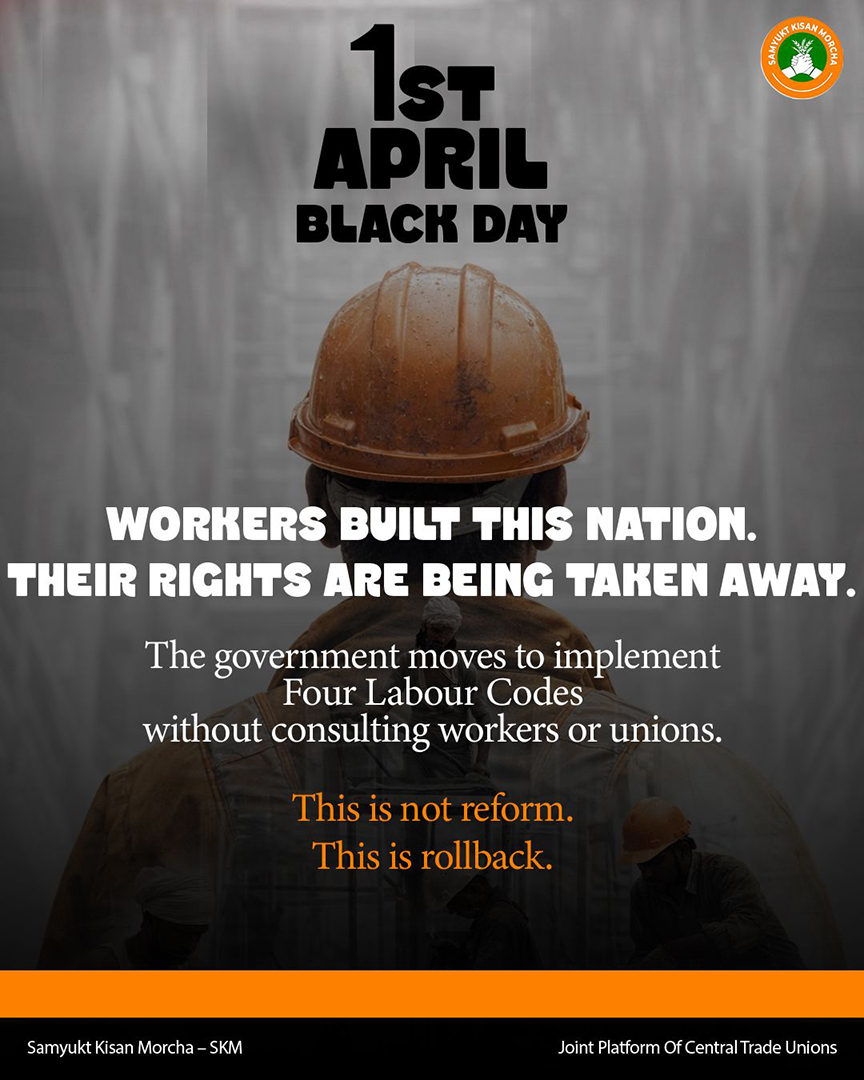
The call comes a day before the Union government’s planned notification for the implementation of central rules for the labour codes. Trade unions have reiterated their long-standing demand to scrap these anti-workers, pro-employer labour codes brought in the name of ‘labour reform’ to facilitate “Ease of Doing Business”.
The platform of CTUs accused the government of refusing any meaningful dialogue with unions despite their sustained opposition to the labour codes, including a massive nationwide general strike on February 12. The CTUs also alleged that the labour codes were drafted without consultation and bypassed established mechanisms such as the Indian Labour Conference.
The statement issued on 27th March 2026 said:
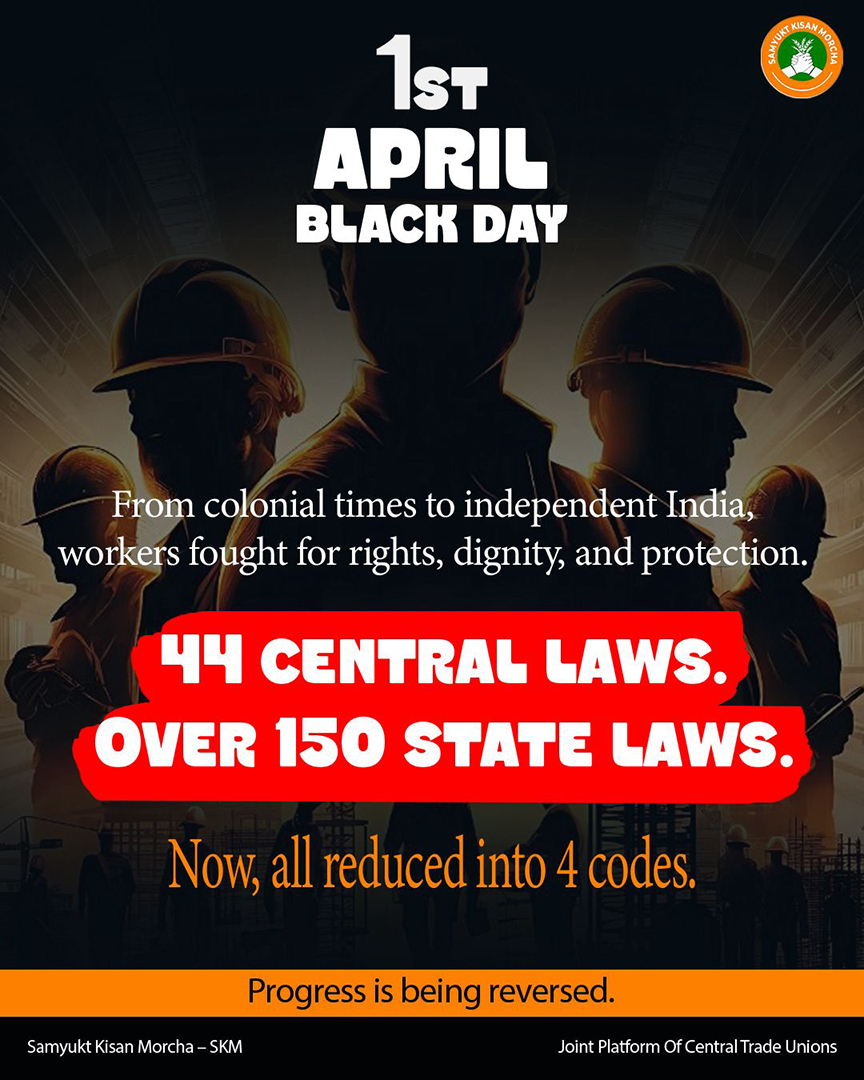
The working class fought against extreme exploitation during colonial rule and then in independent India for, workplace safety, right to organise, collective bargaining, and for right to agitate including the right to strike. It fought for decent wages and social security, for regularization of contract labour engaged in the work of perennial nature, equal pay for equal work, bonus, gratuity and pension rights etc. We could win legalization of our unionisation rights through Trade Unions Act 1926. We could win five laws through hard struggle by our predecessors during British Period, all the rest of the Central laws (which in total became 44 central laws) were achieved through independent India’s parliament and about 150 laws through the state legislations as the labour is placed in the Concurrent list of the Indian Constitution. All these were achieved through struggles in pre- and post-independence by the trade unions with support from pro-worker political forces. These were achievements of the struggle for almost 150 years.
The unions alleged that the labour codes are to push the workforce, the wealth producers of our country, once again to the exploitative conditions of the British colonial era.
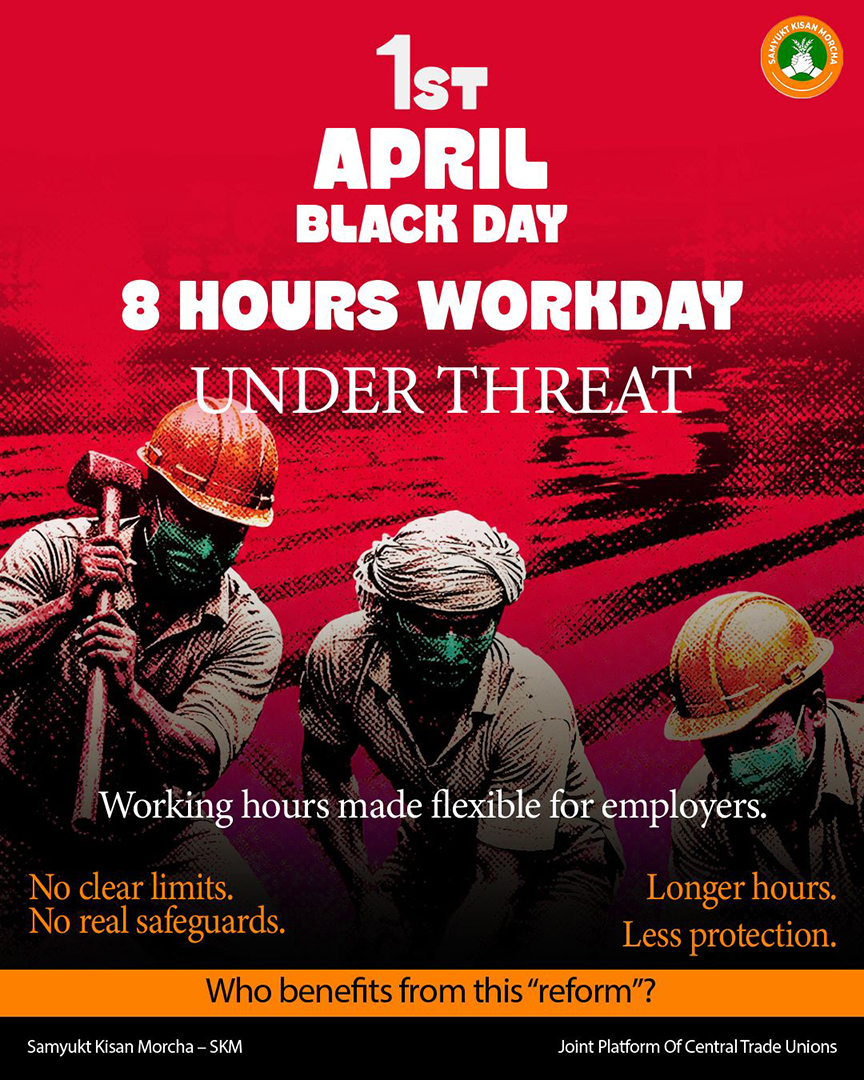
The unions argued that the new codes would dilute hard-won labour rights, including the right to organise, collective bargaining, and the right to strike. They warned that provisions related to fixed-term employment, working hours, and social security could worsen job conditions and increase precarity for workers.
The statement further claimed that the codes weaken workplace safety standards, make union registration more difficult, and reduce penalties for employers violating labour laws. It also criticised the introduction of a national floor-level minimum wage, alleging it falls below the poverty line.
Calling the reforms a rollback of gains achieved through decades of labour struggles, the unions said workers had fought for nearly 150 years—from the colonial period to independent India—to secure protections such as fair wages, social security, and legal recognition of unions.
In this background, the joint platform of Central Trade Unions and independent sectoral federations and associations announced the 1st April should be observed as a Black Day in all workplaces across the country. The platform urged trade unions across the country to organise protests in various forms, including wearing black badges, holding workplace demonstrations, staging dharnas, and conducting cycle or motorcycle rallies on the day. It also appealed to broader sections of society to support the mobilisation.
Signatories to the statement include major central trade unions such as INTUC, AITUC, HMS, CITU, AIUTUC, TUCC, SEWA, AICCTU, LPF, UTUC, along with several independent federations and associations.