
The young Kerala victim’s posthumous disclosure must become a catalyst for change—not another tragedy we mourn and forget.
Tinku Khanna
Groundxero | Oct 15, 2025
The recent death by suicide of a 26-year-old IT professional from Kerala, who alleged in a scheduled Instagram post that he was sexually abused as a child by members of the RSS (Rashtriya Swayamsevak Sangh), has triggered a major political outrage with demands for investigation into the allegations.
In the Insta post, the 26 year old IT professional Anandu Aji, a native of Thampalakad in Kottayam district in Kerala, brought allegations against more than one RSS officials of systematically making him subject to sexual abuse and exploitation from early childhood. In a heart-wrenching post on his Instagram account, he wrote “ I’m committing suicide not because of any girl, love affair, debt, or anything like that. I’m doing this because of my anxiety and depressive episodes. Also, because of my medicines, I can’t concentrate on my work.” The post went live on Thursday (October 9), the same day when Anandu’s body was found hanging in a lodge room in Thampanoor.
Anandu, who joined the RSS as a child, alleged that the organisation was responsible for his mental illnesses, which was caused by repeated sexual and physical abuse he suffered in his childhood.
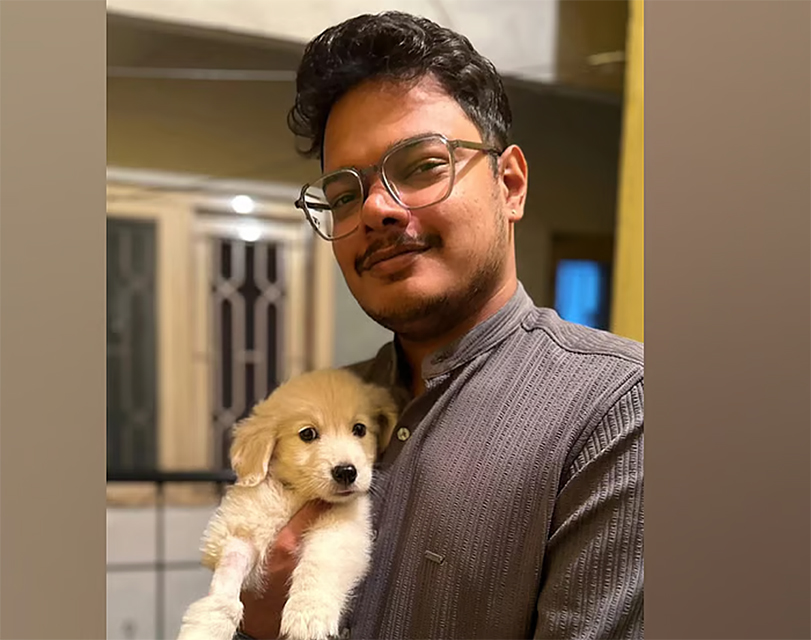
Photo: Instagram/anantwo_aji
“I’m not angry with anyone, except one person and an organisation. The organisation is RSS (Rashtriya Swayamsevak Sangh), which my father (a very good person) made me join. That’s where I’ve suffered lifelong trauma, from the organisation and that person,” he added.
Describing himself as a “victim” of rape, Anandu detailed the abuse he was subjected to: “I was continuously sexually abused by a person when I was a child. I’ve also been subjected to sexual abuse by several members of the RSS. I don’t know who they were. But I will expose the person who abused me when I was just 3-4 years old.”
“He constantly abused me, has done a lot of things to my body. I was like a sex tool for him. The sad part is, I only realised that this abuse was the cause of my mental illness when I was diagnosed with OCD. Until then, I believed it hadn’t caused me any problems. He was like a brother and was considered like a relative by my family,” Anandu said.
Anandu also alleged that he was subjected to severe sexual and physical abuse at RSS camps by the members of the organisation. “I have also been sexually abused at RSS camps. I don’t remember their names, but I have been abused at the ITC and OTC camps. I was also subjected to physical abuse. They used to beat me with the batons without any reason,” he said.
Describing RSS as a den of severe abuse and hatred, Anandu warned against forming close bonds with the members of the organisation.
“There is no other organisation that I absolutely despise. I know it well because I’ve worked with them for so many years. Never befriend an RSS member. Not only friend, even if it is your family, your father, brother or son, cut them off your life. They carry so much venom. They are the real abusers,” he alleged.
Anandu further alleged that he knew several other children who had similar experiences at RSS camps. “What I’ve described is just what they have done to me. They have been sexually and physically abusing a lot of children. I’m able to openly say this because I left the organisation. I know nobody would believe me as I don’t have any proofs. But my life itself is my proof. I’m doing this as I don’t want another child to go through what I suffered,” he said.
Anandu alleged that he was abused by a person named “NM,” an active member of the RSS and BJP, who was also a neighbour and someone he trusted like a brother. Though he only mentioned the name of the accused as ‘NM’ in the post, a purported video post has emerged in which he named the accused as Nidheesh Muralidharan.
This heartbreaking case illuminates the dangerous intersections between authoritarian organizational structures, toxic masculinity, and the vulnerability of children.
The RSS, a paramilitary volunteer organization rooted in Hindu nationalist ideology, embodies many characteristics of fascist movements: rigid hierarchies, militaristic discipline, cult-like loyalty, and the cultivation of aggressive masculinity as political virtue.
The RSS mandates that its full-time workers, known as Pracharaks, commit to lifelong celibacy, austere lifestyle and organizational service. This celibacy requirement is rooted in a deeply troubling understanding of gender. The underlying ideology equates superior masculinity with the suppression of sexuality, the redirection of sexual impulses toward nationalist causes, and the preservation of rigid gender hierarchies.
Fascist ideologies historically rely on rigid hierarchies and the cultivation of aggressive, domineering masculinity as a political tool. This toxic form of masculinity—which equates manhood with control, suppression of emotion, and dominance over others—can create environments where abuse flourishes.
Such an ideology inevitably fosters a toxic form of masculinity within an organization that operates without any democratic accountability and harbours deeply misogynistic attitudes—an environment where victims of abuse find no avenue to be heard.
Indeed, within hours of these allegations becoming public, the RSS launched efforts to discredit the complainant, a victim, who paid the ultimate price by ending his own life.
The connection to male supremacist ideology and child abuse has distinct features, all of which are apparent in Anandu’s case:
Power and control: Both fascist systems and toxic masculinity center on establishing ‘dominance’ hierarchies. This creates conditions where vulnerable individuals, especially children, become targets for exploitation by those seeking to assert power.
Silence and complicity: Authoritarian cultures demand loyalty and discourage questioning authority figures. This same dynamic enables abuse—victims fear speaking out, and communities may protect perpetrators to maintain social order.
Devaluation of empathy: Fascist ideology and toxic masculinity both dismiss compassion as weakness. This erosion of empathy removes crucial protections for children and normalizes cruelty.
This young man’s death reminds us that childhood sexual abuse leaves wounds that can last a lifetime, contributing to anxiety, depression, and profound suffering that medications alone cannot heal.
Because of rigid stereotypes around masculinity, many men and boys suffer in silence—unseen, unsupported, and disbelieved. Cultural values like invulnerability and denial of pain are seen as essential qualities, making it nearly impossible for boys to admit vulnerability or victimization.
Male victims have difficulty disclosing their abuse due to traditional gender norms and associated fears. Boys are socialized to be “strong,” “tough,” and “in control”— admitting to abuse contradicts everything they’ve been taught about being male.
Research regarding child sexual abuse indicates significant gender differences in disclosure rates, with males less likely to disclose their abuse compared to females. This disparity partly stems from the fact that most sexual abuse resources, awareness campaigns, and support services have historically focused on female victims, leaving boys with fewer visible pathways to help.
Boys grow up in environments, where discussing sexual abuse—especially abuse by men—is taboo. Schools, families, and communities rarely create explicit safe spaces where boys feel they can disclose such experiences. The absence of open conversations about male victimization reinforces the isolation survivors feel.
Preventing tragedies like the Kerala case requires systemic transformation at multiple levels. We must demand immediate institutional accountability through independent investigations, mandatory child protection policies with external oversight, and an end to organizational opacity—all youth organizations must maintain transparent records and clear reporting mechanisms.
Creating safe spaces for boys is critical: We need gender-inclusive support services that explicitly welcome male survivors, trained professionals who recognize male victimization, and normalized conversations in schools and families that acknowledge boys as potential victims.
We must redefine masculinity itself, challenging “man up” culture and promoting emotional intelligence, empathy, and respect over domination. As role models and mentors, we must provide boys with an unwavering sensation of being known and loved. This requires comprehensive child safety education starting in early childhood, teaching body autonomy and breaking the silence around male victimization.
Legal reforms must strengthen mandatory reporting laws, extend statutes of limitations, and ensure victim compensation and mental health support. Most fundamentally, we need cultural transformation: believing survivors regardless of gender, holding authority figures accountable, and building communities where protecting children takes absolute precedence over protecting institutions.
The Kerala victim’s posthumous disclosure must become a catalyst for change—not another tragedy we mourn and forget.
_______________
Tinku Khanna is a social activist, and she is associated with Groundxero.