
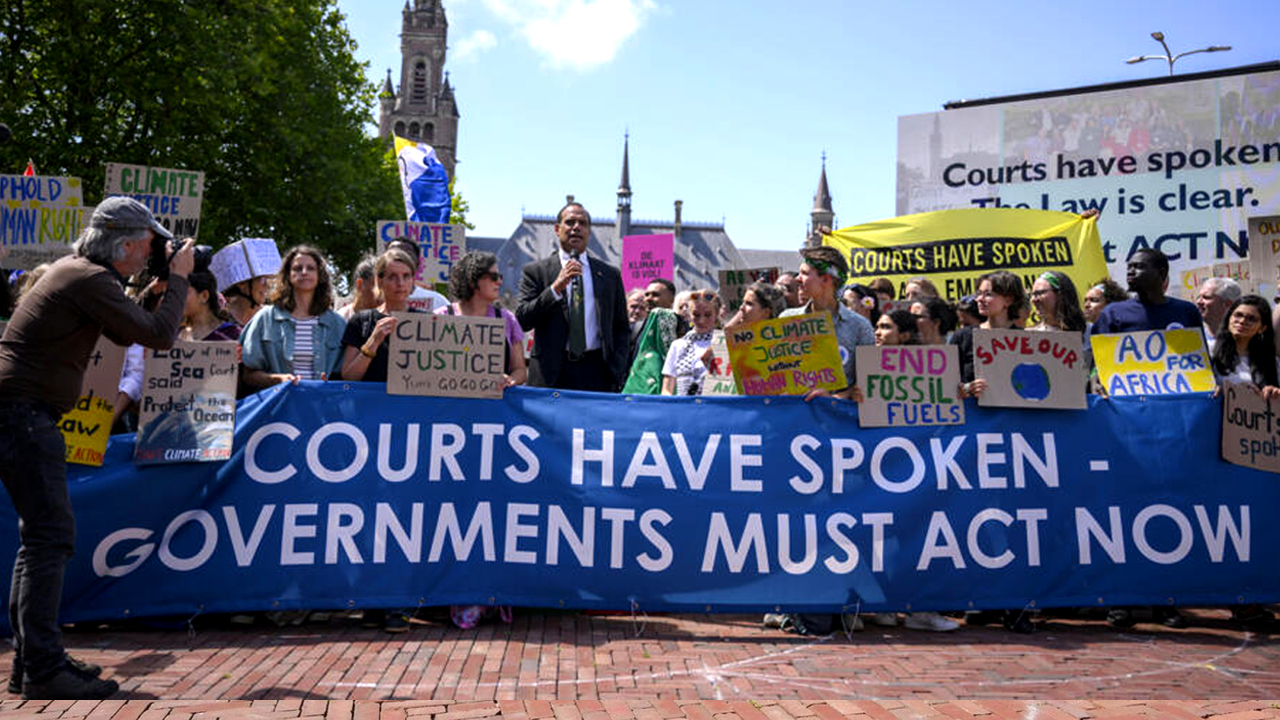
While the ICJ’s Advisory is non-binding, it carries legal and political weight and future climate cases would be unable to ignore it. The Advisory can become a powerful tool for holding rich polluting countries to account for their obligations, especially in protecting the world’s most marginalised people and future generations of humanity.
Groundxero | July 23, 2025
The International Court of Justice (ICJ), today, delivered a landmark Advisory Opinion on the obligations of States to protect the climate system. The Court opined that States have a legal obligation to limit global warming to 1.5°C, marking a landmark moment in international environmental law and climate justice. Particularly significant is the Court’s recognition of nature and the need for a human rights-based approach to limiting climate change.
The Court held that the right to a clean, healthy and sustainable environment is fundamental for all other human rights, and told wealthy countries must comply with their international commitments to curb pollution or risk having to pay compensation to nations hard hit by climate change.
ICJ’s historic opinion follows two weeks of hearings last December when the judges at the ICJ were asked by the U.N. General Assembly to consider two questions:
- What are countries’ obligations under international law to protect the climate from greenhouse gas emissions?
- What are the legal consequences for countries that harm the climate system?
The case was led by the Pacific island nation of Vanuatu and backed by more than 130 countries. Developing nations and small island states at greatest risk from rising sea levels had sought clarification from the court after the failure so far of the 2015 Paris Agreement to curb the growth of global greenhouse gas emissions. Last year, the UN warned in a report that current climate policies will result in global warming of more than 3C (5.4F) above preindustrial levels by 2100.
Delivering the landmark opinion, ICJ Judge Yuji Iwasawa said greenhouse emissions are “unequivocally caused by human activities” and “States must cooperate to achieve concrete emission reduction targets.” Judge Yuji Iwasawa added, failure by countries to comply with the “stringent obligations” placed on them by climate treaties was a breach of international law. He called the climate crisis “an existential problem of planetary proportions that imperils all forms of life and the very health of our planet.”
The court said countries were also responsible for the actions of companies under their jurisdiction or control. Failure to rein in fossil fuel production and subsidies could result in “full reparations to injured states in the form of restitution, compensation and satisfaction provided that the general conditions of the law of state responsibility are met.”
Significantly, the ICJ said industrialised nations have a legal obligation to take the lead in combating climate change, due to their greater historical responsibility for emissions. While, all members of the United Nations are party to the court, including major emitters like the United States and China, the impact of the advisory will be limited by the fact that the United States, the world’s second biggest current emitter behind China, has moved under President Donald Trump to undo all climate regulations.
The Court’s opinion is being hailed by small island states and environmental groups worldwide as a legal stepping stone to make big polluters accountable to address the “urgent and existential threat” of climate change.
Danilo Garrido, Legal Counsel at Greenpeace International, said:
“This is the start of a new era of climate accountability at a global level. The ICJ advisory opinion marks a turning point for climate justice, as it has clarified, once and for all, the international climate obligations of States, and most importantly, the consequences for breaches of these obligations. This will open the door for new cases, and hopefully bring justice to those, who despite having contributed the least to climate change, are already suffering its most severe consequences. The message of the Court is clear: the production, consumption and granting of licenses and subsidies for fossil fuels could be breaches of International Law. Polluters must stop emitting and must pay for the harms they have caused.”
Flora Vano, Vanuatu Women-Led Community Leader, said:
“Tonight I’ll sleep easier. For the first time, it feels like Justice is not just a dream but a direction. The ICJ has recognised what we have lived through – our suffering, our resilience and our right to our future. This is a victory not just for us but for every frontline community fighting to be heard. Now, the world must act.”
Mandi Mudarikwa, Head of Strategic Litigation, Amnesty International, said:
“Today’s opinion is a landmark moment for climate justice and accountability. The ICJ made clear that the full enjoyment of human rights cannot be ensured without protection of the climate system and other parts of the environment.”
While the World Court’s Advisory is non-binding, it carries legal and political weight and future climate cases would be unable to ignore it. The Advisory can become a powerful tool for holding rich polluting countries to account for their obligations, especially in protecting the world’s most marginalised people and future generations of humanity.