
Allegations of the bodies of hundreds of women who were raped and murdered over years being buried in the popular pilgrimage town of Dharmasthala in Karnataka have shocked and horrified people. A former sanitation worker’s (on the payroll of the Dharmasthala temple administration from 1995 to 2014) complaint and testimony in court has blown the lid off what victim families and activists have long tried to expose: a series of chilling crimes buried in silence.
Groundxero | July 21, 2025
The Dharmasthala Mass-Burial Case is not merely another scandal—it is an unprecedented human rights horror story, with alleged mass murder and systemic erasure of victims in a sacred temple town. Between 1995 and 2014, a sanitation worker formerly employed with the Dharmasthala Manjunatha Temple in Dakshina Kannada district of Karnataka, claims he was forced to bury and burn “hundreds” of bodies—many of them women and girls showing clear signs of sexual assault—under threat of death from influential figures tied to temple administration. The case represents one of the most serious institutional cover-ups of such a mass crime in India. In fact, if proven, these allegations could rival some of the gravest mass crimes in recent history globally.
THE GRUESOME DETAIL: FIRST HAND TESTIMONY
The sanitation worker—employed from 1995 to December 2014—worked near the Netravati River and began discovering female bodies, often without clothing, and with signs of rape, strangulation, burns, or acid damage.
Allegedly, some faces were burnt, clothes destroyed to erase identification or forensic evidence. He was repeatedly threatened — “We will cut you into pieces,” “Your body will be buried like the others,” by those he has accused, who had also warned that his predecessor who refused to comply had met with such a fate.
On revisiting identified burial sites, he exhumed skeletal remains, including a skull, and this evidence was submitted to authorities along with identity documents — Aadhaar, voter ID, and old temple ID.
In his statement, he clearly identifies the culprits as people associated with the temple management, his former employer. “The people I have accused in this complaint are associated with the administration of the Dharmasthala Temple and its staff. They were the ones who instructed me to bury the corpses and subjected me to constant death threats and violence.” In his statement, he offered to name perpetrators and lead investigators to burial sites, but only after receiving legal protection under the Witness Protection Scheme, 2018. (See links to copy of the complaint as well as news reports on the same, below)
LEGAL & PROCEDURAL CONTEXT
The sanitation worker in a complaint to the police dated June 3, accompanied by photo evidence of skeletal remains, wrote “Many of the female bodies were without clothing or underwear. Some bore clear signs of sexual assault and violence: wounds or strangulation that indicated violence… More than 100 women, including students, were raped, murdered and buried… .” He claimed that he was forced to dispose of over a hundred murder victims, many of them women who, he alleged, were sexually assaulted, between 1998 and 2014.
Following his formal criminal complaint an FIR was lodged on July 4, at Dharmasthala Police Station. Skeleton remains and photographs were taken into police custody, and forensic teams were consulted, pending judicial approval for exhumations. Authorities also granted him witness protection through the state scheme, recognizing the threats to his life and his cooperation.
A week later, on July 11, the sanitary worker, whose identity has been withheld due to threats to his life, appeared before the Belthangady Principal Civil Judge/JMFC to testify about the allegations he made in his letter, and record his statement. He was masked, his body wrapped from head to toe, and lawyers were denied presence in the court.
Constituted of a Special Investigation Team (SIT)
Amid growing outrage and national attention, Karnataka government has constituted a Special Investigation Team (SIT) to probe allegations concerning the alleged burial of hundreds of bodies in Dharmasthala over the past two decades. The decision was taken after Karnataka State Commission for Women, in a letter dated July 14, had urged chief minister Siddaramaiah to form a SIT, headed by senior police officers, “for a comprehensive and impartial investigation into cases of missing women and female students, unnatural death murder cases, and rape cases in the Dharmasthala area over the last 20 years.” The commission cited media reports from July 12, which included the statement of a family whose daughter went missing and a court deposition by the sanitary worker.
SOME BACKGROUND AND RECENT DEVELOPMENTS
The 800-year old Sri Dharmasthala Manjunatha Temple is a popular place of worship which attracts thousands of devotees each day from within Karnataka as well as Kerala and other parts of the country. The temple is managed by the Heggade family, whose scion Veerendra Heggade is the 21st Dharmadhikari (hereditary administrator) of Dharmasthala, since 1968.
A Padma Bhushan and Padma Vibhushan awardee, Heggade is presently a BJP-nominated Rajya Sabha MP. His family is highly influential in the entire region and beyond, controlling a vast network of commercial, educational and non-profit organisations including the Shri Dharmasthala Manjunatheshwara Educational (SDME) Society, Ujire, which manages 55 plus educational institutions across Karnataka, spanning from kindergarten to doctoral-level programs.
In 2012, the Heggade family’s name figured in a controversy surrounding the murder of Sowjanya, a 17 year old girl from Dharmasthala. Her body was found in a forested area the next day, showing signs of rape and severe injury. The case was transferred to the CBI under public pressure and a person was arrested. However, in 2023, he was acquitted citing lack of evidence.
Sowjanya’s family has maintained that the arrested person was innocent and the real culprits were those connected with the temple administration, but have not been heard by the authorities. Justice for Sowjanya — a campaign by activists — has for over a decade, held mass rallies in several venues attended by thousands, but which the authorities have turned a blind eye to.
Systematic Censorship
In early 2025, a Kannada YouTuber, Sameer MD, released a 38-minute video exposing the case and alleging broader connections with the Heggade family. The video gained 10–18 million views before legal notices were served to the creator, accusing him of misinformation and hurting religious sentiments. However, thanks to the video, the issue gained widespread attention on social media, with several users posting about multiple rape and murder cases in Dharmasthala, allegedly covered up with police complicity and threats by the powerful family in control of the temple.
After the sanitation worker came forward in July this month with his shocking testimony, which identifies people associated with the temple administration as the culprits behind these rapes and murders, Sameer did another video which similarly went viral, and was taken down following court orders as in the earlier case, and Sameer booked under various sections. A report by News Minute says that more than 2000 videos connected to the issue were taken down using court order.
Alongside this systematic censorship campaign, there have also been attempts to deny the facts and portray recent developments as a conspiracy to tarnish the reputation of the temple and its management. Shrinivas Rao, vice‑president of the local Dharmasthala Gram Panchayat, refuted the claims in a press conference, saying the panchayat has complete records of all unclaimed bodies since the late 1980s, and any unclaimed bodies were buried through an official, documented process—contrary to the sanitary worker’s account. C.T. Ravi, a former BJP National General Secretary and a present Member of Legislative Council (MLC), claimed that “Dharmasthala is being targeted to weaken its strength” and suggested that efforts to defame the institution are part of a broader conspiracy.
It is worth noting that local officials, police, the temple management as well as their supporters do not deny the fact that a high number of suspicious deaths have occurred in the area – which according to news reports is estimated in the hundreds. However, they are quick to deny any institutional connection.
Increasingly, more and more families of victims are speaking out to the media. One of them, Sujatha Bhat, a former CBI employee, stepped forward this week to file a police complaint seeking to recover the skeletal remains of her daughter Ananya Bhat, more than two decades after she went missing under mysterious circumstances at the Dharmasthala temple. Ananya, then a first-year MBBS student at Kasturba Medical College in nearby Manipal, had travelled to Dharmasthala with classmates when she disappeared. (link below).
Ploy to Derail the Current Investigation
The Karnataka police have given many excuses for not launching a full-fledged probe, including questioning the whistleblower’s intent, the need for narco and brain mapping tests. Even the skeletal remains produced by the former sanitation worker in court have not been sent to a forensic sciences laboratory (FSL) and are currently being held at a hospital for “medical opinion”, reported The Print.
Meanwhile, lawyers representing the worker in the mass grave case handed over a memorandum to CM Siddaramaiah, raising serious concerns about police collusion, information leaks, and pressure tactics allegedly being deployed to derail the investigation.
Despite protocols, when the whistleblower escorted his lawyers and media-persons to an alleged burial site on 16th July, 2025:
- Police failed to arrive despite announcing that they will be investigating the site that day. (link below)
- The site was not cordoned off, leaving it exposed.
- No protection was provided—the witness and lawyers waited in their car for nearly an hour in an extremely vulnerable state.
- Only a handful of journalists were present; no senior officials or Forensics team attempted to secure the location.
- The police later told the media that the witness was “missing” – a claim immediately refuted by the lawyers of the witness (link below)
This is not negligence—it is calculated inaction, placing the lives of the whistleblower, his family, lawyers, the family members of other victims who have since come forward, in grave danger. The key witness in this case is a Dalit man, who was forced to bury the bodies after the perpetrators threatened to kill him along with his family. He fled the town and went into hiding along with his family after a young woman belonging to his own family was abused by the perpetrators.
If the sanitation worker’s claims are validated, this will rank among India’s most profound abuses of institutional power—where religion, caste, and authority were weaponized to conceal mass murder.
The whistleblower and the families of other victims need broad-based support—from media, human right organizations, civil society, feminist groups to caste justice collectives and student unions.
Meanwhile, CPI MP P. Sandosh Kumar has written to the union home minister Amit Shah demanding a NIA probe into pattern of crimes and alleged mass burials in Dharmasthala, Karnataka. But, the state administration as well as the government of India have completely failed in acting on this most heinous of mass crimes to ever come to public attention in Karnataka’s and India’s history.
This gruesome institutional horror crime cannot be allowed to fade away from public memory and die gradually. The national media should deploy investigative teams, forensic journalists, and cover the exhumation and legal proceedings in real time. Media attention is critical for witness protection, evidence preservation, and public visibility. Civil society and human rights organizations like PUCL and Amnesty India must consistently maintain pressure on national and state authorities to properly conduct the investigations and take credible action.
KEY SOURCES
These sources provide critical coverage, documentation, and testimony central to understanding the gravity of the Dharmasthala mass burial allegations.
What is in the complaint submitted to the SP regarding criminal acts in Dharmasthala village?
Bhaskar English – “Ex-sanitation worker alleges years of secretly burying murder victims in Dharmasthala, seeks legal protection amid chilling revelations”
Whistleblower turns up to show burial sites in Dharmasthala, returns without meeting cops
Dharmasthala mass burial case: Police say whistleblower ‘missing’; lawyers say no
Dharmasthala burials: Mother seeks justice for daughter who allegedly went missing 22 years ago
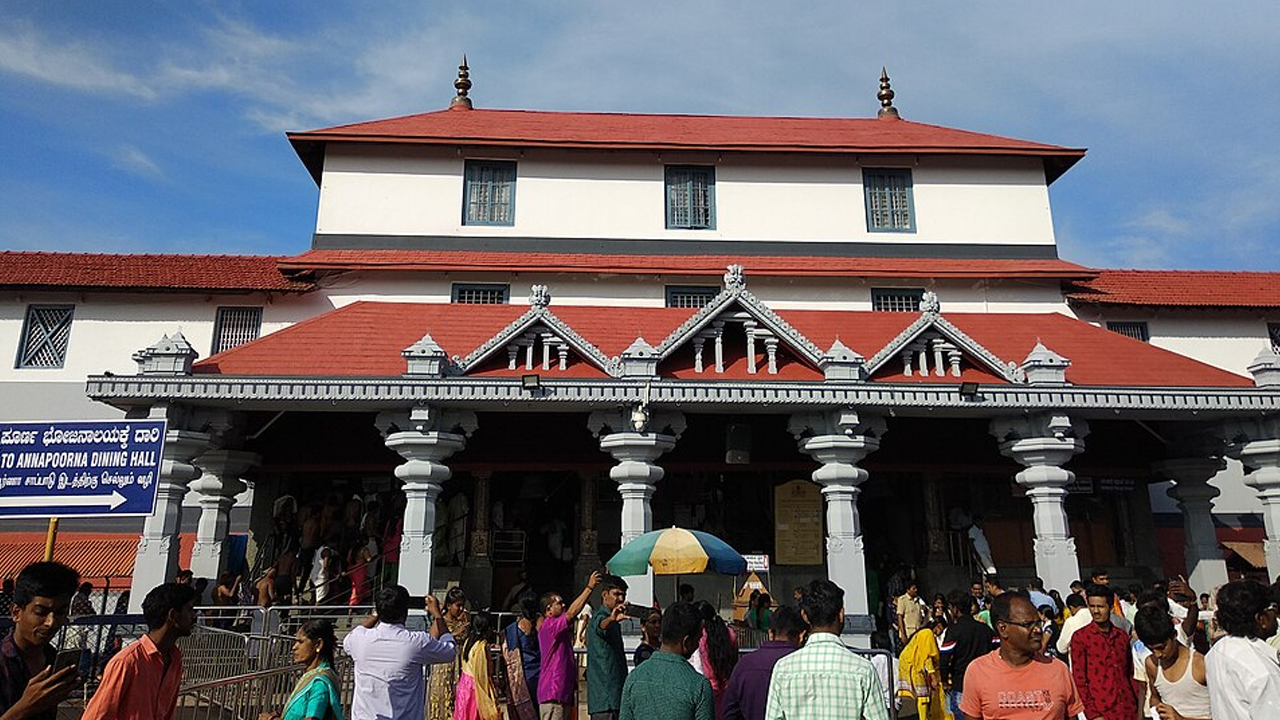
Feature Image: Dharmasthala Temple
Source: https://commons.wikimedia.org/wiki/ File