
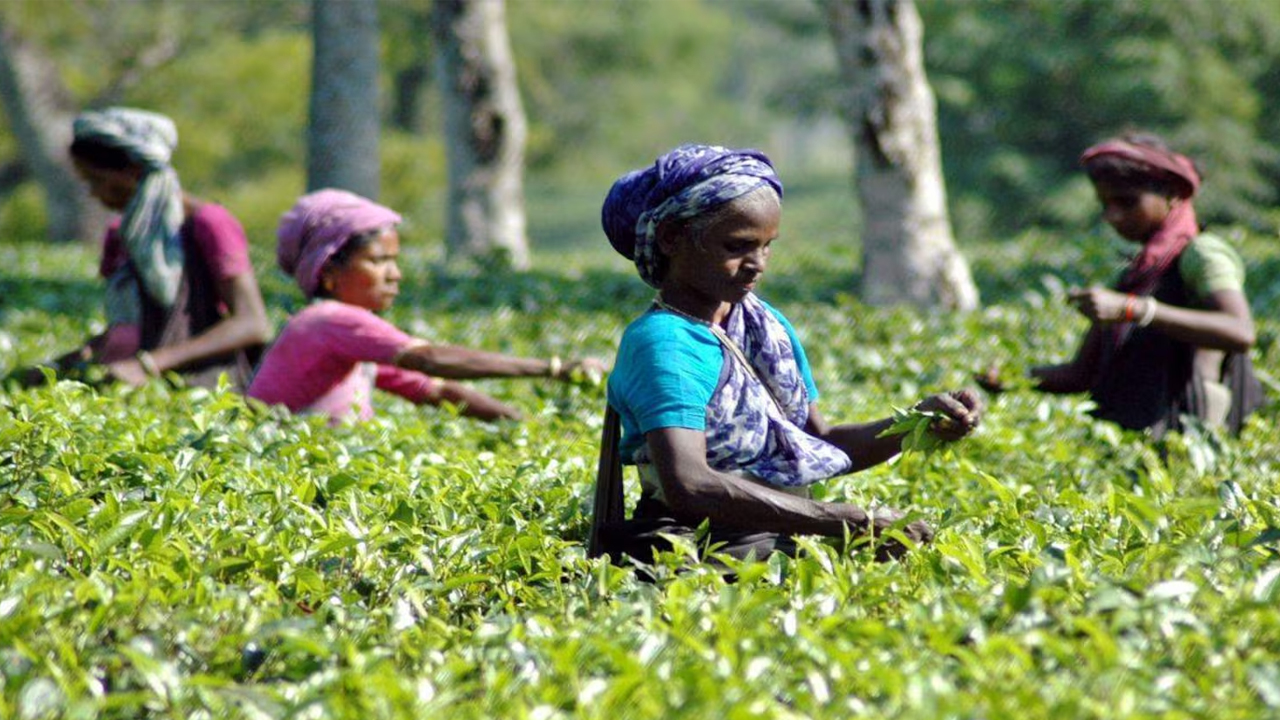
Six Merico-Sammelan managers are in custody, but the group’s directors and employers remain unarrested. As workers continue to wait for bonus and other outstanding dues, PBCMS demands arrest of owners, recovery of payments, Rs 5,000 relief for workers denied bonus, and protection of abandoned garden assets.
20 October 2026 | Groundxero Desk
Even after workers took to the streets, blocked highways and forced the authorities to act, thousands of tea garden workers in the Dooars in North Bengal are still waiting for the bonus they were promised before Durga Puja. In a particularly brazen display of political appropriation, the distribution of bonus money in some gardens has been turned into a BJP publicity event, presenting workers’ bonus payment as a favour bestowed by political leaders.
Meanwhile, six Merico-Sammelan managers have been arrested and two other managers are reportedly absconding, following cases filed by the Paschim Banga Cha Majdur Samiti (PBCMS), but the directors and employers evade accountability and remain untouched. The arrest of managers has failed to resolve the crisis confronting thousands of workers across tea estates. Five of the arrested managers were due to appear before the Alipurduar court on Tuesday, 20 October, after spending four days in police custody. The question now is whether the police and administration will pursue the cases against the garden owners allegedly responsible for the non-payment of workers’ dues, or whether the action will stop with the managers.
The latest developments follow weeks of protests over the failure to pay the promised 20% annual bonus by the government’s 5 October deadline. As documented in Groundxero’s earlier report, “No Bonus, Unpaid Wages, Missing PF Dues: Thousands of Tea Workers Take to the Streets in North Bengal” (16 October), the dispute is part of a wider crisis involving unpaid wages, outstanding leave allowances, provident fund contributions allegedly not deposited since June 2023, and gratuity dues owed to retired workers.
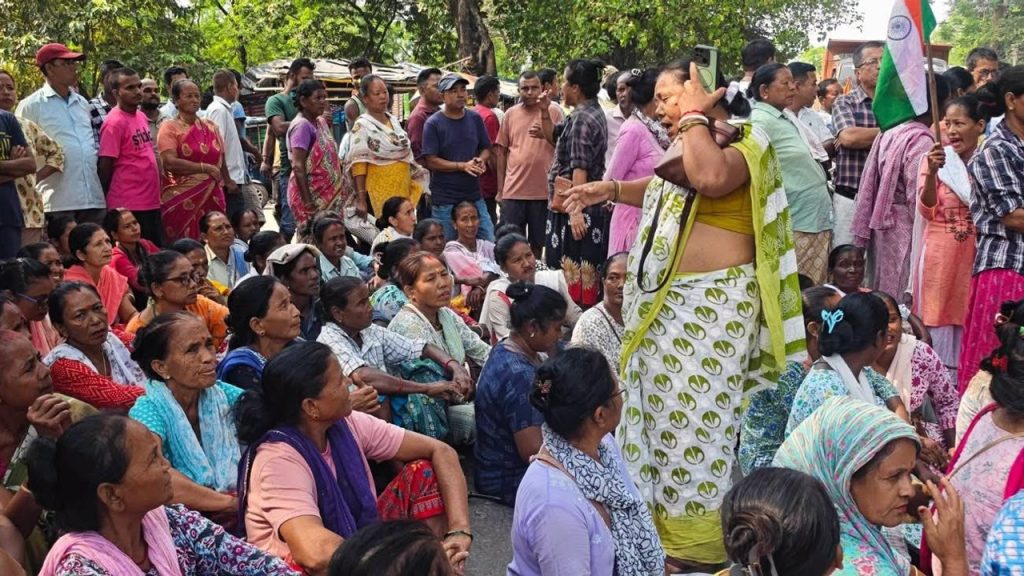
Tea workers block highway over withhold bonus
The management’s repeated assurances have not translated into payment. Workers have had to organise demonstrations, march to police stations and block highways to demand money earned through their labour. The arrests mark a development in the struggle, but they do not settle the outstanding dues or establish accountability across the ownership and management of the gardens.
PBCMS has demanded that the authorities pursue all cases filed by the union and the Labour Department, recover workers’ outstanding payments and ensure accountability through due process. The union has also called for effective action to secure the arrest of the remaining accused.
Bonus is a workers’ right, not BJP’s charity
The struggle has also exposed how a workers’ entitlement can be appropriated for political publicity.
On 17 October, a 10% bonus (half of the promised of 20%) was distributed in Dumchipara, Hantapara, Gairganda, Tulsipara and Birpara gardens. Workers at Bagrakote, Kilcott and Nageisuree were still waiting for bonus payment.
At Samsing tea garden, the distribution of bonus became a ruling party spectacle, with three BJP ministers, two MLAs and an MP present. The MP was seen counting and handing out money amid prominently displayed BJP flags.
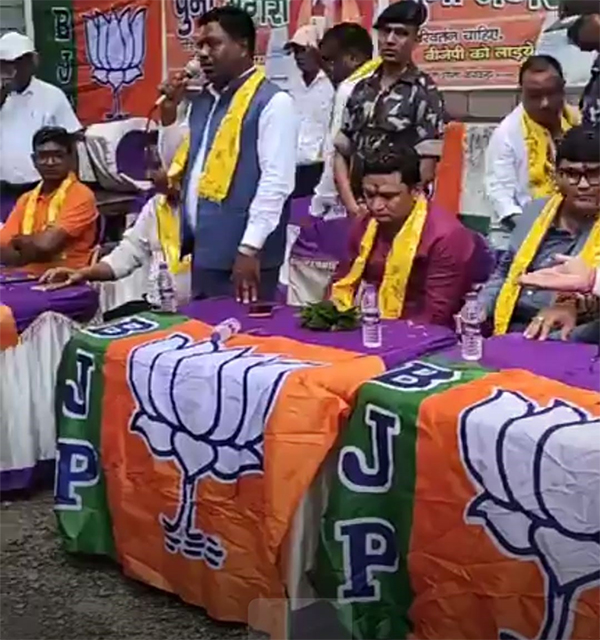
BJP leaders distributing bonus to workers
The political message was unmistakable: a payment due to workers was being projected as a favour delivered by the ruling party. But bonus is not charity, nor is it a favour from ministers or MPs or MLAs. It is an entitlement arising from workers’ labour, and its payment should not depend on political patronage or turned into publicity event of a political party.
The irony is especially sharp because the BJP government, like the previous Trinamool Congress government, had announced a 20% bonus and set a deadline of October 4-5 for payment. Yet the failure to enforce that deadline has left workers to take to streets to protests to secure their own earnings. The government has failed to effectively enforce its own assurance and take action against employers who deliberately refused to pay the workers their dues.
Fresh promises, more unanswered questions
Puna Bhengra, BJP MLA from Metelli, has announced that a new owner would pay a 20% bonus in Nageisuree, Kilcott, Bamandanga-Tundu and Samsing. This was followed by assurances of a tripartite meeting and reopening of the gardens after Durga Puja.
On 18 October, the purported new owner and BJP representatives visited Kilcott and Nageisuree, examined the liabilities and left. Workers who had waited anxiously for three days for their bonus were once again left without clear answers. Who is the proposed new owner? When will the promised bonus be paid? What arrangements have been made to settle their outstanding wages and other liabilities? And when will the gardens reopen?
These are not incidental questions. Any transfer of ownership or reopening plan must address the liabilities to workers accumulated over years. A change of owner cannot become an excuse to evade responsibility for workers’ unpaid dues.
For workers who have endured repeated assurances and missed deadlines, another announcement of a new management offers little security unless it is backed by a definite payment schedule, transparent arrangements for settling liabilities and enforceable commitments.
Rs 5,000 Puja assistance to workers denied bonus
The West Bengal government has announced Rs 5,000 as special Puja assistance for eligible workers of closed tea gardens. PBCMS is demanding that the assistance also be extended to Merico-Sammelan workers who have not received their promised 20% bonus. The distinction between a formally operational garden and a closed one does little to help workers whose employers have failed to pay them.
The union argues that workers deprived of their promised bonus should not be excluded from relief simply because their gardens have not been formally declared closed. Workers of operational gardens too need to buy food or meet household expenses.The government must extend the Rs 5,000 payment to eligible workers who have received no bonus and pursue recovery of their outstanding dues from the employers under applicable law.
Such assistance, however, cannot substitute for payment of the full bonus, and outstanding PF and gratuity dues.
Women union leaders face pressure; garden assets at risk
PBCMS alleges that women leaders in Dumchipara and Gairganda have faced pressure to withdraw cases. Such attempts undermine workers’ ability to seek justice and hold employers accountable. The police must investigate these allegations and ensure that workers and union representatives can pursue their complaints without intimidation.
The struggle has also raised concerns about deteriorating condition of the tea gardens. The union has also warned that timber and other assets belonging to the gardens are at risk of theft. It has demanded police patrols and immediate steps to protect the property.
The condition of the gardens is inseparable from the question of workers’ livelihoods. Factories have been shut; garden operations have deteriorated and workers face uncertainty about the future of their employment. Allowing the assets to be stripped or the gardens to decay would deepen the crisis and make any future reopening more difficult.
PBCMS has therefore called on the government to protect garden property, support workers in safeguarding the assets and, in the interim, run the gardens itself or support workers-led collectives to operate them.
The struggle to end with payment of dues, not empty promises
PBCMS has placed four principal demands before the authorities:
- Pursue all cases filed by the union and the Labour Department, recover workers’ dues and ensure accountability through due process.
- Extend the ₹5,000 special Puja assistance to Merico-Sammelan workers who have not received their full bonus.
- Protect garden assets and support workers in safeguarding them; in the interim, ensure that the gardens are run by the government or through supported women-led collectives.
- Identify responsible new employers who will settle outstanding liabilities, reopen the gardens and secure workers’ livelihoods.
The demands go to the heart of the crisis in North Bengal’s tea industry. Workers whose labour sustains the plantations are being made to fight for wages, bonus and social security payments that should not require weeks of agitation to obtain. Employers, meanwhile, have been able to delay payment and avoid accountability despite repeated assurances and official interventions.
The arrests of managers cannot be the end of the matter. The authorities must establish responsibility, hold the owners accountable, pursue the cases, recover the dues and protect workers from intimidation.
Bonus is not a dole. Workers’ rights cannot be reduced to party publicity, empty promises or pressure to withdraw cases. The test of the government’s response will not be the number of meetings held, and assurances issued. It will be whether workers receive their full dues, employers are held accountable, and the gardens and livelihoods dependent on them are secured.
For the workers of the Dooars, the struggle is not for political generosity. It is for the wages and rights they have earned with their labour.