
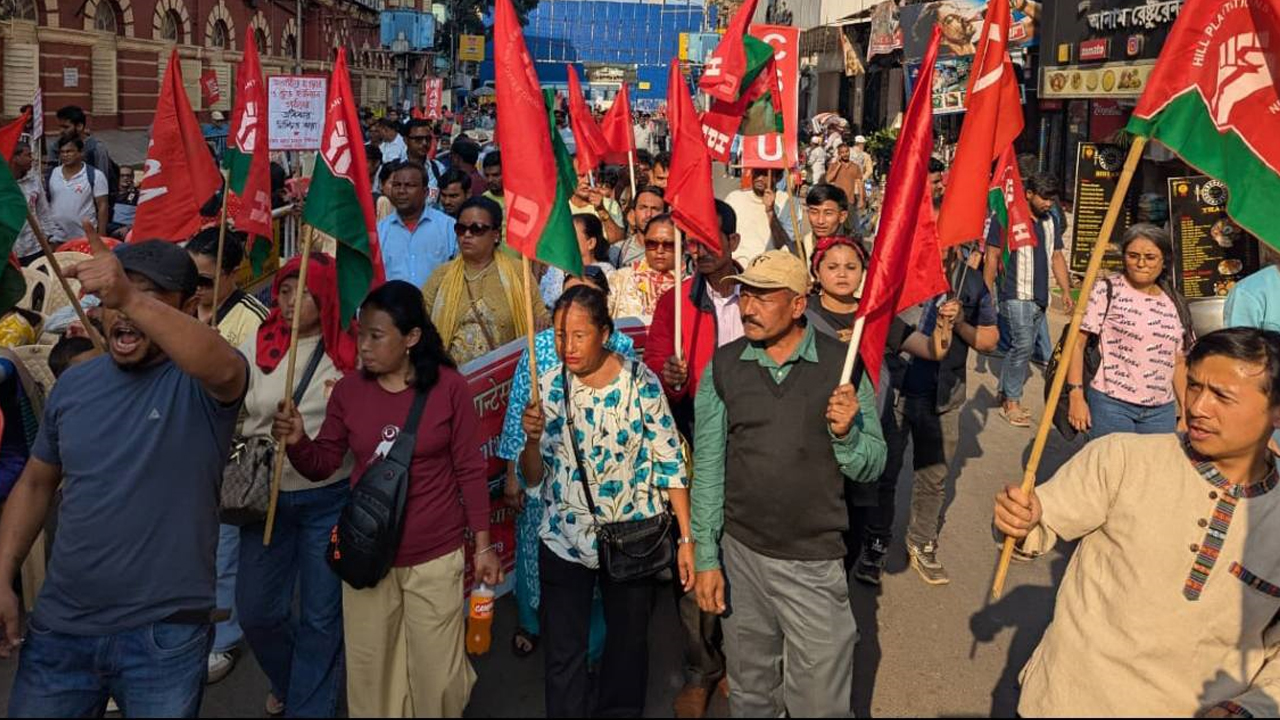
The message from All India Workers’ Rights Day was clear: far from silencing opposition, the Modi government’s labour reforms have galvanised a new phase of working-class resistance that is likely to deepen in the period ahead.
Groundxero | December 14, 2025
Thousands of workers across India marked All India Workers’ Rights Day on Sunday, 14 December, with coordinated protests against the implementation of the four pro-corporate Labour Codes, sharpening resistance to what trade unions describe as one of the most far-reaching assault on labour rights in independent India. The nationwide mobilisations were organised on the call of Mazdoor Adhikar Sangharsh Abhiyan (MASA), a coordination of 14 workers’ organisations, unions and federations across India.
Demonstrations and rallies were reported from cities including Delhi, Kolkata, Chennai, Patna, Lucknow, Bareilly, Bhubaneswar, Kurukshetra, Ludhiana, Haridwar, Rudrapur, Davangere and Gulbarga, cutting across states such as Delhi, Haryana, Uttar Pradesh, Uttarakhand, Punjab, Bihar, West Bengal, Odisha, Tamil Nadu and Karnataka. Organisers said the scale and geographic spread of the protests reflected growing anger among workers confronting job losses, stagnant wages, longer working hours and shrinking legal protections.
At Jantar Mantar in New Delhi, more than a thousand workers gathered despite what organisers described as repeated police pressure and administrative restrictions. Participants travelled from Delhi and neighbouring regions of Haryana, Uttar Pradesh and Rajasthan, representing a wide spectrum of sectors—automobile, garment and electronics manufacturing, domestic work, MNREGA, construction, MSMEs, gig and platform work, and government scheme-based employment.
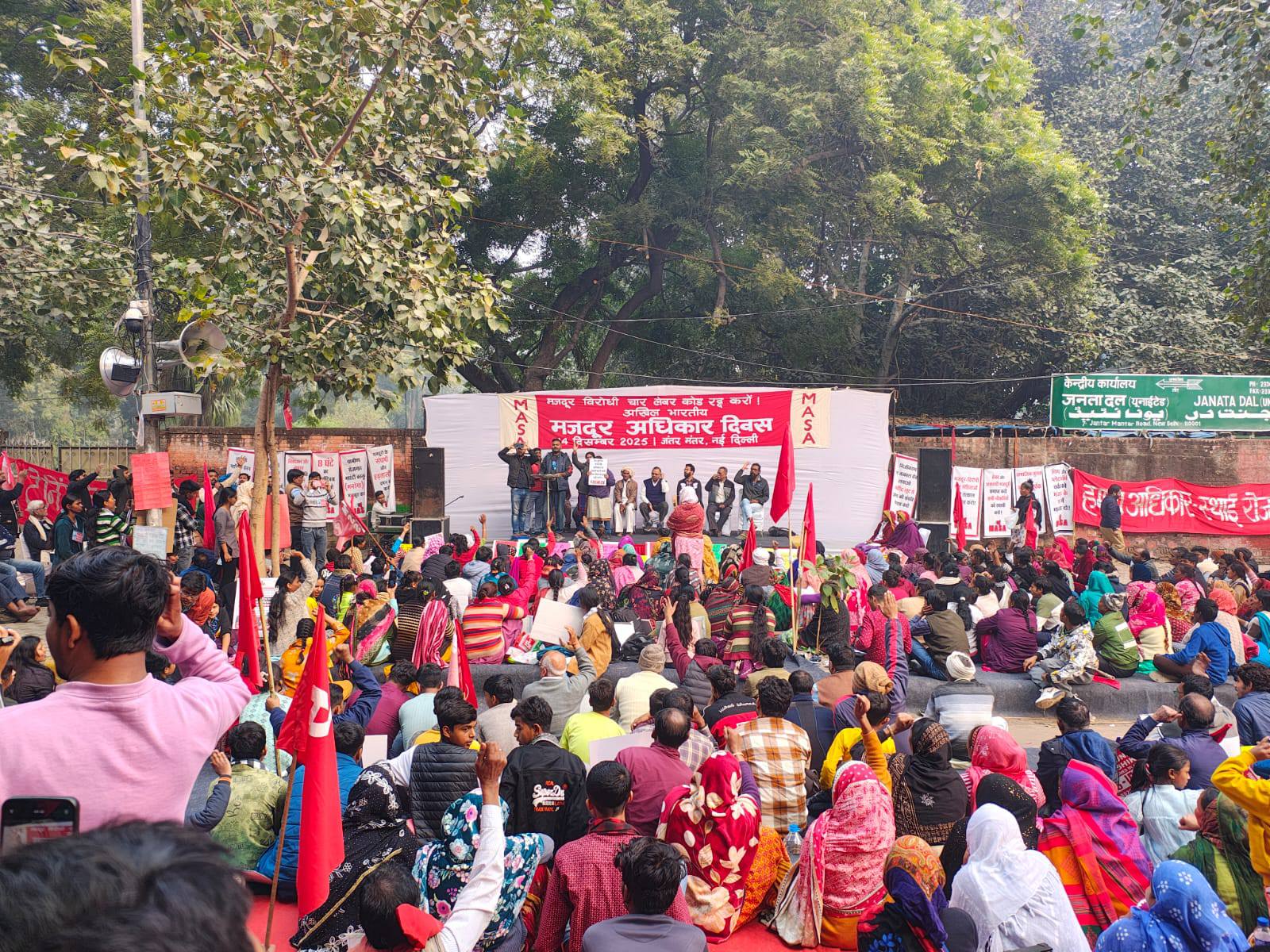
Jantar Mantar in New Delhi
Placards and slogans denounced the Labour Codes as “anti-worker” and “pro-corporate,” while speakers warned that the new regime labour laws will institutionalise insecurity for millions of working people. The Delhi mobilisation was jointly organised by MASA’s NCR constituents—MSS, CSTU, IMK, IFTU-S, GMUB and BNASU—and drew participation from trade union federations such as ICTU, IFTU and AIFTU (New). Workers’ unions including the All India Railway Trackmen Union, Maruti Suzuki Struggle Committee, Bellsonica Employees Union, Daikin Workers Union and MMTC Workers Union were present, alongside MNREGA unions, domestic workers’ collectives, farmer organisations and student and youth groups.
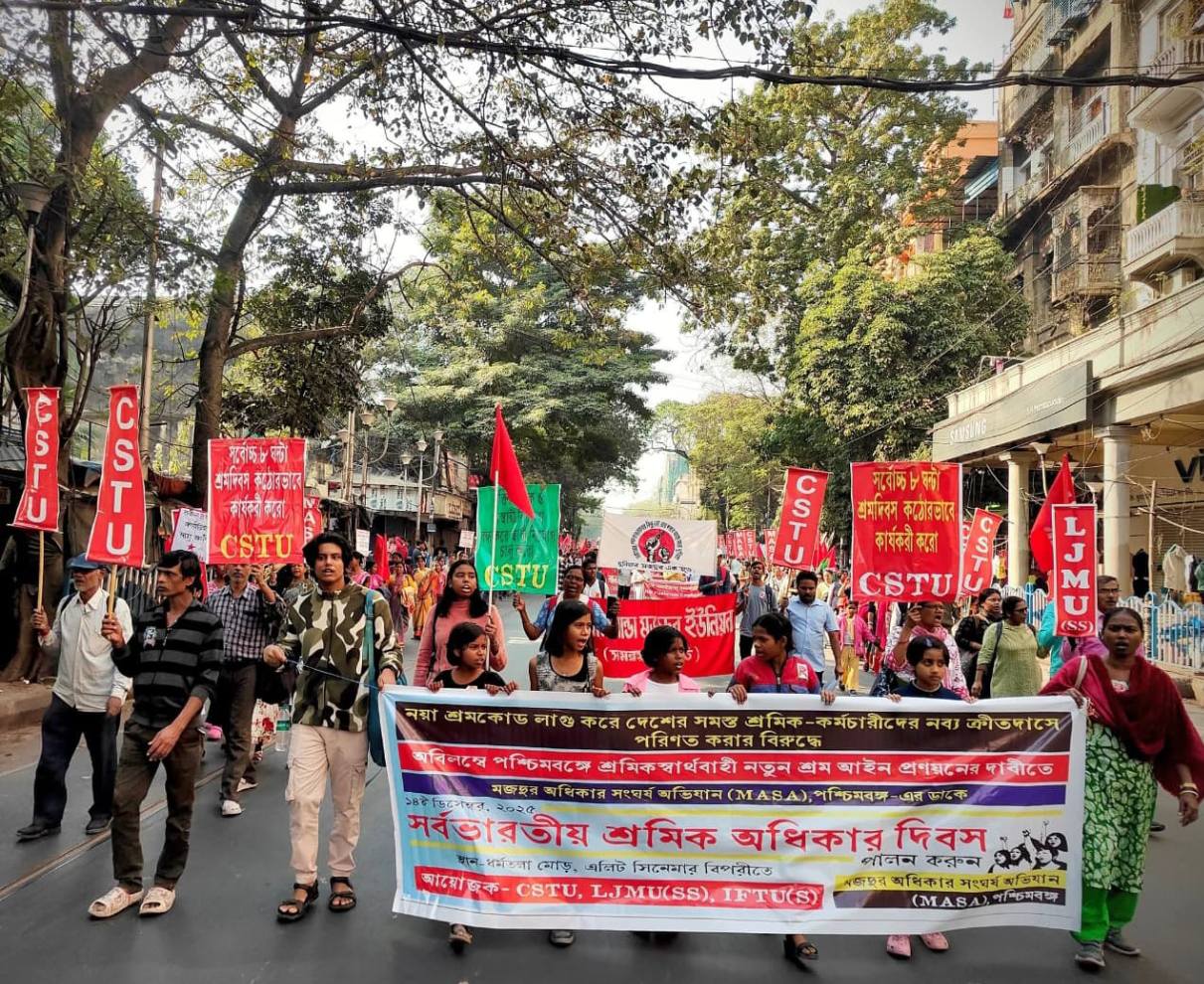
Protest rally in Kolkata
Speakers at the rally accused the Union government of forcing through the four Labour Codes on 21 November, ignoring sustained protests, warnings, and appeals from trade unions and workers’ organisations across the country. According to MASA and participating unions, the codes, designed in the interests of foreign and Indian big capitalists will facilitate abolition of permanent employment, legitimise hire-and-fire practices, restrict collective bargaining, criminalize trade union movement, extend working hours and dilute occupational safety standards. They also expressed concern over changes to labour courts and labour departments, warning that workers’ access to justice would be further curtailed.
MASA in a press release said:
These labour codes intend to snatch away hard-won rights of Indian working class by century-long trade union struggles at one stroke. This is a deliberate attempt to push workers into modern form of slavery, stifling the dreams and hopes of future generations. This isn’t just a policy proposal—it’s an organized, dangerous, and brutal attack on the working class, a class war that can only be stopped through workers’ resistance and united struggle.
“What is being presented as reform is actually a historic rollback of rights won through decades of struggle,” a trade union leader said from the stage. “The Labour Codes are designed to transfer power decisively from workers to big domestic and foreign capital.” Speakers repeatedly described the changes as pushing workers into extreme precarity, particularly at a time when unemployment and informalisation are already widespread.
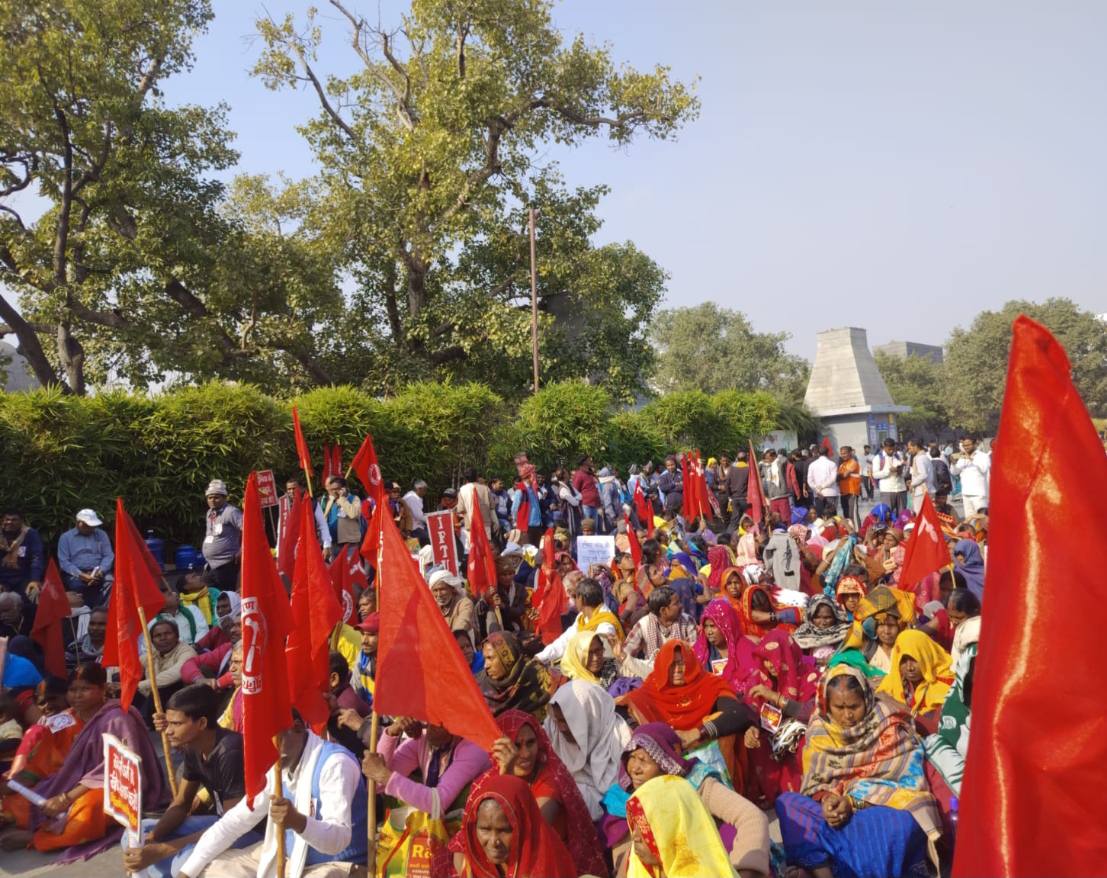
Protest demonstration in Patna
Protesters also targeted the Draft National Labour and Employment Policy (Draft Shram Shakti Niti, 2025) released by the Ministry of Labour and Employment. Trade unions called the draft policy regressive, which draws inspiration from the Manusmriti, and called it incompatible with constitutional principles of equality, dignity and social justice. They argued that the policy signals a deeper shift towards a market-driven framework that treats labour as a disposable input rather than a social relationship governed by rights.
Beyond the notification of the Labour Codes, speakers located the protests within a broader political economy marked by rising inequality. They pointed to soaring corporate profits alongside layoffs, wage cuts and increasing work hours. The accelerated privatisation of public sector industries, banks and insurance was repeatedly flagged as further undermining job security and access to essential services.
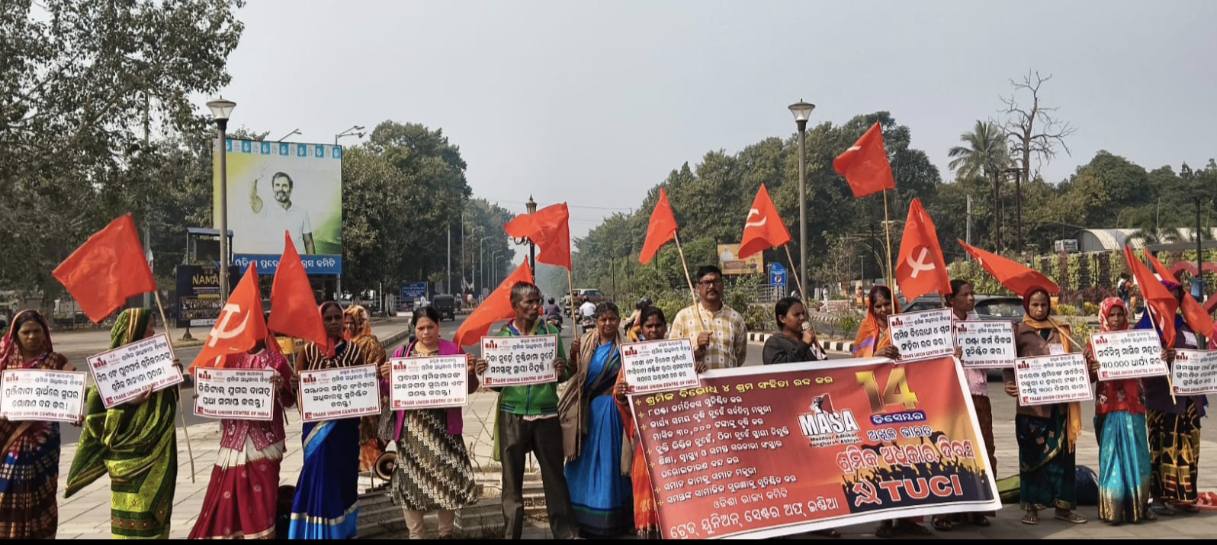
Protest in Chennai
Several speakers warned that communal and caste-based polarisation along with chauvinist nationalism was being deliberately used to fracture working-class unity and divert attention from economic distress. “These divisive tactics are the ideological weapons of the capitalist class to break class unity and divert the anger of the workers away from their real enemies — the exploiters and oppressors,” said MASA. The Unions vowed to advance a militant, continuous and decisive struggle across India to scrap the Labour Codes, defend hard-won workers’ right and fight fascist attacks and capitalist exploitation-oppression.
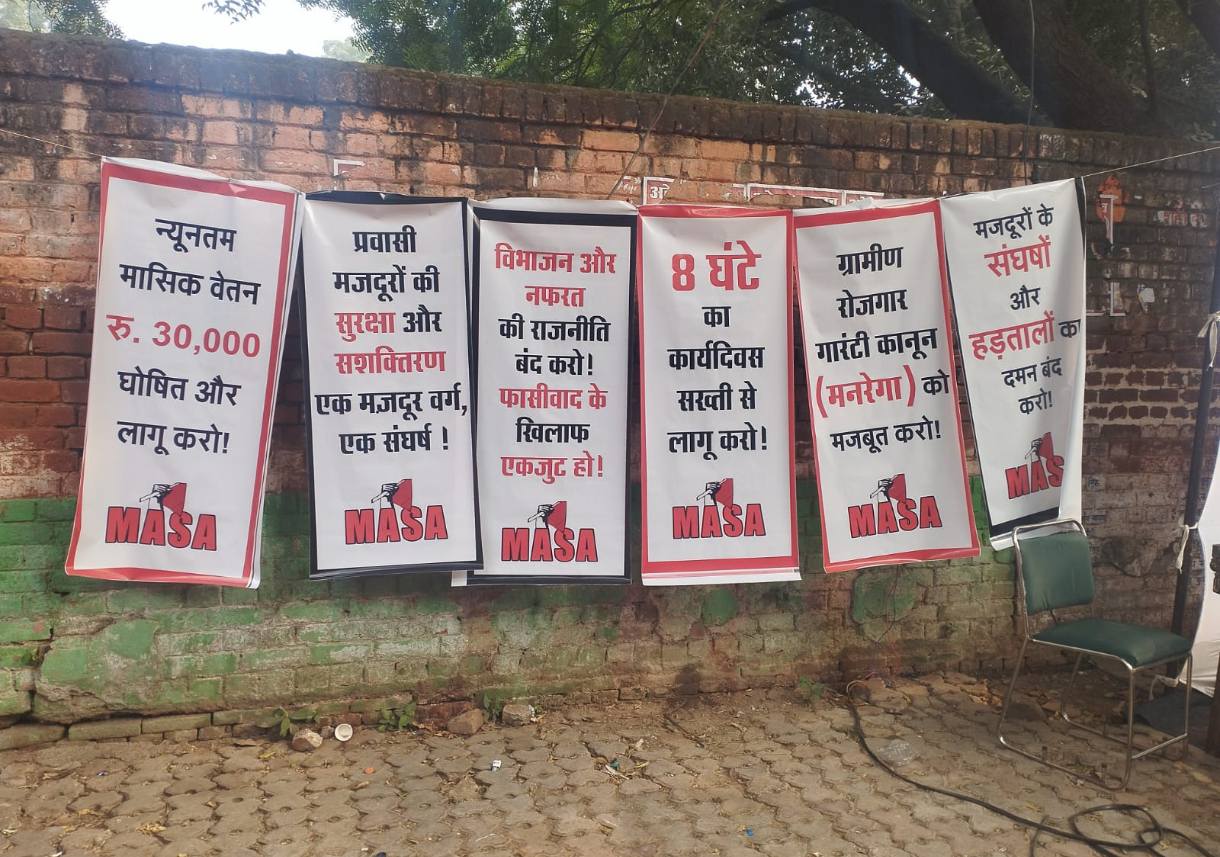
Demands raised by MASA
MASA raised a set of concrete demands. The immediate central demands are:
- Restore workers’ rights — repeal the anti-worker labour codes!
- Stop state repression on workers’ struggles and strikes!
- Guarantee freedom to organize and form trade unions!
- Abolish contract and temporary employment — make all jobs permanent!
- Declare and implement minimum monthly wage at ₹30,000 — link wages to inflation!
- Strengthen and expand rural employment — guarantee 300 days of work at ₹1,000 per day!
- Implement the 8-hour workday — no to the capitalist push for super-exploitation!
- Recognize gig and platform workers as workers — end digital-age slavery!
- Protect and empower migrant workers — one working class, one struggle!
- Guarantee social security and the right to live with dignity!
- Stop privatization — defend people’s property from corporate loot!
- Stop the politics of division and hate — unite the working class against fascism!
These demands resonated at protest sites across the country, where workers pledged to intensify resistance against the Labour Codes in the coming months. In several cities, speakers framed the struggle as a long-term battle rather than a one-day token protest, calling for sustained mobilisation at workplaces and in communities.
MASA leaders said efforts were underway to build a broader, militant all-India movement by joining hands with other trade unions and workers’ collectives.
The message from All India Workers’ Rights Day was clear: far from silencing opposition, the government’s labour reforms have galvanised a new phase of working-class resistance that is likely to deepen in the period ahead.
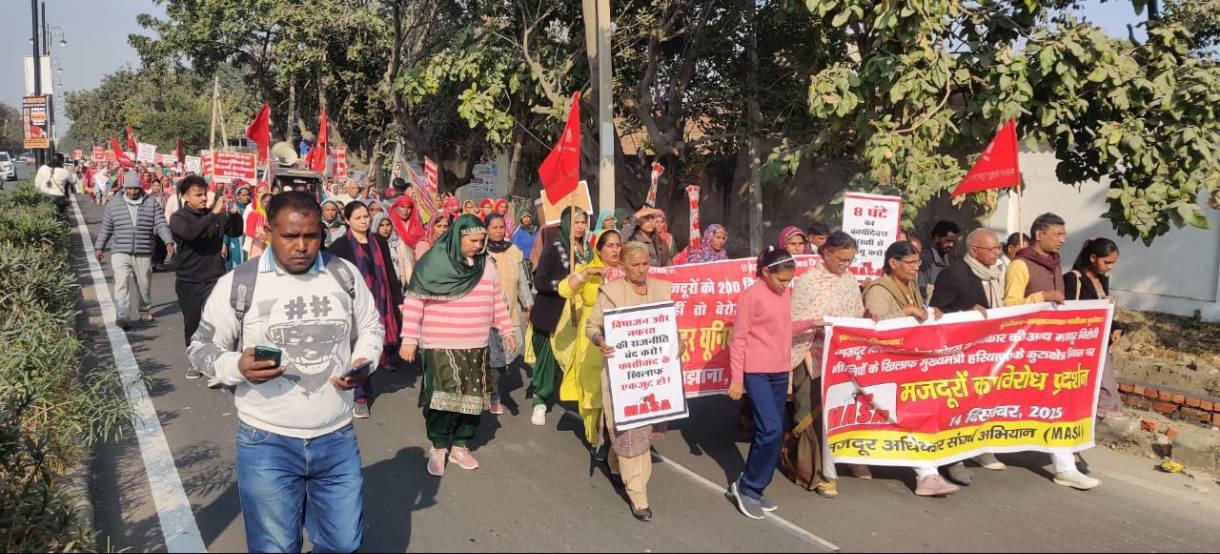
(Images used in the report have been taken from the FB page of MASA.)