
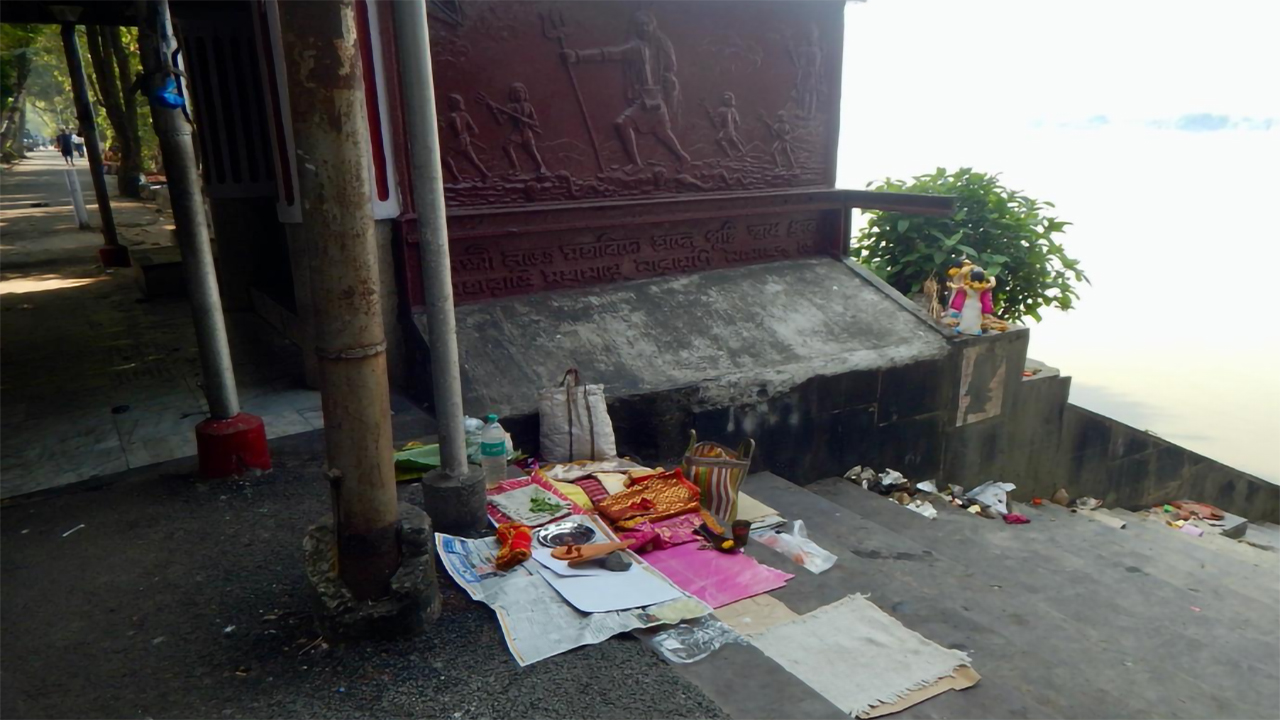
The trail as a mirror leaves back sensory methods that help one read lingering memories and the fragile boundaries of the ordered and the chaotic expressed by the city’s “in-between” zones.
By Debasree Sarkar
Groundxero| 12 December 2025
Thinking about cities, urbanity, and metropolitan spaces, we overlook the diverse transitional ecosystems that form them. One often ponders if the transitional aspects of a city are mimicked in other cities. Those that remain unacknowledged to date. What can be the methods to chronicle such imitations? Every city is mapped by distinct ecological communities that inhabit it, which is a testimony to the co-existence of biodiverse species. Acknowledgement of the ecological realities and past histories of the city, shrouded by the urbane concrete, requires us to pause, feel, smell, and listen even if we fail to see what’s around us.
Amrita DasGupta, a researcher and teacher from London, has spent a considerable amount of time comprehending how cities become archives of their past histories through emotions, sounds, and smells. Things absent from museum catalogues and left ambiguous by the buildings that stereotypically make cities. She tries to accommodate the senses to recreate the identity of the cemented city underneath which their ecological realities live. Thereby, ideating the city as a contradiction, a space for continued transition. In her new way of envisioning the city, she incorporates the stories of adjustments made by people in relation to the changing ecology around them. Her curated walk across Kolkata is a sensory blueprint to rediscovering the ecological pasts of our cities.
“Welcome aboard!” said Amrita, handing each of the participants a platform ticket from a railway station in North Kolkata (Bagbazaar). An unusual start to a walk that was not motivated by sightseeing. It was a journey into how cities grow, forget, and remember themselves and how people remember and forget the cities, especially in spaces where land and water meet. Every city has lived many lives. Their histories have been conveniently deleted, rewritten, and revised just like the trail we were on: one of the oldest neighbourhoods of Kolkata, Chitpur, which at one point was a trading hub, a working-class settlement, a ritual space, and recently, a point where the city’s wastewater drains into the Ganges. We were not looking at the buildings and infrastructures around us; rather, we were mindful of the smells and sounds associated with them. A graceful reminder of the mutual relations of people and environment. People shape their environments, and environments, in return, shape the people.
We paused at a bridge. Here the dark canal met the pale Ganges, making for a striking sight. One carrying waste, and the other, the century-old religious and devotional significance. A city’s contradiction metaphorically came alive here. It brought together the sacred and the polluted, the remembered and the forgotten, and the cared for and the abandoned. A zone of transition known for its unique converging biodiversity, community, and cultures. A transition that, through mergers and cracks, reveals the possibilities to sieve out the ecological history of the city. Initially a delta, which was later brutally urbanised.
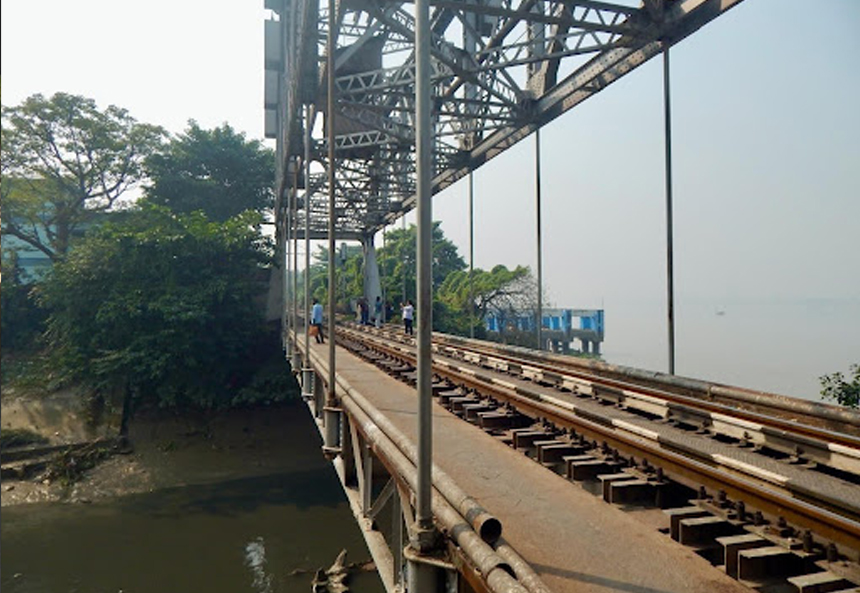
Bagbazar Tolly Canal Bridge
The train line running across the bridge placed above the symbolic confluence with trains rushing past behind us, Amrita says, is a constant prompt about the haste created by the Anthropocene, the man-made ecological age we inhabit which is marked by escalating climate change. We do not have enough time to save our planet, we must be mindful now. Also, a subtle push to acknowledge the hurriedness of urban lives and how in varied noises and sounds the truths of our city’s ecology and present city lives survive. Colonial infrastructure not only polluted the environment but also came on the shoulders of expanded deforestation and concrete embankment building, which added to the impacts of the Anthropocene in the present day.
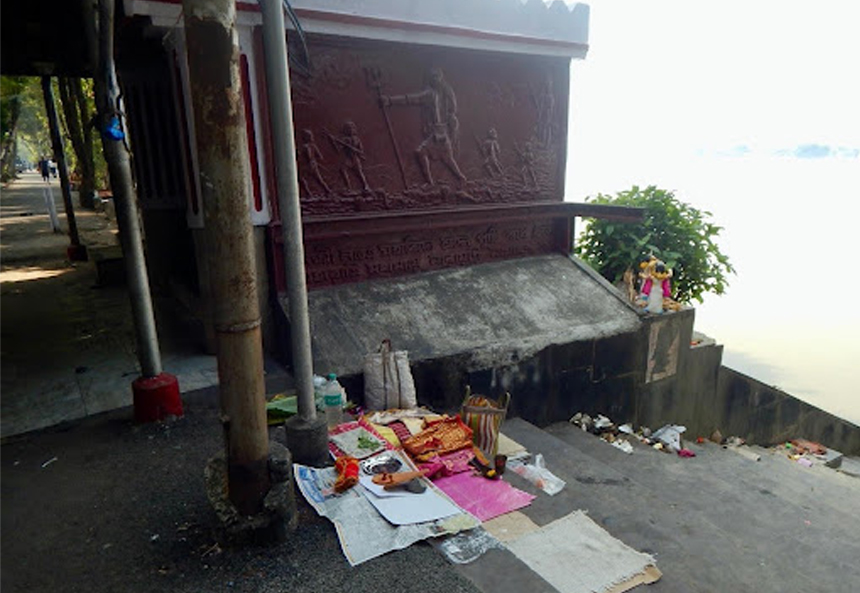
Mutual spaces of divine and the departed
The walk echoed. What does a city keep? The neighbourhoods of every city shift. In the social and economic evolutionary process, the city even loses its identity. Once a connection to the Kolkata Port with sprawling markets and artisans’ workshops that catered to the eastern region of India, Chitpur is now recognised for the several ghats it has, used for ritualistic purposes. The sense of layered memory, central to Amrita’s work, is the nucleus of a city’s identity, which always is transitioning. Every rewrite of the city’s identity leaves something unsaid that gets preserved in the overlooked sounds, smells, and tastes of the metropolis that can be assessed through points of ecological mergers, where the land and water meet. Ending the walk at the Kashi Mitra Burning Ghat is poignant of these transitions. The river here receives both the divine offerings and the ashes of the departed. A non-ceremonial co-existence of life, loss, hope, renewal, and the end.
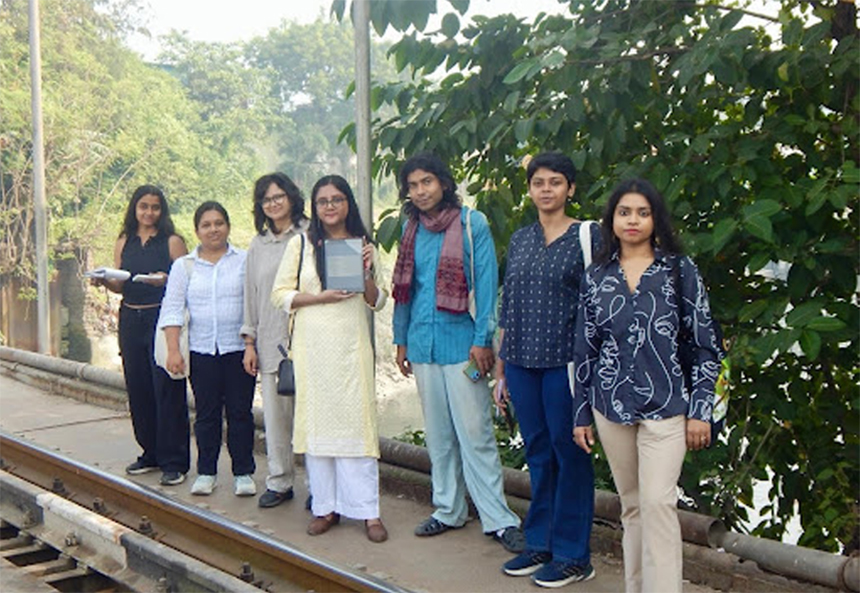
The ‘trail’ group
The walk brings forth a larger question that resonates across cities: how do we remember the cities we inhabit? How to balance the past and the present? How do we as commoners out on an evening walk ponder on our city’s history and identity shaped by the human and natural forces? The trail as a mirror leaves back sensory methods that help one read lingering memories and the fragile boundaries of the ordered and the chaotic expressed by the city’s “in-between” zones. As Amrita says, “city histories live in transitional spaces where life refuses to fit neatly into categories, as one would find in an archive or museum, but still flourishes. These histories are more sensory than infrastructural and recorded.”
________________
Debasree Sarkar is pursuing Ph.D. from the Department of History, Diamond Harbour Women’s University, Sarisha. She can be reached at debasree.his@icloud.com
Images were clicked by the author during the walk.