
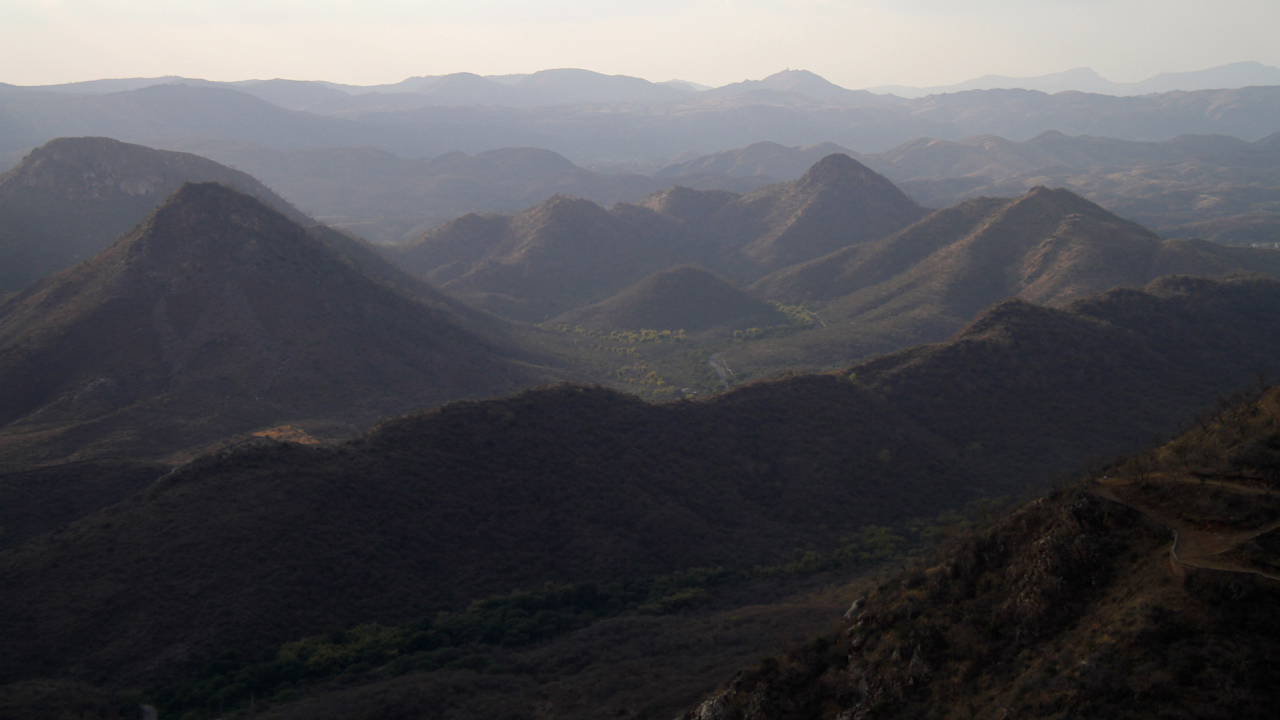
The Apex Court’s ruling lays bare a deeper, ongoing shift in the state’s approach to natural commons—one that privileges extraction over conservation, and corporate interest over ecological survival.
By Tinku Khanna
Groundxero | 10 December 2025
Indroduction
The Supreme Court’s recent acceptance of a narrow, elevation-based definition of the Aravalli Hills marks a turning point in India’s environmental governance. The judgment removes protection from nearly 90 percent of the world’s oldest hills, opening vast stretches of the Aravalli to mining, real-estate speculation and corporate acquisition. The ruling lays bare a deeper, ongoing shift in the state’s approach to natural commons—one that privileges extraction over conservation, and corporate interest over ecological survival.
The SC Judgment and Its Implications
On November 20, 2025, the Supreme Court accepted a narrow definition of the Aravalli Hills proposed by the Ministry of Environment, Forest and Climate Change (MoEFCC), defining them as landforms with an elevation of 100 meters or more from local relief.
This seemingly technical decision carries catastrophic implications for one of the world’s oldest mountain ranges. Approximately 90% of the Aravalli range will no longer qualify for legal protection, effectively opening vast ecologically sensitive areas to mining and commercial exploitation. The judgment marks a fundamental shift in India’s environmental governance—prioritizing technical definitions over ecological significance.
While the Court ordered a Management Plan for Sustainable Mining (MPSM) and temporarily halted new mining licenses, the redefinition excludes the low-lying scrub hills, grasslands and ridges that form the majority of the Aravalli system. It effectively undoes three decades of legal safeguards.
The 1992 Aravalli notification and the NCR Planning Board’s Natural Conservation Zone declarations had protected the entire range based on its ecological value, not merely its height. The new definition dismantles this holistic approach and replaces it with an arbitrary threshold that ignores the interconnected nature of the ecosystem.
Corporate Land Grabbing and Resource Exploitation
The narrowed definition creates immediate opportunities for corporate land acquisition across multiple sectors. Licensed mining operations have already wiped out most of the two-billion-year-old ecological heritage in Haryana’s Charkhi Dadri and Bhiwani districts, leaving behind barren landscapes stripped of vegetation and wildlife. The construction industry particularly covets Aravalli’s granite deposits, which though comprising less than 3% of the terrain, are described as a literal goldmine for developers hungry for building materials to fuel the Delhi-NCR construction boom. This extraction has transformed ancient geological formations into quarries, permanently altering landscapes that took millions of years to form.
Investigative reporting has exposed systematic patterns of corporate encroachment through complex financial arrangements designed to circumvent existing protections. Corporate groups deploy networks of shell companies to acquire Aravalli forestland and convert it into lucrative real estate projects, with groups like Patanjali holding over 123 acres through multiple entities in areas like Mangar village alone. These transactions often involve layers of intermediaries that obscure ultimate ownership and benefit from regulatory gaps. The 2023 amendment to the Forest Conservation Act has further facilitated this process by stripping protection from extensive Aravalli lands not officially designated as forests, creating legal loopholes that corporations have been quick to exploit. Meanwhile, the proximity to Delhi-NCR makes the range particularly attractive for tourism and hospitality projects, with developers eyeing hillside resorts and recreational facilities that would fragment remaining habitat and accelerate ecological degradation.
Ecological Significance and Ongoing Loss
The Aravallis function like a giant sponge, with rainwater seeping through cracks in the hills to fill underground aquifers—natural storage tanks that supply water to millions of people across four states. Remove the hills through mining, and this entire system collapses. The evidence of this collapse is already visible in areas where mining has destroyed the mountains.
Groundwater that was once accessible at 10 meters depth is now 150 meters down, while in Mahendragarh district in Haryana, some wells have dried up completely with water tables dropping to 1,500-2,000 feet. Famous lakes like Badkal near Delhi have transformed into barren dirt, stark reminders of what happens when the aquifer system fails.
As hydrogeologist Dr. Vidhu Shekhar explains, aquifers beneath the Aravallis are all interconnected—break the hills in one place, and water tables drop everywhere. It’s like cutting holes in a water pipe; the whole system fails. This interconnected nature means that mining in one location has cascading effects across the entire region, threatening water security for millions who depend on these underground reserves.
For thousands of years, the Aravalli Hills have blocked the Thar Desert from expanding eastward into India’s agricultural heartland. Think of them as a dam holding back sand instead of water. That dam now has twelve major breaches. Through these gaps, desert dust is already pouring into Delhi and surrounding regions, with scientists finding desert sand, called loess, in cities like Mathura and Agra—places that should be fertile farmland, not desert outposts.
India’s space agency ISRO reports that 30% of India’s land is already degraded, with the figure reaching 50% in Delhi, Rajasthan, and Gujarat. Open up 90% of the Aravallis to mining, and experts predict the desert could reach what are currently farming areas within one generation. Your children could witness fields of wheat transforming into sand dunes, fundamentally altering the landscape and agricultural potential of northern India.
Delhi already has some of the world’s worst air pollution, with the Aravallis serving as one of the few things helping by acting like the city’s lungs, trapping pollutants and producing oxygen. Mining destroys this protective function completely. Stone crushers release clouds of silica dust, blasting tears up vegetation, and the toxic air doesn’t remain localized but spreads across the entire region. In villages near mining operations, people already suffer from asthma and chronic lung disease, silicosis (a deadly disease from breathing stone dust), and respiratory problems in children who’ve never smoked.
As environmental analyst Indratanu Saha notes, Delhi air already gives people black lungs without them ever touching a cigarette. Remove the Aravallis, and the situation deteriorates even further, compounding existing air quality crises that already claim thousands of lives annually.
The Aravallis guide monsoon winds carrying rain to northern India. Remove the hills, and the monsoon pattern changes dramatically. Some areas receive less rain while other areas experience sudden floods because there’s no vegetation to slow down the water. Gurugram, built as a millennium city with glass towers and fancy malls, floods every monsoon because mining damages the natural drainage systems. Meanwhile, nearby areas face severe water shortages, creating a paradox where excess water and scarcity exist simultaneously in neighboring regions.
The Aravallis host over 200 bird species, leopards, hyenas, and countless plants found nowhere else on Earth. These aren’t isolated pockets but interconnected habitats, with animals moving between forest patches along ancient routes called corridors. Mine the low-lying areas that this new definition doesn’t protect, and you sever those corridors. Animals become trapped in shrinking islands of forest, and species go extinct not because we hunted them directly, but because we destroyed the landscape they needed to survive. The loss is silent but permanent, with each species extinction representing millennia of evolutionary adaptation wiped out in a generation.
The scale of loss is staggering when examined systematically. Between 1972-75, Rajasthan’s Aravalli districts contained 10,462 square kilometers of forest cover. By 1981-84, only 6,116 square kilometers remained, and today the figure is even lower. The Survey of India counted approximately 2,200 hillocks in 1968; today, over 25% have completely disappeared from the landscape. Water tables tell an equally devastating story—areas that once had groundwater at 10 meters depth now require drilling to 150+ meters, with some areas having no accessible groundwater left at all.
This isn’t a prediction of future harm but documentation of damage already inflicted. The new judgment could accelerate this destruction across 90% of the remaining mountains, pushing degradation past the point of possible recovery.
Who Wins? Who Loses?
Government lawyers and mining representatives argued in court that millions of workers depend on mining jobs, cities need construction materials, and blanket bans fuel illegal mining and criminal gangs. They contended that allowing sustainable mining with proper oversight represents a better approach. While these concerns are not baseless, they obscure the broader economic truth.
Agriculture is collapsing as water disappears and fields are coated in dust. Health bills are exploding as respiratory diseases, silicosis, and pollution-related illnesses cost far more than mining generates in revenue. Tourism has been destroyed in areas that once attracted visitors but now attract only mining trucks. Property values are crashing even in expensive suburbs like Gurugram, which suffer constant flooding and water shortages. The future costs of dealing with desertification, water scarcity, and air pollution will dwarf any current mining revenues.
Economic analyses show that the long-term costs of Aravalli destruction far exceed revenues earned from mining. The fundamental asymmetry is temporal and distributional—mining profits materialize immediately and flow to a few companies, while costs emerge gradually and millions. This mismatch between who profits and who suffers, between immediate gains and long-term losses, explains why ecologically destructive activities continue despite their net negative impact on social welfare.
The Broader Pattern of Corporatization
The Aravalli case exemplifies a systematic pattern of corporatizing India’s natural commons through multiple coordinated mechanisms that progressively weaken environmental safeguards. The Haryana government’s 2019 amendment to the Punjab Land Preservation Act removed 63,000 acres from restricted status, opening previously protected areas to commercial development. The 2023 Forest Conservation Act amendment went further; facilitating the transfer of public forest lands to private industry and real estate developers by redefining what constitutes forest land and streamlining approval processes for conversion. These legislative changes reflect a fundamental shift in how the state views natural resources—increasingly as underutilized assets rather than public goods requiring protection.
By accepting a definition that excludes 90% of the range, the judiciary has inadvertently enabled what legislation alone couldn’t achieve—the de-protection of vast natural landscapes through technical redefinition rather than explicit policy change. This approach provides political cover by framing environmental rollbacks as technical clarifications rather than policy reversals. The Environment Ministry committee justified its recommendations by citing the need for systematic exploitation of critical, strategic and atomic minerals, arguing that conservation must not compromise strategic interests and national security requirements. This rationale is increasingly deployed to fast-track extractive projects, with environmental concerns subordinated to economic and security imperatives. The public-private nexus driving these changes has systematically weakened environmental protections across multiple fronts, with government officials openly stating their intent to amend protective laws to facilitate development, revealing the deliberate nature of this transformation rather than presenting it as an inadvertent consequence of modernization.
Conclusion
By accepting the 100-meter definition and permitting “sustainable mining,” the Supreme Court has created a legal architecture that may dismantle the Aravallis irreversibly. Once these ancient hills are destroyed through mining, their geological and ecological functions cannot be restored. Unlike forests that can regenerate or water bodies that can be cleaned, the geological formations of the Aravalli represent irreplaceable natural heritage that took billions of years to form and cannot be reconstituted once destroyed.
Aravalli’s fate reflects a troubling national trajectory: the transformation of natural resources from common heritage into corporate assets. This shift represents more than environmental policy—it embodies a fundamental reimagining of the relationship between the state, corporations, and natural commons.
The Warning is Clear
These ancient mountains cannot speak. But their dried-up lakes speak. The villages suffering silicosis speak. The advancing desert speaks.
India has been warned. The consequences are predictable. The only question is: Will we listen?
As one environmental lawyer, put it: “This isn’t about saving rocks. It’s about saving ourselves.”
The Aravallis have protected India for two billion years. Now India must decide whether it will return the favour.
References
[6] “Aravallis: On the Brink of Total Destruction,” Peoples Democracy, May 26, 2024.
[8] https://thewire.in/environment/aravalli-mining-zoo-safari-haryana
[9] https://thewire.in/environment/the-aravalli-hills-have-a-new-definition-heres-why-this-is-a-problem
________________
Tinku Khanna is a social activist and member of Groundxero Collective.
Feature image: Aravalli mountains near Udaipur city in Rajasthan.
Source: Wikimedia Commons | Tapesh Yadav (Author)