
While the CRI report tells us what has happened in the past, it is not a precise predictor of what will happen in the future. But the report clearly demonstrates global emissions must be reduced immediately; otherwise, we face rising deaths and economic disaster worldwide.
Groundxero | November 12, 2025
The recently released Climate Risk Index 2026 (CRI) by Germanwatch, published at the sidelines of the COP30 climate summit in Belém, Brazil, on Tuesday (November 11, 2025), has placed India among the world’s most climate-vulnerable nations, revealing its growing vulnerability to heat waves, floods and cyclones that have intensified under global warming.
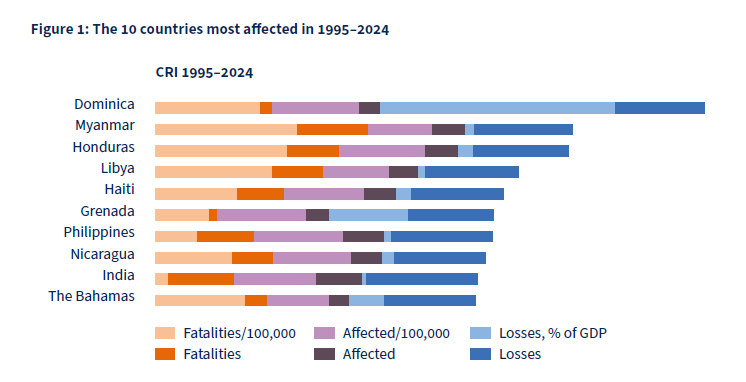
The CRI rank indicates Dominica, Myanmar and Honduras were the most affected countries by extreme weather events followed by Libya, Haiti and Grenada, while India is ranked 9th globally over the period of past three decades from 1995–2024. The CRI 2025 report has ranked India as the 6th most affected country due to extreme weather events between 1993-2022.
The Climate Risk Index (CRI), published since 2006, is one of the longest running annual climate impact-related indices. The CRI analyses climate-related extreme weather events’ degree of effect on countries. It ranks countries by the human and economic toll of extreme weather. The 2026 edition covers data from the year 2024 (for the annual ranking) and over the period 1995–2024 (for the long-term ranking). It covers 174 countries (subject to data availability).
CRI 2026 is based on 2024 data. It uses the International Disaster for extreme weather data, and the International Monetary Fund (IMF) and the World Bank for socio-economic data.
Key Highlights:
- According to the CRI 2026, from 1995 to 2024, nearly 5.7 billion were affected, more than 832,000 lives were lost and direct economic losses of nearly USD 4.5 trillion (inflation-adjusted) were recorded, driven by more than 9,700 extreme weather events.
- The report underscores the disproportionate impacts borne by developing countries and smaller economies, many of which have contributed little historically to greenhouse-gas emissions yet face the most severe impacts.
- The frequency and intensity of climate-related disasters continue to rise, and these figures underscore the urgent need for climate action. The report emphasizes that inaction has a mounting cost as the human and economic toll of climate-related extreme weather events continues to rise.
Alarm for India:
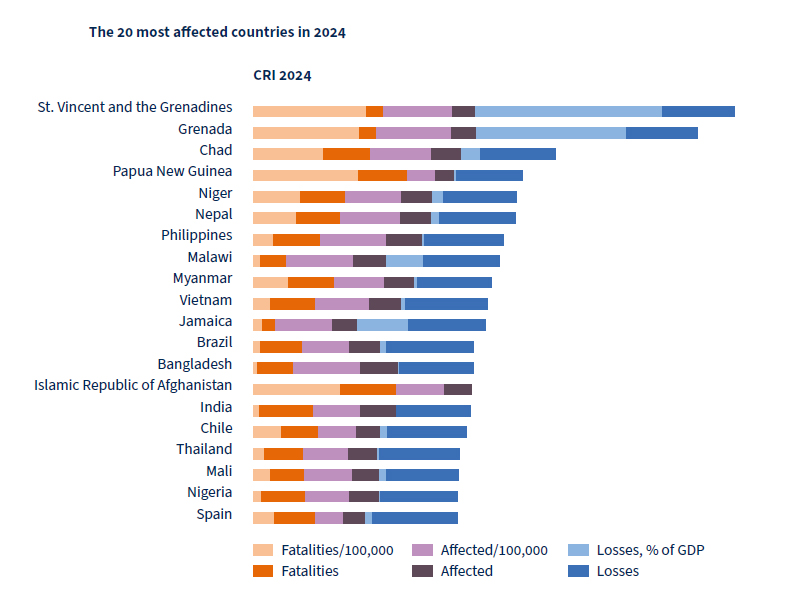
India with high absolute fatalities and high economic losses, as well as, high number of people affected, both in absolute term and per 100, 000 population, has been ranked 9th. India’s rank among the top ten countries over the past three decades highlights its growing vulnerability to heat waves, floods and cyclones that have intensified under global warming. India ranks 15th among the 20 most affected countries assessed for the year 2024.
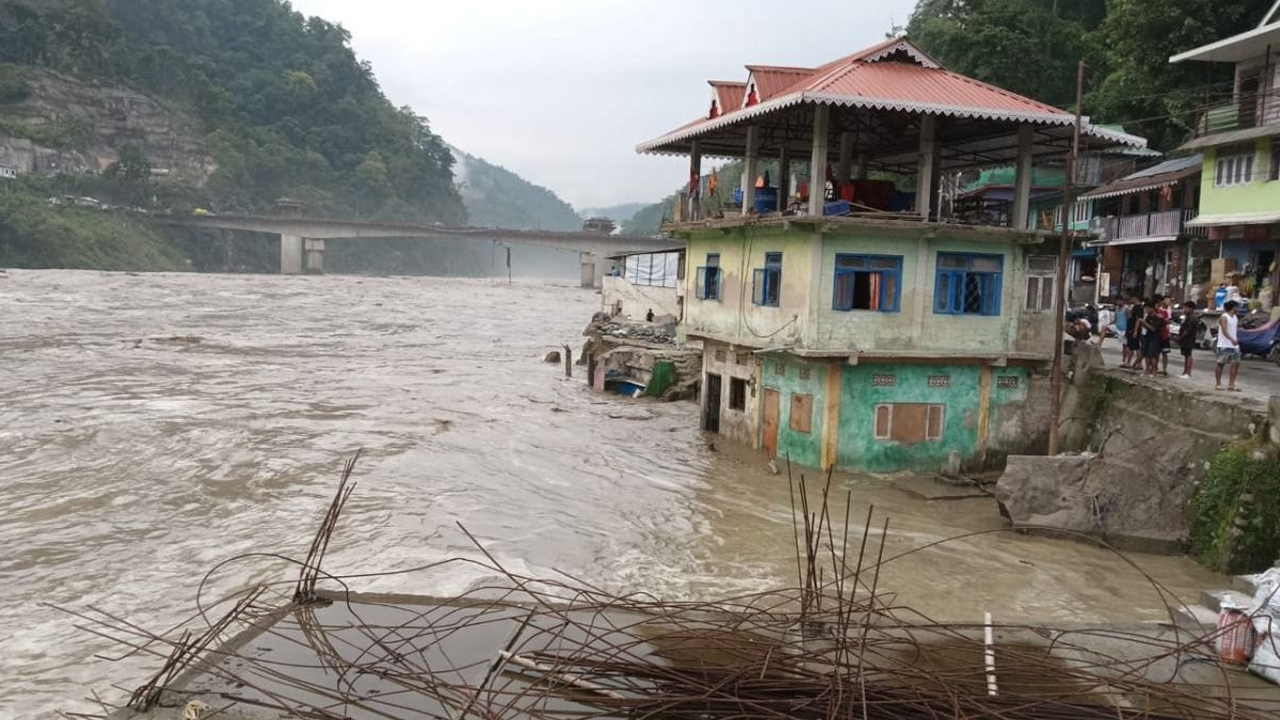
India has faced various extreme weather events, including floods, heat waves, cyclones and droughts. Floods and landslides resulting from extreme monsoons have displaced millions and damaged agriculture, and cyclones have devastated coastal areas, underscoring India’s multiple climate risks.
CRI 2026 reported nearly 430 extreme weather events in India in the three decades examined, resulting in economic losses of nearly USD 170 billion (inflation –adjusted), nearly 1.3 billion people affected, and over 80,000 fatalities.
The report identifies India as a country suffering from “continuous climate threats” rather than isolated one-off disasters, meaning frequent extreme events leave little time for recovery before the next disasters strikes.
The report is a stark reminder: climate-hazard impacts in India are large, persistent and require urgent attention. Since the most severely hit by the extreme climate events are infrastructure, agriculture, livelihoods and public health, climate risk must be built into India’s development planning (urban design, agriculture policy, water management).
Conclusion:
CRI 2026 underscores how developing countries or the Global South bears the brunt of climate impacts despite contributing the least to global emissions. Six of the ten most affected countries are lower-middle-income nations. Other countries in the top ten include Dominica, Myanmar, Honduras, Libya, Haiti, Grenada, the Philippines, Nicaragua and the Bahamas.
The rich and industrialized countries are morally obliged to pay for these losses. The debut of the Loss and Damage Fund offers a long-awaited financial lifeline, but one that remains small compared to the mounting toll of climate destruction. By 2030, developing countries will need $200–400 billion annually to address loss and damage, according to the Independent High-Level Expert Group on Climate Finance. Yet, developed countries have pledged only $788 million, with less than $400 million actually transferred to date.
While the CRI tells us what has happened, it is not a precise predictor of what will happen in the future. The CRI 2026 clearly demonstrates global emissions must be reduced immediately; otherwise, we face rising deaths and economic disaster worldwide.