
The question before Bengal today is therefore not whether the past can be restored. It cannot. The question is whether a new democratic and emancipatory political imagination can emerge from the ruins of the old order before majoritarian nationalism succeeds in permanently reshaping the social and moral landscape of the state.
For more detail on editing and delivery, this resource from davinciresolveclub.com is worth keeping handy.
Arkadeep Goswami
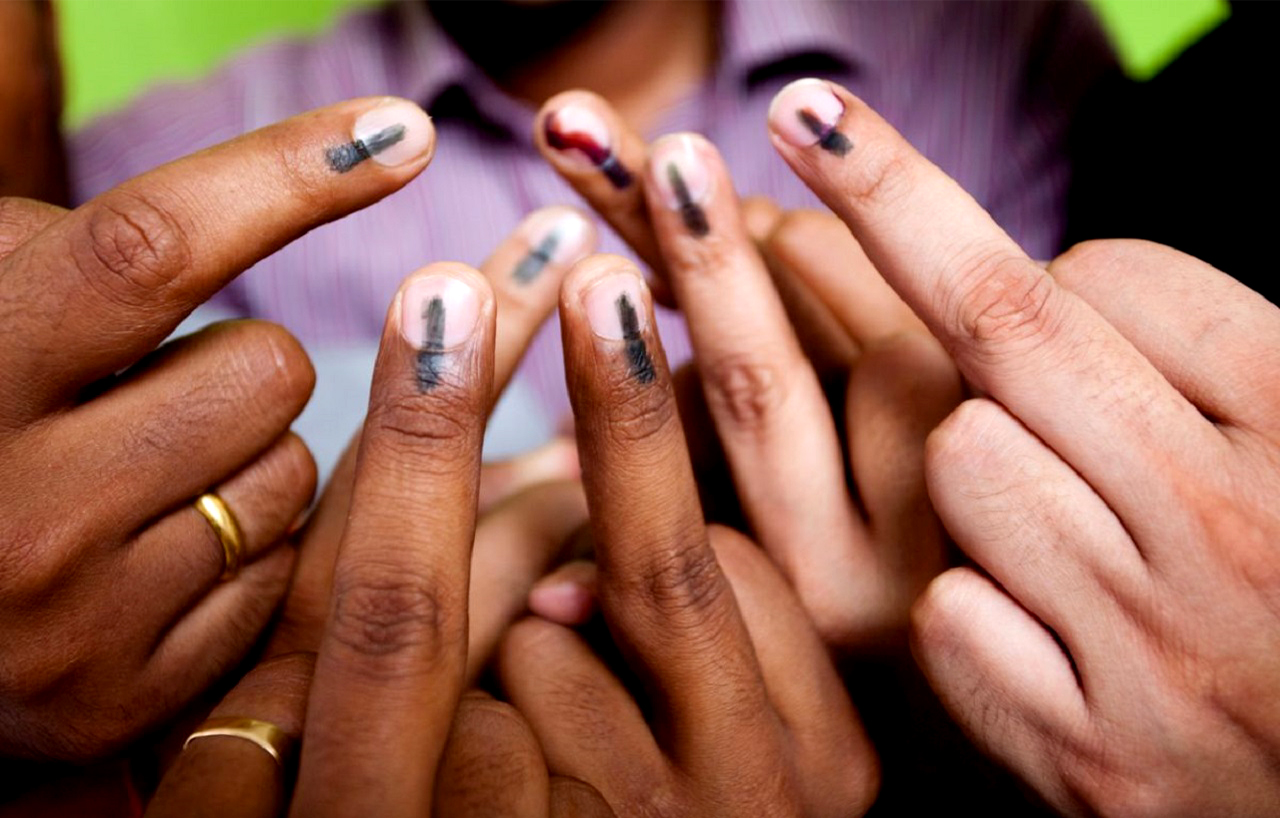
It has been a few days since the results of the West Bengal Assembly elections were declared. Predictably, political commentators, party loyalists, media houses, and independent observers have all rushed to explain what this verdict means, not only for Bengal, but perhaps for the future trajectory of Indian politics itself. Yet, as is often the case in deeply polarized political climates, most explanations have emerged along sharply partisan lines.
For supporters of the Bharatiya Janata Party (BJP), the result represents a decisive popular rejection of the outgoing Trinamool Congress government. In their interpretation, the electorate has voted against corruption, political violence, administrative decay, and what they describe as the politics of selective appeasement of minorities. The election, therefore, is portrayed as a democratic correction, a mandate for stronger governance, political order, and ideological realignment.
On the other hand, many in the progressive camp see the outcome very differently. According to this perspective, the result cannot be understood merely as an expression of popular will. Rather, it is viewed as the culmination of an electoral process profoundly shaped by the special intensive revision (SIR), unequal deployment of state power, central agencies, media influence, infusion of corporate capital, and sustained communal polarization. In this reading, the election was fought not on an even democratic terrain, but within an increasingly asymmetrical political structure dominated by the central ruling establishment.
Both interpretations contain elements of truth. Yet neither, by itself, appears sufficient to fully explain the magnitude and implications of what has unfolded in Bengal. Irrespective of the reason behind the election outcome, the only thing that can be pronounced with certainty is: Hindutva has become the most dominant ideology within the popular political imagination in Bengal.
To reduce the verdict solely to a spontaneous public uprising against corruption would ignore the wider national political environment in which regional opposition parties increasingly operate under immense institutional pressure and financial constraint. At the same time, to dismiss the result entirely as a manufactured mandate would overlook the genuine discontent accumulated over years of governance failures, political arrogance, factionalism, bureaucratic decay, and declining public trust.
The Bengal election, therefore, must be understood not as an isolated electoral event, but as the convergence of several deeper crises: the crisis of regional governance, the fragmentation of secular and progressive politics, the exhaustion of older political structures, and the growing consolidation of a centralized Hindu nationalist order across India within the post-neoliberal global order.
To understand the implications of this election, one must move beyond immediate partisan reactions and examine the broader historical, socio-economic, and political forces that have shaped this moment.
Was Bengal Truly Exceptional?
Perhaps, instead of confining ourselves to electoral arithmetic, we need to engage far more seriously with the deeper social terrain beneath these political developments. The BJP, as the ruling party at the Union level, will undoubtedly deploy every institutional, political, and ideological instrument available to capture power in a state. They have made that intention abundantly clear. Certainly, such actions must be resisted and challenged. But merely reacting to immediate political manoeuvres is insufficient when confronting a majoritarian nationalist project of this scale. The developments unfolding across India since 2014 have demonstrated precisely that.
If we are to understand the rise of the BJP in West Bengal, we must move beyond the comfort of political exceptionalism and critically examine the social foundations of Bengali society itself.
For decades, Bengal has been imagined as exceptional within the Indian context; inherently tolerant, secular, culturally refined, and politically more progressive than many other parts of India. This self-image did not emerge from nowhere. It was shaped by historical experiences: the Bengal Renaissance, anti-colonial radicalism, literary humanism, peasant struggles, trade union movements, and the long dominance of Left politics.
Compared to many regions of northern and western India, Bengal indeed witnessed relatively restrained forms of overt communal mobilisation during much of the post-independence period. This contributed to the belief that Bengali society possessed a fundamentally different political character, one supposedly resistant to the currents of aggressive majoritarianism visible elsewhere.
But is this image entirely accurate? Or has it partly functioned as a comforting myth through which Bengali society avoided confronting its own contradictions?
It is perhaps time to ask that question honestly.
The very birth of West Bengal was inseparable from communal division, two-nation theory and the logic of Partition. The province emerged through the violent rupture of Bengal itself. The communal riots of 1946, the killings, displacement, forced migrations, and refugee crises that accompanied Partition profoundly shaped the political, economic and psychological landscape of Bengali society. Yet while these histories have gradually faded from public discourse, they have not necessarily disappeared from the deeper collective consciousness of society.
What has been obscured is not the trauma itself, but the unresolved tensions produced by it.
The recurring anxieties surrounding “infiltration,” demographic change, border insecurity, refugee influx, and cultural displacement, anxieties that the BJP has successfully transformed into fertile political ground, must be understood within this historical context. These fears did not emerge spontaneously in recent years. They are deeply connected to the unfinished psychological and socio-economic consequences of Partition and the communal violence of 1946–47. As a small note, we can add that, recent development in Bangladesh, just across the border, has fuelled the situation to some extent at least. While, it has been more than seven decades since India, Pakistan and Bangladesh has become three independent political entities, the developments in each of these entities has not fully freed itself from the others.
Therefore, it can be said that the afterlife of Partition never fully disappeared from Bengal. It merely ceased to speak openly in political language for a certain historical period.
The Limits of economic Reductionism
In the decades following Partition, the Left in West Bengal played a historically significant role in redirecting political energies away from sectarian mobilisation toward economic and class-based struggles. Through peasant movements, land reforms, trade unionism, refugee organisation, and strong local party structures, class politics partially displaced communal politics as the dominant mode of political articulation.
This was one of the greatest historical achievements of the left in Bengal.
The Left succeeded in constructing a political culture where overt communal mobilisation became socially disreputable within large sections of public life. Electoral politics increasingly revolved around questions of class, agrarian reform, labour rights, decentralization, and welfare. The expansion of panchayat structures and mass organisations helped create forms of collective participation that often cut across religious identities.
However, this transformation was also accompanied by a significant limitation: a form of economic reductionism that assumed economic mobilisation alone would gradually dissolve deeper religious and communal anxieties.
To a considerable extent, this approach succeeded in containing communal tensions at the surface level. Compared to several other regions of India, West Bengal remained relatively insulated from large-scale communal violence for decades. But this relative stability did not necessarily emerge from a complete social resolution of communal contradictions. Rather, it depended heavily upon the organisational and ideological strength of political institutions capable of regulating social tensions from above.
The Left’s organisational machinery acted as a political structure capable of containing social contradictions that had not been fully resolved within society itself.
As long as strong party networks, trade unions, peasant organisations, neighbourhood committees, and ideological structures remained active, communal sentiments could be politically subordinated. But the deeper processes necessary to dismantle communal consciousness at the level of everyday social life remained incomplete. Memories of displacement, inherited fears, religious mistrust, and demographic anxieties continued to survive beneath the formal language of secular politics.
Communalism was contained, but not transcended. This distinction is crucial. Because once those organisational structures weakened, the submerged tensions beneath them began resurfacing with renewed force.
The Collapse of the Old Political Order
The crisis of the Left in West Bengal was not merely electoral. It was political in character.
The decline of the Left Front after the late 2000s represented the weakening of an entire political ecosystem that had mediated social life for decades. Cadre structures deteriorated. Trade unions weakened. Ideological education collapsed. Political participation increasingly transformed into managerial electoralism detached from long-term social organisation.
The “Poriborton” of 2011 did not simply mark a transfer of administrative power from one party to another. It marked the rapid disintegration of the institutional architecture through which West Bengal’s political contradictions had long been regulated, contradictions which were not resolved but merely managed.
What emerged in its place was not a new ideological order, but a fragmented and increasingly depoliticized political culture shaped by patronage networks, populist welfare, media spectacle, and localized factional competition.
At the same time, these developments coincided with broader structural transformations produced by neoliberalism across India.
Stable employment declined. Informal labour expanded rapidly. Trade union influence weakened. Public institutions lost legitimacy. Rural distress intensified. Young people entered a social world increasingly defined by precarity, competition, unemployment, and declining collective structures.
The older forms of political belonging that once connected individuals to unions, movements, and ideological communities gradually eroded.
Into this vacuum entered a different form of political identity.
Hindutva offered not merely communal polarization, but a new language of certainty amid social fragmentation. It provided emotional cohesion in an increasingly atomized society. It transformed diffuse insecurities into identifiable enemies. It reorganized anxieties produced by economic uncertainty, demographic fears, cultural insecurity, and political disillusionment into a majoritarian nationalist framework.
This is one of the central reasons why the BJP’s rise in West Bengal cannot be understood merely as the product of propaganda or electoral management.
Its success lies in its ability to politically activate unresolved historical anxieties within a society whose older structures of mediation have weakened substantially.
The significant consolidation of Hindu votes behind the BJP indicates that communal anxieties now operate far more openly within West Bengal’s political sphere than many earlier analyses were willing to acknowledge.
Beyond Liberal Secularism
The crisis confronting West Bengal today is therefore not simply electoral. It is ideological, historical, and socio-economic.
For too long, secularism in West Bengal survived partly as a cultural self-image and partly as a mediated State ideology rather than as a continuously renewed democratic practice. Many educated middle-class Bengalis assumed communalism belonged elsewhere, to the Hindi belt, to “backward” regions, to other social formations. This produced a dangerous complacency.
The rise of Hindutva in West Bengal has shattered that illusion.
A society does not become permanently immune to communal politics merely because it possesses a rich literary culture, a history of Left movements, or memories of anti-colonial radicalism. Communal consciousness survives not only through organized hatred, but through inherited anxieties, social segregation, competitive victimhood, historical silences, and unresolved collective trauma.
The inability of liberal and progressive politics to seriously engage with these deeper emotional and historical questions created a vacuum that Hindutva has effectively occupied.
For years, much of mainstream anti-BJP politics remained trapped between two inadequate responses: either moral denunciation of communalism or technocratic electoral opposition. Neither approach was capable of confronting the deeper social transformations underway. The question of communal majoritarianism must be engaged politically, instead of as a moral question, or an issue of law and order. Communalism cannot be defeated merely through constitutional rhetoric or electoral arithmetic, if the underlying social anxieties producing it remain unaddressed and politically unresolved.
The National Context
The West Bengal election must also be situated within the broader transformation of Indian politics under the BJP-led Union government under Narendra Modi. Since 2014, India has witnessed an unprecedented concentration of political power, accompanied by the growing fusion of state institutions, corporate capital, media influence, surveillance mechanisms, and majoritarian nationalism. The distinction between party, state, and ideology has increasingly blurred, producing a political environment in which dissenting voices operate under steadily narrowing democratic space.
Opposition parties today function within a deeply uneven political terrain. Financial resources, media visibility, institutional access, and administrative machinery remain profoundly asymmetrical. Investigative agencies, digital propaganda networks, and centralized electoral financing structures have together altered the very conditions under which democratic competition takes place.
Within such an environment, regional parties often find themselves trapped between accommodation and confrontation. Their ideological coherence weakens under continuous pressure from both electoral compulsions and centralizing state power. Governance becomes increasingly managerial, defensive, and survival-oriented. Under conditions of perpetual political siege – corruption, patronage networks, and administrative excess frequently intensify rather than diminish.
The Trinamool Congress government was hardly immune to these tendencies. Years of incumbency produced visible forms of bureaucratic arrogance, local-level corruption, factional violence, and political exhaustion. Public anger against these realities was neither fabricated nor insignificant.
Yet the danger lies in assuming that the replacement of one flawed regional regime by an aggressively centralized majoritarian project automatically constitutes democratic renewal. Across several parts of India, the BJP has repeatedly succeeded in converting legitimate public frustrations, against corruption, inequality, unemployment, or administrative decay, into support for a far deeper authoritarian restructuring of political life itself.
What emerges in such moments is not merely a change of government, but a transformation in the character of the republic: from a plural and contested democratic space into a more homogenized political order organized around nationalism, centralized authority, and cultural majoritarianism.
That process now appears increasingly visible in West Bengal as well.
What Lies Ahead?
The implications of this election therefore extend far beyond immediate party calculations. What West Bengal faces today is not simply the rise of another electoral successor. It is the emergence of a political project seeking long-term social transformation through the reorganization of historical memory, cultural identity, idea of development, educational narratives, state institutions, and everyday common sense.
The challenge before left forces cannot be reduced to the formation of temporary electoral alliances every five years. Nor can it be addressed through nostalgic invocations of Bengal’s supposedly exceptional past, a past imagined as permanently immune to communal polarization or authoritarian nationalism. History offers no such guarantees.
If democratic politics is to survive meaningfully in West Bengal, a far deeper reconstruction of social solidarities will be necessary. That reconstruction must move beyond the language of elite secularism and re-enter the terrain of everyday life itself: neighbourhoods, workplaces, schools, unions, cultural spaces, student politics, and local communities. It must confront not only widening economic inequality, but also inherited communal anxieties, unresolved historical wounds, and the gradual erosion of social trust in the era of post-liberal order.
The future of progressive politics in West Bengal will therefore depend not merely on opposing the BJP electorally, but on rebuilding forms of collective political life capable of addressing both material insecurity and emotional alienation simultaneously. Majoritarian politics does not grow only through ideology; it grows through socio-economic alienation, loneliness, humiliation, fear, atomization, and the collapse of meaningful collective belonging.
The old political order has already collapsed. But what replaces it remains uncertain.
And it is precisely within such moments of uncertainty that majoritarian nationalism advances most successfully. When established institutions lose legitimacy, when political languages become exhausted, and when social despair deepens without credible alternatives, authoritarian movements often succeed by offering emotional certainty in place of democratic complexity.
The crisis confronting the Left today emerges partly from its own inherited certainties. For decades, sections of the Left remained shaped by a deterministic reading of Marxism, one in which history itself appeared to guarantee eventual victory. Reality has shattered that illusion. Electoral decline, organizational decay, and the fragmentation of working-class solidarities have produced not only political defeat, but also a profound crisis of confidence. A pervasive pessimism now surrounds progressive circles across West Bengal.
Yet history rarely moves in linear or predetermined ways. Defeats are not endpoints; they are moments of reckoning that compel political traditions to rethink themselves.
Perhaps it is precisely in this moment that Marx’s words from nearly 170 years ago acquire renewed relevance:
“Men make their own history, but they do not make it as they please; they do not make it under self-selected circumstances, but under circumstances existing already, given and transmitted from the past… The social revolution of the nineteenth century cannot draw its poetry from the past, but only from the future. It cannot begin with itself before it has stripped off all superstition concerning the past.”
The question before Bengal today is therefore not whether the past can be restored. It cannot. The question is whether a new democratic and emancipatory political imagination can emerge from the ruins of the old order before majoritarian nationalism succeeds in permanently reshaping the social and moral landscape of the state.
Arkadeep is a writer based in Kolkata. The views expressed in this article belong to the author and do not necessarily reflect the editorial policy of Groundxero.