
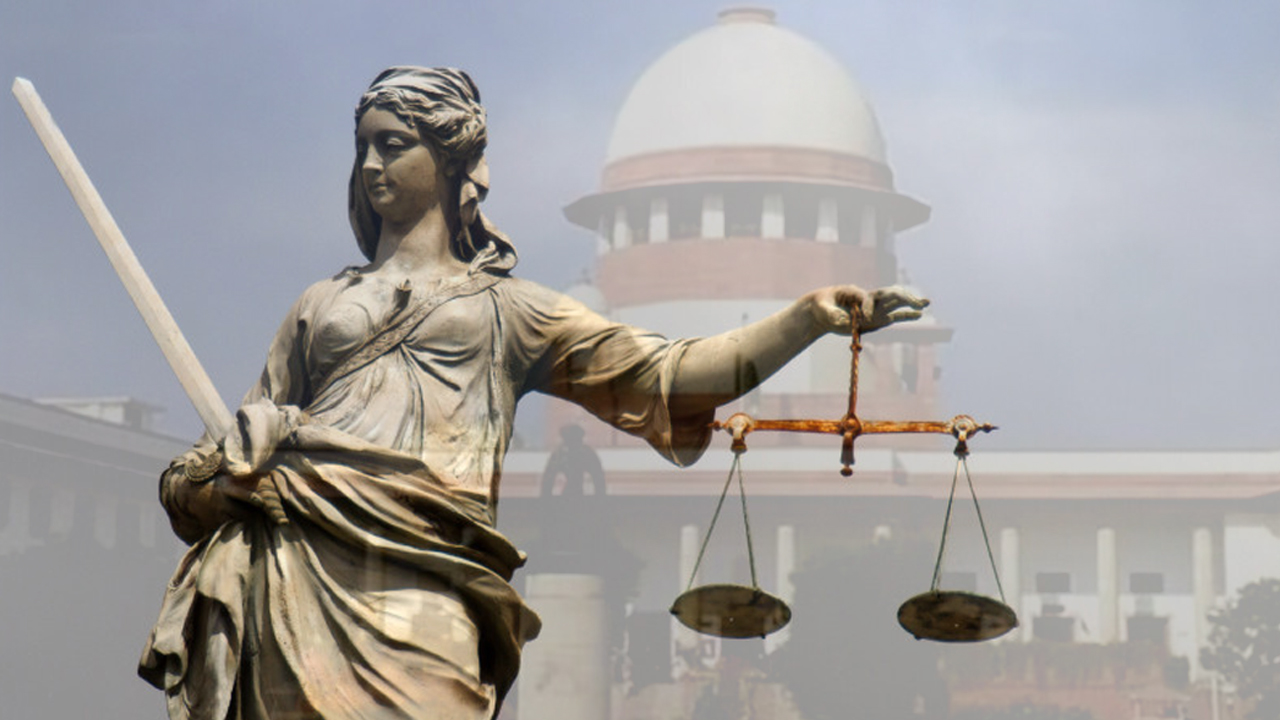
As residents of a nation-state focused on undermining gender justice through concerted and choreographed action of all its functionaries, how do we resist?
By Samata Biswas
The last month and a half in India have been singularly detrimental to all the strides that the country has made towards gender justice.
On 13th March, the Supreme Court of India rejected a petition seeking a national law mandating paid menstrual leave for working women and female students, with the judges claiming that this will prevent employers from hiring women. While the states of Bihar and Odisha already offer menstrual leave to government employees, and Karnataka just formalised a law offering the same to women employed in formal sectors, the Chief Justice’s comments reflect deep seated prejudice and secrecy around menstrual hygiene in India. Prejudice and secrecy are nothing new—sanitary products (for those who can afford them) continue to be sold in black plastic bags across the country. On the other hand, women migrant workers employed in labour intensive and seasonal sectors like sugarcane harvesting regularly undergo voluntary hysterectomy at a young age, so that menstruation and child birth do not interfere with their precarious and low-paying work lives. 23 million students drop out of formal education after the onset of menstruation, due to the lack of sanitary facilities, including clean toilets where they can change their sanitary products and dispose of them. Only three months ago, the same Supreme Court had to direct the Union Government and all states to provide free sanitary napkins and separate toilets for girl students. In India, questions of sanitation are inextricably linked to the labour of sanitation–toilets are nearly always the least important infrastructure. When the same toilets are expected to cater to women–they are even more so.
Incidentally, or perhaps not so incidentally, the Supreme Court is now also hearing a petition challenging the 2018 Sabarimala ruling. The southern Indian seat of Hindu deity Lord Ayappa, at Sabarimala, had for long denied entry to women of menstruating age (10- 50) on account of the god being a ‘bachelor’. In 2018, the Supreme Court opined that the state holds the right to make public Hindu-institutions open to all ‘classes and categories’ of Hindus, including the gendered category of women–a legislation that however faced steep opposition while being implemented. In 2018, I felt that having the right to enter a Hindu place of worship, as a menstruator, does not further women’s rights in any way, given that most Hindu temples continue to keep women out while they menstruate. But eight years later, the current discussions in the Supreme Court make me rethink my earlier position.
In response to the current petition, on 7th April, the Central government claimed that “barring a particular gender within a specific age group from entering a place of worship” is not discrimination– thereby linking the present hearing with the earlier observations by the Supreme Court that chose to limit menstruators’ participation in the workplace instead of giving them the right to paid time off.
Menstruator is a globally recognised term that indicates that all the people who menstruate do not necessarily identify as women. In India, the recently amended Transgender Persons (Protection of Rights) Amendment Bill 2026, placed in the Loksabha on March 13, and turned into a law merely 15 days later (incidentally on the eve of the International Transgnder Day of Visibility) goes back on the provisions of the landmark NALSA (National Legal Services Authority vs. Union of India) judgment of 2014 which upheld the rights of all persons to self-identify their gender. Following from the NALSA judgment, the Trans Act of 2019, despite its many shortcomings, continued to recognise gender as self determined. But the Trans Act Amendment of 2026 narrows the definition of a transgender person (limiting it to a handful of socio-cultural and occupational groups) and necessitates medical recognition for legal recognition. Moreover, it obliterates transmasculine and non-binary identities, generating confusion, fear and a looming mental health crisis. Persons on the road to transition fear being denied hormone treatments and community consultations reveal the refusal of doctors and surgeons to proceed with scheduled surgeries and consultations without clear guidelines from the state.
These amendments have not arisen as a result of any demands from within the community or through inviting comments to a draft, but instead, to supposedly protect the transgender community from “infiltrators” who use self identification to “corner” benefits intended for the community. Given that the transgender community is yet to receive benefits in the form of horizontal reservation in employment or in education, it is not clear what benefits do these “infiltrators” that the lawmakers speak of, are cornering. Over the last few years, with the rise of the “ghuspetiye/ illegal immigrant/ infiltrator” rhetoric in national and local media, and the close alliance to different sections of the trans community with the Hindu right, the alleged Bangladeshi Muslim identity of some transpersons have been the target of attack even within the community. But in the case of the Amendment Act, this act of infiltration is brought back to bear upon the body of the transgender person, privileging biomedically essentialised identities over others.
What is clear, however, is that the “infiltrator” rhetoric has played havoc with the lives and rights of marginalised women and transgender persons in the Special Intensive Revision (SIR) of the electoral roll in West Bengal. Instead of ensuring that no eligible voter is left behind, the election commission, aided by majoritarian rhetoric against “infiltrators”, has been keen to identify undocumented “Rohingyas and Muslims” living and voting in Bengal–although there has been no such claim after the SIR exercise was completed. Instead, data shows that in a similar exercise in Bihar last year, twice as many women as men were removed from the electoral roll, since women are least likely to have any of the 11 documents desired. In Bengal, after the voter lists were frozen before the first phase of assembly election, it was found that the ratio of female to male voters fell from an all time high of 970: 1000 to 952:1000. Nearly 62 percent of those deleted in the SIR are women, with socially marginalised groups such as Muslims, SCs (especially Matuas) and STs bearing the largest brunt. The Muslim majority districts of Malda and Murshidabad have recorded the largest deletions among women; in the tribal-dominated Jangal Mahal region more than 9 constituencies have with more than 60% deleted women voters. Similarly, districts like North and South 24 Parganas and Nadia, with a major Mauta population, include 8 of the 10 constituencies with the highest number of deletions for women.
For any interested observer, this tragedy was foretold. Women migrate due to marriage, are less likely to have school completion certificates, own land or have employment/ pension records. By shifting the burden of proof onto the citizen, the SIR process expects women, in a deeply patriarchal nation, to prove their ‘legitimacy’. Not surprisingly, Bihar SIR deleted twice as many women as men, the Assam NRC also disproportionately targeted women.
The Supreme Court, so vigilant to stop discrimination against women, has not yet done anything to stop or stall the SIR process, or to give women their voting rights back. This is a timely reminder of the national debates exactly a century ago when many legislators held that only sex workers wanted to stand in a queue to cast their ballots, claiming that ‘respectable’ women were happy to be led by their male counterparts. It is ironic that women were given the vote in Bengal exactly a hundred years ago, but are today disenfranchised.
Recent developments in India clearly indicate a regression of hard won rights for women, for marginalised gender and sexualities. In the hearing of the Sabarimala case, mentioned above, the Central Government termed the reading down of Section 377 of the IPC by the Supreme Court, terming it as “not a good law”. Section 377 of the Indian Penal Code (IPC) is a colonial era law that criminalised homosexuality. The historic reading down of the same by the Supreme Court in 2018 decriminalised consensual same sex relationships between LGBT individuals. The comments by the Central government once again undermine these hard won recognition.
Finally, on 17th April, the union government tabled the popularly called Women’s Reservation Bill, or the Nari Shakti Adhiniyam, the One Hundredth and Sixth Constitutional Amendment. Passed in 2023, the Bill has, for many years, been at the centre of discussions by Dalit and Bahujan feminist groups as well as of political parties that claim to represent such communities. A blanket women’s 33% reservation bill in the parliament and the state legislatures does ensure that women of all kinds– especially of oppressed castes, tribes and minority religion will also become part of the legislature–in fact, it only caters to dominant caste/ class women, who might further the casteist Hindutva agenda. Nevertheless, the Bill, which was passed in 2023, was set to be implemented in the Parliament, once it was expanded through the delimitation of States and Union Territories based on the 2011 census. The current Parliament has only 14% women, with the ruling BJP including only 13% women in its total strength.
A Bill that could have been implemented in the 2024 Lok Sabha elections, or even without delimitation, was nevertheless clubbed with the delimitation bill, and thereby guaranteed defeat. Despite the internal contradictions of the Bill, and it’s very legitimate criticisms-–how can one interpret the quite obvious attempt by the union government to pass the unconstitutional delimitation of parliamentary constituencies under the rhetoric of gender justice?
These six instances, in rapid succession over the span of just six weeks, when seen together, indicate a fast and clear backsliding of gender justice in India. On the surface the issues may seem disparate–they range from issues of self identification of gender to sexuality, from menstrual taboo to electoral disenfranchisement, from equality in temple entry to ensuring political representation. But they are connected to each other through the quite obvious need to control–control bodies that break the binaries of gender and heterosexuality, bodies that bleed, move and do not serve the purpose of majoritarian heteropatriarchy.
As residents of a nation-state focused on undermining gender justice through concerted and choreographed action of all its functionaries, how do we resist? Women from Manipur, Odisha and Madhya Pradesh are showing the way while we type. In Odisha women in Raygada district are leading intense protests against Bauxite mining, in MP, hundreds of tribal women have been lying in mock funeral pyres, opposing the linking of rivers. In Manipur, thousands of Meitei women, well-known both for their forcible action against state repression as well as their participation in the violence of the last three years, are blocking roads protesting the killing of two children in Bishnupur district. These localised acts of resistance are running parallel to the administrative onslaught on gender justice in India—asking, once again, is there a country for women?
Samata Biswas is Asst. Professor and Coordinator, Department of English, The Sanskrit College and University, Kolkata.