
A survey of 2,500 Muslim women exposes widespread violence, abandonment and economic dispossession; over 300 prominent citizens endorse petition demanding ban on polygamy
Groundxero Report | Dec 8, 2025
A coalition of Muslim women, secular activists, civil-rights defenders and progressive citizens has launched a petition demanding a complete legal ban on polygamy in India. The call—endorsed by more than 300 prominent signatories—is grounded in a landmark new study by the Bharatiya Muslim Mahila Andolan (BMMA) documenting the emotional, social, economic and psychological violence inflicted on Muslim women trapped in polygamous marriages.
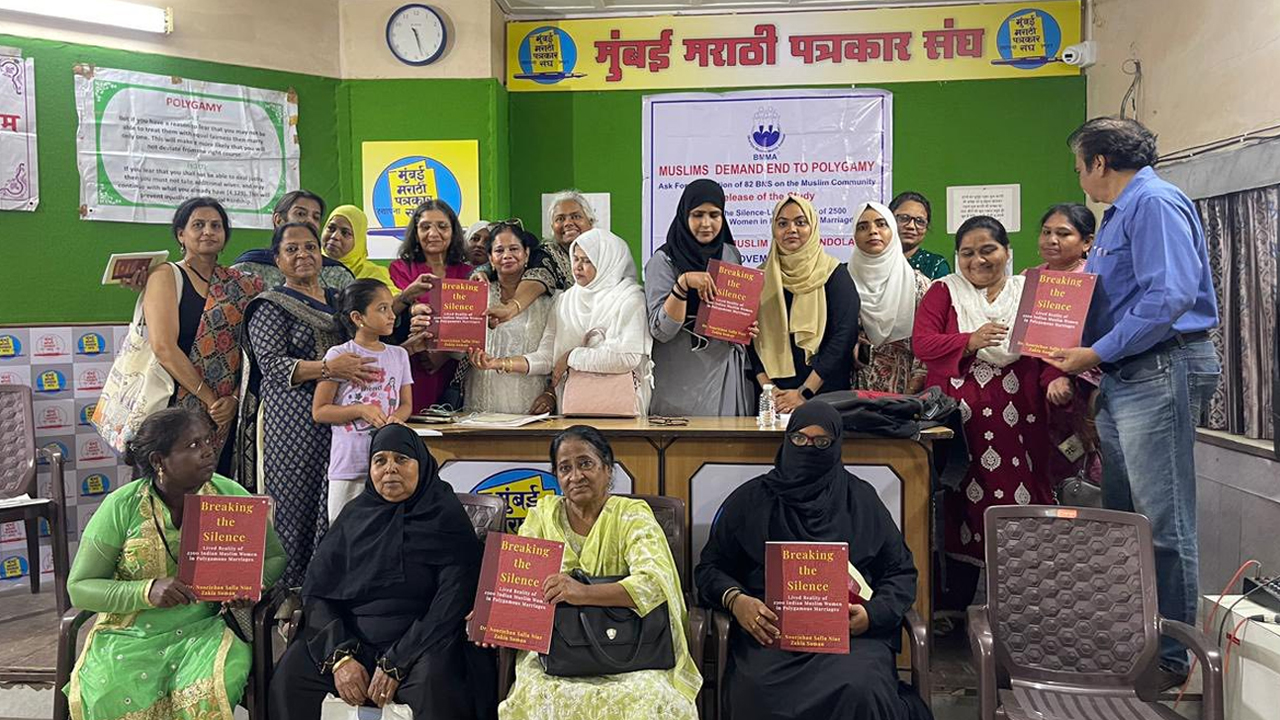
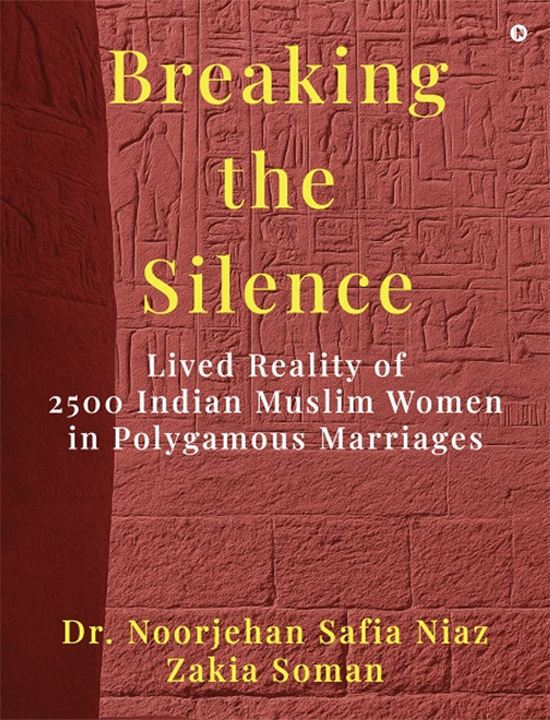
The 132-page report, Breaking the Silence: Lived Reality of 2,500 Muslim Women in Polygamous Marriages, was released at the Mumbai Marathi Patrakar Sangh last Tuesday. It draws on detailed quantitative data and in-depth testimonies from seven states, and presents one of the most comprehensive portraits to date of how polygamy operates as structural injustice in contemporary India.
The report reveals 85 % of women surveyed calling for abolition of Polygamy and 87 % demanding its criminalization. The call is clear: faith must not be a shield for exploitation — equality and justice must prevail.
Key Findings from the BMMA 2025 Report
- 85% of Muslim women surveyed want polygamy abolished.
- 87% demand that polygamy be criminalised under law.
- 79% of first wives were never informed about their husband’s second marriage.
- 88% said the husband did not seek their consent before remarrying.
- 54% of first wives faced abandonment after the second marriage.
- 36% received no financial support thereafter.
- 47% were forced to return to their parental homes due to destitution.
- 93% demand a complete ban on child marriage, an issue closely tied to unregulated marital practices.
MMMA said that these statistics reveal a system of structural injustice, not a religious or cultural obligation. “These are not isolated ‘family disputes’,” BMMA stated. “They reflect a system of violence, exploitation and economic dispossession that leaves women and children vulnerable and without rights.”
More powerful than the statistics were the testimonies of two women — Tasleem and Husna — who spoke at the report’s launch, as reported by The Hindustan Times. What came across most from their testimonies were the feelings of humiliation, inadequacy and rejection they experienced when their husbands remarried, coupled with the pain of the insults and physical violence meted out to them by their husbands, in-laws, and also the second wife.
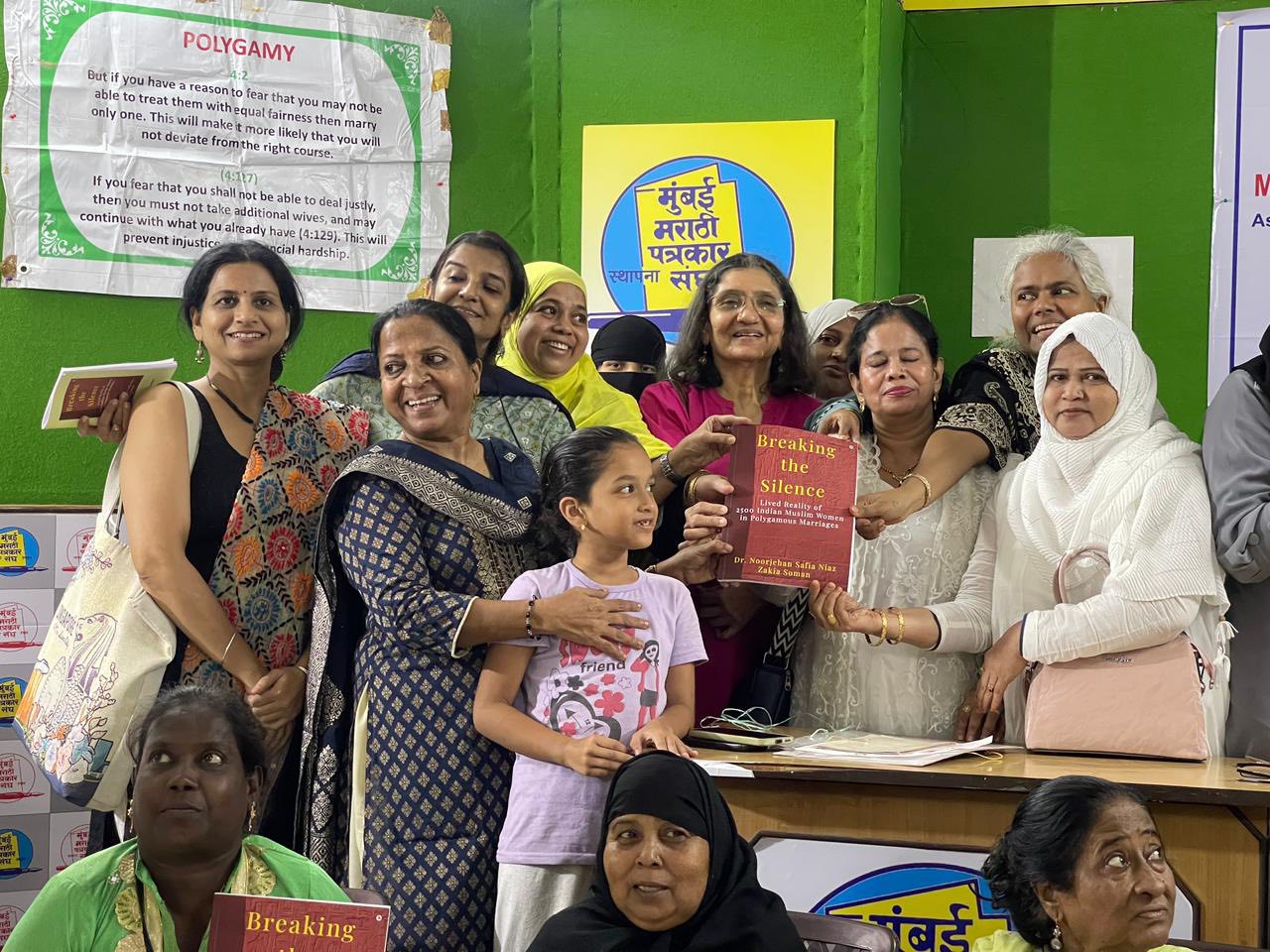
BMMA co-founder Zakia Soman emphasised at the press meet that laws restricting polygamy exist in several Islamic countries, and the Quran itself states that a second marriage can only be entered into under very strict conditions. The study, she said is aimed to move the state and the community into action for family law reforms towards justice, equality and compassion. Legislative protection is an important tool for social transformation and this study by BMMA hopes to achieve that goal, she stressed.
“As we present this study, we hope the community will rise up for itself to correct generations of neglect of this important issue of family law reform. We also hope that the state will respond to this demand of Muslim women for not just ending polygamy but also taking full efforts for a comprehensively overhaul of the Muslim family law,” said the BMMA.
Noorjehan Safia Niaz, Co-Founders of Bharatiya Muslim Mahila Andolan. Mr. Javed Anand and Mr. Feroze Mithiborewala from the Indian Muslims for Secular Democracy also expressed their support to the demand by Muslim women, and pushed for reforms in the Muslim family law.
More than 300 leading progressive figures from all walks of life, from across the nation have endorsed a statement demanding a Legal Ban on Polygamy in India. The signatories include Zakia Soman, Noorjehan Safia Niyaz, Medha Patkar, Javed Anand, Baba Adhav, Tushar Gandhi, Raosaheb Kasbe, Saeed Mirza, Shamsuddin Tamboli, Ram Puniyani, Feroze Mithiborwala, Dr. Yashwant Manohar, Anand Parwardhan, Zeenat S. Ali, Feroze Abbas Khan, Mallika Sarabai, Dr. Sunilam, Vibhuti Patel, Avinash Patil, Kavita Srivastava, Nikhat Azmi, Hamid Dhabholkar, Dr. Suresh Khopde, Subhash Ware, Hasina Khan, Sabah Khan, Sandhya Gokhale, Benazeer Tamboli, Vinod Sirsat, Chayanika Shah, Pratima Joshi, Masooma Ranalvi, Sultan Shaheen, Arshad Alam, Ashok Dhiware among others.
The endorsed statement is published here.
We, the undersigned — Indian Muslims, women’s rights organisations, secular-progressive citizens, academics, activists, students, and allies — issue this collective call for the complete legal abolition of polygamy in India.
MUSLIM COMMUNITY DEMANDS END TO POLYGAMY
Asks For Application of 82 BNS on the Muslim Community
Indian Muslim women continue to be denied justice and equality in marriage and family for nearly eight decades after India’s independence. Reform in Muslim Family Law has been long overdue and Indian Muslim women are entitled to legal protection and safeguards similar to women from other communities.
BMMA has been in the forefront of demanding a comprehensively codified family law since 2007. While we await action on the draft law, we have been also advocating for piecemeal legislation to address some or the other aspect of the Muslim family law. To end that we could get a legislation against triple divorce in 2019.
Further on, we have been advocating for bringing the Muslim community within the ambit of BNS 82/494 IPC, a provision against polygamy as well as to bring the Muslim community, unambiguously within the ambit of the Prohibition of Child Marriage Act, 2006. Our PIL to end polygamy and halala is with the Supreme Court of India for a fair judgment.
Unfortunately, for Indian Muslims a Muslim Code leading to codified personal laws remains a distant dream or it is even unthinkable. The conservative ulemas have never allowed any possibility of reform; even mentioning reform is blasphemous as we learnt the hard way in the course of our work. They invariably raise the bogey of “Islam in danger” and “Shariat in danger” whenever voices demanding gender justice are raised. This was witnessed repeatedly during the women-led struggle against instant triple talaq. They keep parroting the line “Islam gave rights to women 1400 years ago” but vehemently oppose any move towards translating these rights into reality. This has also resulted in a common sense in vast sections of the community about personal laws being above board and the question of reform must not arise. It is left to the women themselves to take up their demands for gender just family laws.
Need to Abolish Polygamy
Muslim women remain trapped between patriarchy within the community and communal politics in the larger context. The voices of reform that arose in the last two decades such as the women-led movement against triple talaq cannot survive in an atmosphere of hate, religious polarization and aggravated communalism. On the other hand, nothing can be expected from the conservative ulemas as far as women’s equality is concerned. Under the circumstances, BMMA continues in its mission for attaining gender justice for Muslim women and for equal citizenship.
We have been conducting public meetings, workshops and programs for building consciousness about women’s rights in religion as well as Indian constitution. We have conducted ground level studies on various issues relevant in lives of women including a pilot study on polygamy. The women we spoke to urged for a legal abolition of polygamy as they found the practice was inhuman and unbearable for women. Our pilot survey indicated that being in a polygamous marriage causes tremendous emotional trauma to the woman apart from economic and other hardships. It affects the woman’s sense of self respect, self-esteem and dignity as a human being. The issue is compounded by educational and economic deprivation as they are in no position to raise their voice and demand fair treatment. An overwhelming number of women told us that they felt a sense of betrayal, loss of dignity and loss of self-respect when the husband remarried.
Quran Does Not Encourage Polygamy
We at the BMMA are firmly of the view that polygamy or taking of more than one wife by a man is strictly not permitted by the Quran in today’s context and it should be legally banned forthwith. Some Indian Muslims suffer from the misplaced belief that a Muslim man can marry four times and it is totally permitted by the Quran. Very few know that this is not true! The Quran gives man permission for more than one marriage, but nowhere is a man encouraged to marry a second time. In fact, there is a clear preference that he marries only once. According to the Quran ((4:2, 4:3, 4:127, 4:129) a Muslim man cannot freely marry a second time while the first wife is alive. In the very same chapter the Quran says that even if it is his ardent desire to treat all of wives equally he cannot. The final goal of Quran is monogamy. The circumstances of war prompted the revelation of these verses to ensure justice for women and not an all-time permission to marry multiple times.
Breaking the Silence-Lived Reality of 2500 Indian Muslim Women in Polygamous Marriages reveals the harsh conditions of those who have been impacted by polygamy. It unpacks their lives through in-depth case studies and detailed quantitative data to understand the emotional, social and economic toll of polygamy and its impact on women’s health, relationships, dignity and rights.
It is a study for the sake of transformation hoping to move the state and the community into action for family law reforms. It seeks to give voice to those who are silently suffering within the 4 walls of their home. It calls for action which moves the community towards justice, equality and compassion. Legislative protection is an important tool for social transformation and this study hopes to achieve that goal.
This study of 2500 victims of polygamy will give a push to our campaign to demand appropriate legislation against polygamy. The objectives of the study is to assess the current situation of Muslim women with regards to polygamy, to assess its impact on women’s social, economic, mental and physical health, to assess its impact on the children and to finally utilize the data for further advocacy work and make polygamy legally invalid.
As we present this study, we hope the community will rise up for itself to correct generations of neglect of this important issue of family law reform. We also hope that the state will respond to this demand of Muslim women for not just ending polygamy but also taking full efforts for a comprehensively overhaul of the Muslim family law.
The press was addressed by Zakia Soman and Noorjehan Safia Niaz, Co-Founders of Bharatiya Muslim Mahila Andolan. Mr. Javed Anand and Mr. Feroze Mithiborewala from the Indian Muslims for Secular Democracy also expressed their support to the demand by Muslim women. Dr. Zeenat Shaukat Ali, the Director-General of the Wisdom Foundation and Mr. Shamsuddin Tamboli, President of the Satyashodhak Mandal expressed their views and pushed for reforms in the Muslim family law.
Key Findings from the BMMA 2025 Report
- 85% of Muslim women surveyed want polygamy abolished.
- 87% demand that polygamy be criminalised under law.
- 79% of first wives were never informed about their husband’s second marriage.
- 88% said the husband did not seek their consent before remarrying.
- 54% of first wives faced abandonment after the second marriage.
- 36% received no financial support thereafter.
- 47% were forced to return to their parental homes due to destitution.
- 93% demand a complete ban on child marriage, an issue closely tied to unregulated marital practices.
These statistics reveal a system of structural injustice, not a religious or cultural obligation. The lived experiences of women across class and region show that polygamy today operates as violence, exploitation, and economic dispossession, leaving women and children vulnerable, abandoned, and without rights.
Why We Demand a Ban
- Equality before Law:
Polygamy is banned for all other communities in India. Muslim women must not be left with fewer rights or weaker protections. - Gender Justice & Constitutional Values:
Articles 14, 15 and 21 guarantee equality, dignity, and personal liberty. No personal law can override these fundamental rights. - Religious Freedom is Not a License for Harm:
Islam emphasises justice, responsibility and compassion — not the unchecked power of men over women. Faith cannot be misused as a shield for exploitation. - Universal Civil Protections:
Ensuring that marriage law applies equally to all citizens strengthens democracy and social harmony. No woman should have to fight for rights that others already enjoy.
Our Demands to Central & State Governments, Parliament and All Political Parties:
- A clear statutory ban on polygamy under the provisions of Bharatiya Nyaya Samhita (BNS) 82. This provision criminalises polygamy with imprisonment upto 7 years.
- Mandatory registration of all marriages.
- Guaranteed maintenance, inheritance and housing rights for women and children abandoned under polygamous arrangements.
- Expansion of legal aid, crisis shelters, counselling and economic support for survivors.
- Community-led awareness programmes to ensure reform is rooted in dignity and justice, not stigma.
Our Commitment
This petition is a declaration that Indian Muslim women deserve the same legal protections as every other woman in this country. It is a call rooted in constitutional morality, women’s rights, and the ethical principles of justice and equality.
We stand in solidarity with the thousands of Muslim women whose voices the BMMA 2025 report amplifies. Their experiences demand action — not delay, not excuses.
Join Us
We call upon:
- Muslim organisations and ulema who stand for justice,
- Women’s groups and feminist collectives,
- Student unions and workers’ unions,
- Civil society networks, journalists, lawyers and academics,
- And all citizens committed to equality and democracy,
To endorse this petition and support a legal ban on polygamy in India.
The time for justice is now!
Issued by:
Javed Anand (IMSD)
Feroze Mithiborwala (IMSD)
Shamsuddin Tamboli (MSM)