
Western recognition of Palestine may have been a symbolic victory, but in the absence of enforcement, it changes nothing on the ground. Strongmen like Trump ensure that such gestures remain hollow, easily dismissed, and politically inert.
Ronny P Sasmita
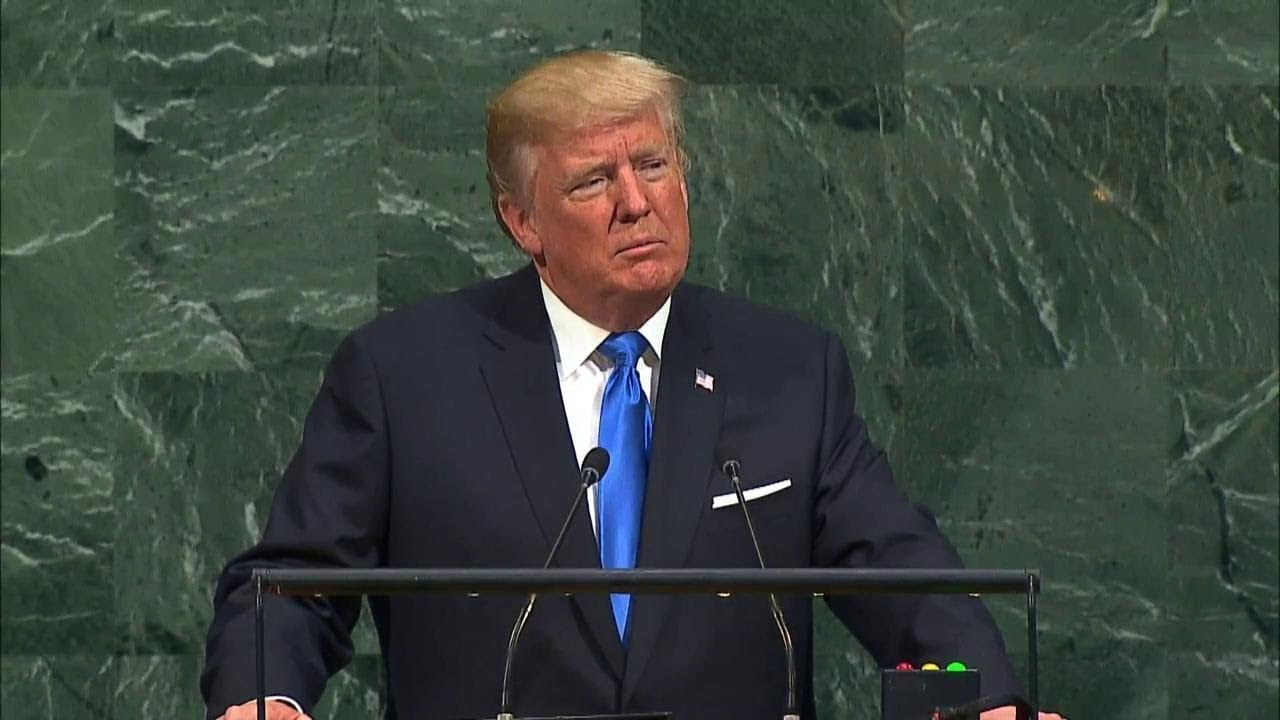
Donald Trump’s 23 September speech at the United Nations General Assembly was never going to be subtle. True to form, the US president turned what is traditionally a stage for diplomacy into a spectacle of nationalist swagger, disdain for multilateral institutions, and open contempt for the very ideals the UN purports to uphold. What stood out most this year, however, was not just Trump’s scorn for the UN itself, he ridiculed it as “a club for the weak” that has “never solved a real problem”, but his deliberate silence on one of the world’s most enduring crises, the devastation of Gaza and the Palestinian people’s plea for justice.
This omission was not accidental. Trump has long approached the Israel–Palestine conflict with a combination of ideological blindness and transactional calculation. His speech, laced with invocations of sovereignty, “America First” nationalism, and sneering dismissals of global governance, underscored a simple message, Palestine will not find its justice in a world defined by strongmen. Even as multiple Western states, including several in Europe, moved in September to grant recognition to Palestine, Trump’s posture, amplified by the growing global chorus of leaders who share his disdain for multilateralism, rendered those recognitions almost meaningless. When the loudest and most powerful voice in the room mocks the institutions meant to enforce international law, recognition becomes little more than symbolism.
Trump’s failure to mention Gaza was not merely a gap in speechwriting. It was a political signal. For months, images of bombed-out neighborhoods, mass civilian casualties, and desperate calls for humanitarian relief have defined the Gaza Strip in the eyes of the world. Yet Trump’s UN remarks avoided even a perfunctory acknowledgment of the suffering. Instead, he doubled down on defending “allies who stand strong against terror,” a not-so-subtle gesture toward Israel, without naming it directly. The omission is consistent with the “strongman” playbook.
As Gideon Rachman argues in The Age of the Strongman, contemporary leaders thrive by appealing to domestic audiences through nationalism and the projection of strength, while treating international norms as irrelevant or even hostile. Strongmen rarely find political capital in empathy for stateless peoples or in calls for compromise. In Trump’s world, the Palestinians are either a nuisance or an obstacle, never a constituency worth defending. His silence on Gaza was therefore a declaration, Palestinians have no place in the narrative of strongman politics.
The contrast between Trump and Indonesia’s President Prabowo Subianto could not have been starker. Just days before, Prabowo used his own UN speech to issue a passionate defense of the Palestinian cause, calling for urgent international action to halt Israel’s attacks and restore dignity to Gaza’s civilians. For Prabowo, a leader with strongman ambitions of his own, Palestine is not simply a moral issue but a strategic one. By aligning himself with the Palestinian cause, Prabowo strengthens his legitimacy at home, where public support for Palestine runs deep, and positions Indonesia as a moral heavyweight in the Muslim world. Yet Trump, with his trademark cynicism, brushed off such rhetoric as “performative posturing.”
His dismissive tone suggested that Prabowo’s defense of Palestine was little more than political theater designed for domestic consumption. And in some sense, Trump was right—Prabowo, like other aspiring strongmen, understands that foreign policy can serve as a stage for consolidating power. But Trump’s sneer also revealed something darker: a worldview in which appeals to justice, solidarity, or human rights are treated as laughable. To Trump, leaders like Prabowo may talk about Gaza, but power ultimately belongs to those who ignore Gaza and stand firmly with stronger, wealthier allies like Israel.
The cruel irony of September’s wave of recognition for Palestine by Western countries is that it arrived precisely at the moment when the global order is least capable of translating recognition into meaningful change. The European states that extended recognition no doubt imagined themselves standing on the right side of history, affirming the Palestinians’ right to self-determination. Yet in practice, these symbolic gestures collide with the reality of Trump-style strongman politics.
Terry M. Moe, in Trajectory of Power: The Rise of the Strongman Presidency, explains how leaders who command vast executive powers can nullify institutional norms with the stroke of a pen. Trump exemplifies this. Even if an international consensus forms around Palestine, a U.S. president committed to undermining multilateral institutions can paralyze enforcement. The UN Security Council remains hostage to the veto power of the United States. The International Criminal Court is ridiculed as “illegitimate.” And so, the machinery that might transform recognition into accountability or statehood is dismantled by strongman contempt. Recognition without enforcement is theater, and Trump’s speech at the UN drove home that point with ruthless clarity.
Trump is not alone. His speech echoed the voices of other strongmen, from Vladimir Putin to Narendra Modi, who have systematically eroded faith in multilateral institutions. Together, these leaders represent a global shift away from consensus-driven diplomacy toward transactional power politics. For Palestine, this shift is devastating. The cause that once animated solidarity movements and inspired resolutions at the UN is now sidelined by leaders more interested in tariffs, sovereignty, and cultural nationalism than in justice for stateless peoples. The implications go beyond Palestine. As Trump derided the UN and laughed off its failures, the message to other conflicts, from Ukraine to Myanmar, was unmistakable, multilateral solutions are obsolete. The age of strongmen is an age in which power speaks louder than law, and in such an age, Gaza’s cries for justice will always be drowned out.
Donald Trump’s UN speech did not just diminish the institution; it diminished the hope of Palestinians who, for decades, have looked to international law and global solidarity as their lifeline. By ignoring Gaza, sneering at leaders like Prabowo who invoked it, and mocking the very institutions designed to address such crises, Trump confirmed that Palestine’s struggle is increasingly futile in a strongman-dominated world. Western recognition of Palestine in September may have been a symbolic victory, but in the absence of enforcement, it changes nothing on the ground. Strongmen like Trump ensure that such gestures remain hollow, easily dismissed, and politically inert. In the final analysis, Trump’s speech was more than a performance of nationalist bravado. It was a reminder that in the age of the strongman, justice for Palestine, and for Gaza’s beleaguered people, is not merely delayed. It is indefinitely denied.
________________
The author is a Senior Fellow at Indonesia Strategic and Economics Action Institution
This article is republished from Middle East Monitor under a Creative Commons Attribution-NonCommercial-ShareAlike 4.0 International License. Read the original article.