
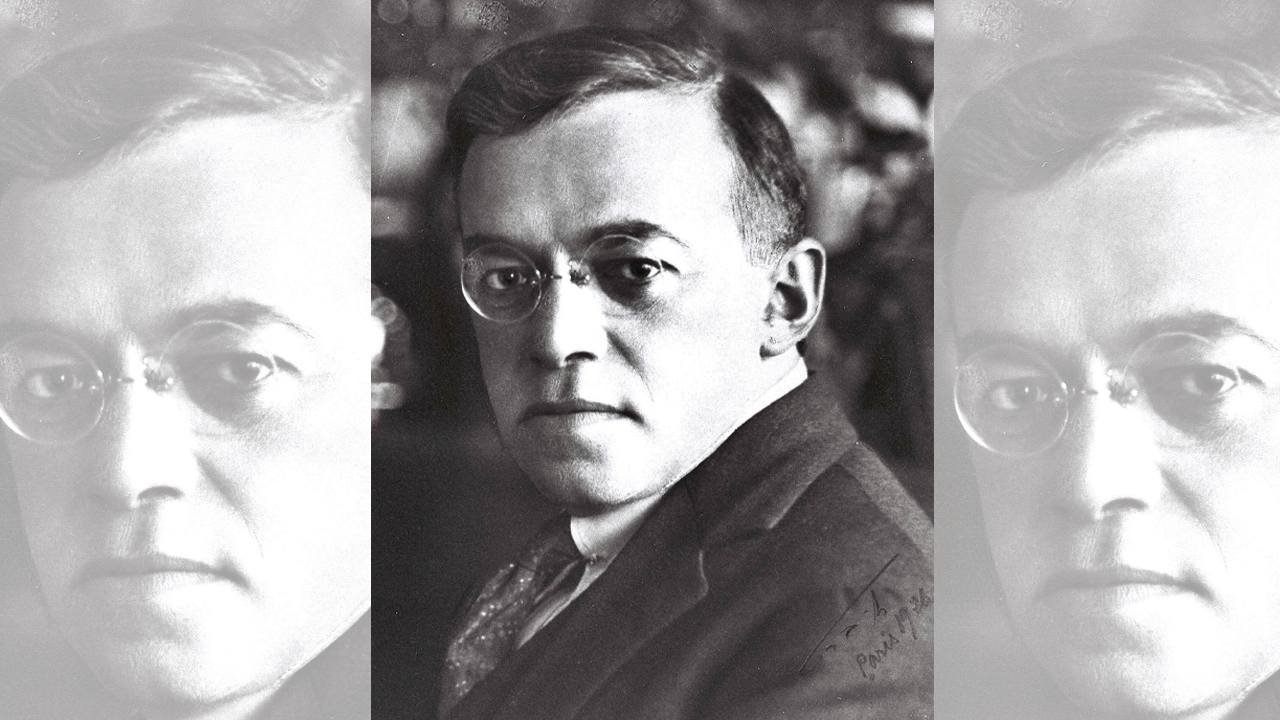
Revisionist Zionism was not a fringe ideology. It provided the foundations for the modern Israeli right wing, from the Irgun to the Stern Gang to today’s Likud Party. Its legacy survives in Israel’s enduring policies of apartheid, occupation, and territorial maximalism.
By Arkadeep Goswami
Few political movements have so effectively weaponized historical victimhood to justify militarism, colonialism, and systemic violence as Revisionist Zionism. Unlike the liberal strands of early Zionism that at least gestured towards coexistence, Revisionist Zionism, forged in the 1920s under Vladimir Jabotinsky, has always embraced a nakedly expansionist, ethno-nationalist vision of a Jewish state secured through force, conquest, and racial supremacy. This is not a forgotten episode in Zionist history—it is the ideological DNA of the modern Israeli state.
In his infamous 1923 essay The Iron Wall, Jabotinsky openly rejected the possibility of peace with the indigenous Palestinians, writing: “Zionist colonization must either stop, or proceed regardless of the native population’s wishes. This colonization can, therefore, continue and develop only under the protection of a power independent of the native population—an iron wall which the native population cannot break through.”
Here, Jabotinsky did not merely endorse colonial expansion; he demanded that such expansion be achieved against the will of the Palestinians, who he dismissed as obstacles to be crushed. This was not the language of peace, nor of Jewish safety— it was the rhetoric of settler-colonialism in its most unapologetic form.
Revisionist Zionism was not a fringe ideology. It provided the foundations for the modern Israeli right wing, from the Irgun to the Stern Gang to today’s Likud Party. Its legacy survives in Israel’s enduring policies of apartheid, occupation, and territorial maximalism. As Israeli historian Ilan Pappé succinctly explains: “Zionism is not Judaism. Zionism is a settler-colonial ideology that used Judaism as a shield to colonize Palestine.” Pappé’s analysis strikes at the heart of the Zionist narrative: the project was not the fulfillment of Jewish self-determination—it was a colonial enterprise built through systematic ethnic cleansing.
The global menace of Revisionist Zionism is most chillingly revealed in its collaboration with fascist regimes, including its documented attempt to establish ties with Nazi Germany. This is not speculative—it is a historical fact. In January 1941, the Stern Gang (Lehi), led by Avraham Stern and later by Yitzhak Shamir—who would later become Israel’s Prime Minister—offered to align Zionist paramilitary efforts with the Nazi regime. In a formal letter to Nazi authorities in Beirut, the Stern Gang proposed a partnership to advance “the establishment of the historical Jewish state on a national and totalitarian basis and bound by a treaty with the German Reich.”
As historian Lenni Brenner meticulously documents in Zionism in the Age of the Dictators, the Revisionist Zionists’ collaborationist overtures were not isolated. They were part of a cynical, strategic calculation: if aligning with the architects of the Holocaust could facilitate the Zionist project of colonizing Palestine, then it was a price they were willing to pay. The moral depravity is staggering—while millions of European Jews faced extermination, segments of the Zionist right prioritized the establishment of a Jewish ethno-state over the fate of their own people.
The Stern Gang’s relationship with fascism was not merely theoretical. The organization also perfected the tactics of modern terrorism. It orchestrated the assassination of Lord Moyne, the British Minister for Middle East Affairs in 1944, and participated in the Deir Yassin massacre in 1948, where over 100 Palestinian civilians were slaughtered in cold blood. These were not rogue actions; they were the realization of Jabotinsky’s “iron wall” doctrine, which sanctioned terror, murder, and ethnic cleansing as legitimate instruments of Zionist policy. These very tactics—car bombings, targeted assassinations, civilian massacres—would later be institutionalized by the Israeli state, forming the backbone of its contemporary military and intelligence strategy.
The moral inversion is grotesque: while the world rightly condemns terrorism in other contexts, the architects of Zionist terror are honored in Israel. Streets are named after Menachem Begin, a former Irgun leader and Prime Minister, and Yitzhak Shamir, former Stern Gang commander. What the colonized call terror, the colonizer institutionalizes as national heroism.
Revisionist Zionism’s global threat did not stop at Israel’s borders. It has metastasized into Israel’s modern statecraft, into the very architecture of apartheid enshrined in Israel’s Basic Laws, which legally codify Jewish supremacy over the land and its people. The “iron wall” that Jabotinsky theorized has materialized in the form of fortified borders, concrete apartheid walls, military checkpoints, segregated roads, siege warfare, and sprawling settlements that suffocate Palestinian life. The entire Israeli security complex is built on the normalization of these supremacist structures.
Even more insidiously, Revisionist Zionism has gone global. Israel’s colonial expertise is now one of its most lucrative exports. Surveillance technologies, developed and field-tested on Palestinians, are sold to authoritarian regimes and police forces across the world, from India’s repression of Kashmiris to the militarization of the U.S.-Mexico border. Israeli historian Tom Segev rightly observed: “What began as a colonial project has become a global security empire.”
Today, Israeli arms, spyware, and crowd-control techniques form the backbone of oppressive regimes worldwide. The Zionist colonial laboratory has gone international, with Palestinians as its first test subjects.
What is perhaps most cynical is Revisionist Zionism’s embrace of the global far-right. Israeli leaders like Benjamin Netanyahu have cultivated warm relationships with explicitly anti-Semitic leaders such as Viktor Orbán in Hungary, whose regime openly traffics in anti-Jewish conspiracy theories. Netanyahu also cozied up to Brazil’s Jair Bolsonaro, the Philippines’ Rodrigo Duterte, and India’s Narendra Modi, all of whom have championed fascistic, ethno-nationalist, or genocidal policies. Revisionist Zionism’s alliances reveal its true face: it is not a shield for Jewish safety—it is a flexible instrument of colonial domination, willing to embrace anyone who shares its obsession with borders, walls, and racial purity.
The Israeli state’s increasing intimacy with India’s Hindutva regime is particularly instructive. Both Israel and India’s ruling elites share a militarized, ethno-nationalist vision that seeks to erase indigenous populations—Palestinians in Israel, and Kashmiris and Indian Muslims under Hindutva. Both rely on the criminalization of dissent, surveillance of minorities, and the glorification of military conquest. Zionism, once falsely marketed as a refuge against persecution, now provides ideological scaffolding and tactical expertise for some of the world’s most oppressive regimes.
As philosopher Achille Mbembe has noted: Israel’s politics today represent “the politics of enmity,” a logic in which Palestinians are permanently cast as threats to be contained, segregated, and eliminated. The global diffusion of this colonial technology threatens not only the Palestinians but the very possibility of universal emancipation. Revisionist Zionism’s global menace lies in its ability to normalize militarism, racial supremacy, surveillance, and border violence as standard features of modern governance. This is not merely a local issue. It is a blueprint for global authoritarianism.
We must unapologetically name Revisionist Zionism for what it is: a colonial project, a historical collaborator with fascism, and a global threat to anti-racist, anti-colonial, and democratic struggles everywhere. Its architects were willing to negotiate with the very forces that sought the extermination of Jews, so long as it served their supremacist ambitions in Palestine. As the Israeli historian Tom Segev and Jewish intellectuals like Judith Butler remind us, Zionism is not Judaism. It is a violent political ideology that cynically uses Jewish suffering to justify new forms of racial domination.
We must reject the Zionist narrative that wraps itself in the memory of the Holocaust to defend fresh atrocities in Gaza, the West Bank, and beyond. To oppose Zionism—especially its revisionist form—is not to be anti-Semitic; it is to stand in solidarity with all those who resist colonial violence.
As the Palestinian intellectual Edward Said so powerfully put it: “The connection between the struggle against anti-Semitism and the struggle against Zionist oppression must be understood as the same struggle—against racism in all its forms.”
The true betrayal of Jewish history is not anti-Zionism—it is using the Jewish name to perpetuate colonial supremacy. “Never Again” means Never Again for Anyone.
________________
Arkadeep is a political activist and writer based in Kolkata.
Image: Ze’ev Jabotinsky, founder of Revisionist Zionism, Source: Wikipedia