
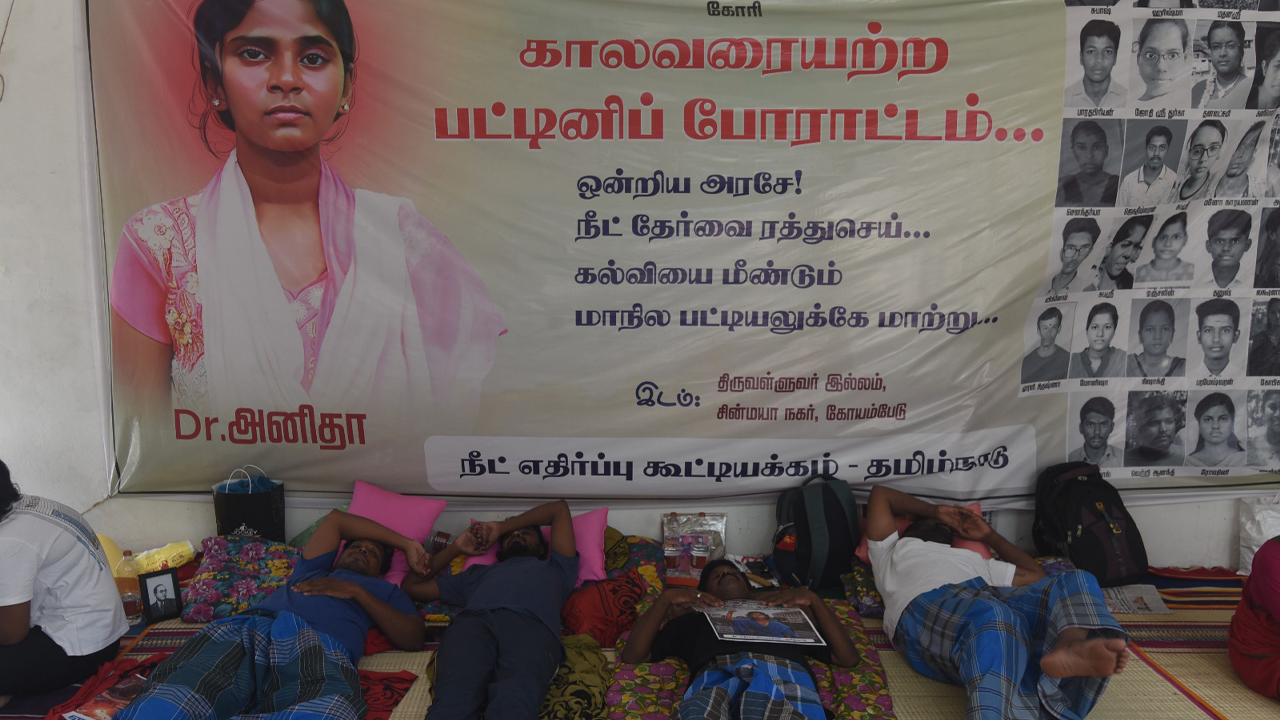
The indefinite hunger strike against the National Eligibility-cum-Entrance Test (NEET) in Chennai entered its seventh day on Saturday, August 8. The agitation, led by the Anti-NEET Federation and the Joint Movement Against NEET, is demanding not merely reforms to the examination but its complete abolition, along with greater state control over education.
Chennai, August 8, 2026: An indefinite hunger strike demanding the abolition of the National Eligibility-cum-Entrance Test (NEET) entered its seventh day in Chennai on Saturday, with four anti-NEET activists continuing their fast at Koyambedu.
The four hunger strikers — Dhanasekar, Jeeva, Puliyanthope Mohan and Ravi — are associated with the Ban NEET Movement of the Anti-NEET Federation in Tamil Nadu. The Joint Movement Against NEET is demanding the abolition of NEET, greater state autonomy over education and a designated public space in Chennai where the protesters can continue their agitation peacefully. One of the four hunger-strikers, Ravi was hospitalised on Thursday after coughing up blood. His condition is now reported to be stable.
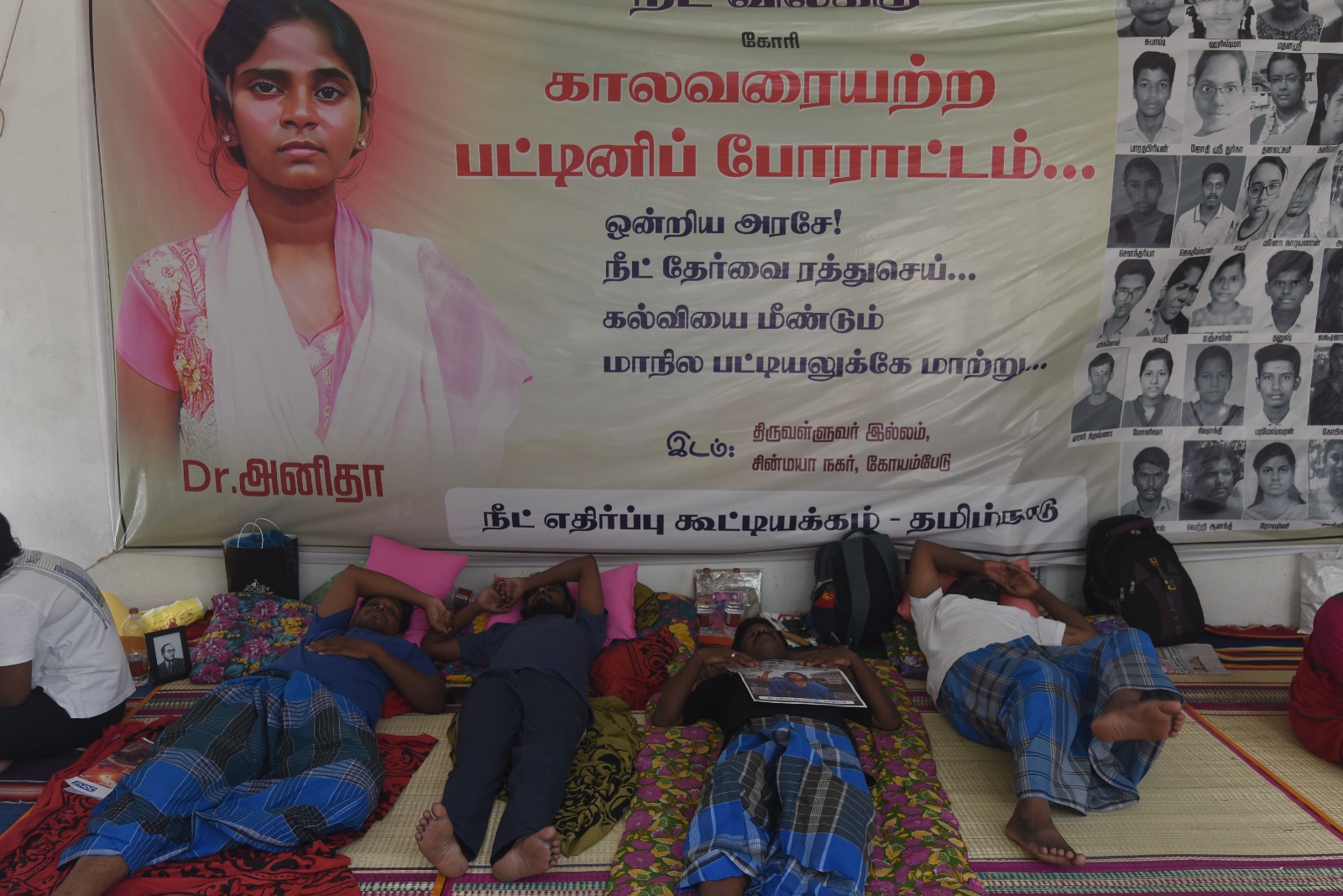
The protesters are demanding that the TVK-led Tamil Nadu government pass a fresh Assembly resolution or Bill seeking exemption from NEET and pursue the pending legal challenge concerning the state’s earlier attempt to secure an exemption. They have also called for the government to provide a permanent public venue for peaceful protests in Chennai.
“We will call off the hunger strike if a resolution is passed. That’s the first step. Then, we need an alternative location to carry on with our protest against the exam,” said S Manirathinam, brother of S Anitha, whose death in 2017 became a defining moment in Tamil Nadu’s opposition to NEET.
Manirathinam urged the Tamil Nadu government to reaffirm its opposition to NEET through a fresh Assembly resolution or Bill. He said previous AIADMK and DMK governments had passed resolutions and a Bill seeking an exemption and argued that a renewed initiative would demonstrate that opposition to NEET cuts across party lines.
He also called for the state government to expedite its legal challenge to the President’s decision to withhold assent to the earlier exemption Bill passed in the state assembly.
‘Not fair NEET, but ban NEET’
The Anti-NEET Federation, a collective of students’ and youth organisations and social workers, says its demand goes beyond seeking reforms that will make NEET more transparent or prevent examination malpractice.
Its position is unequivocal: NEET itself should be abolished.
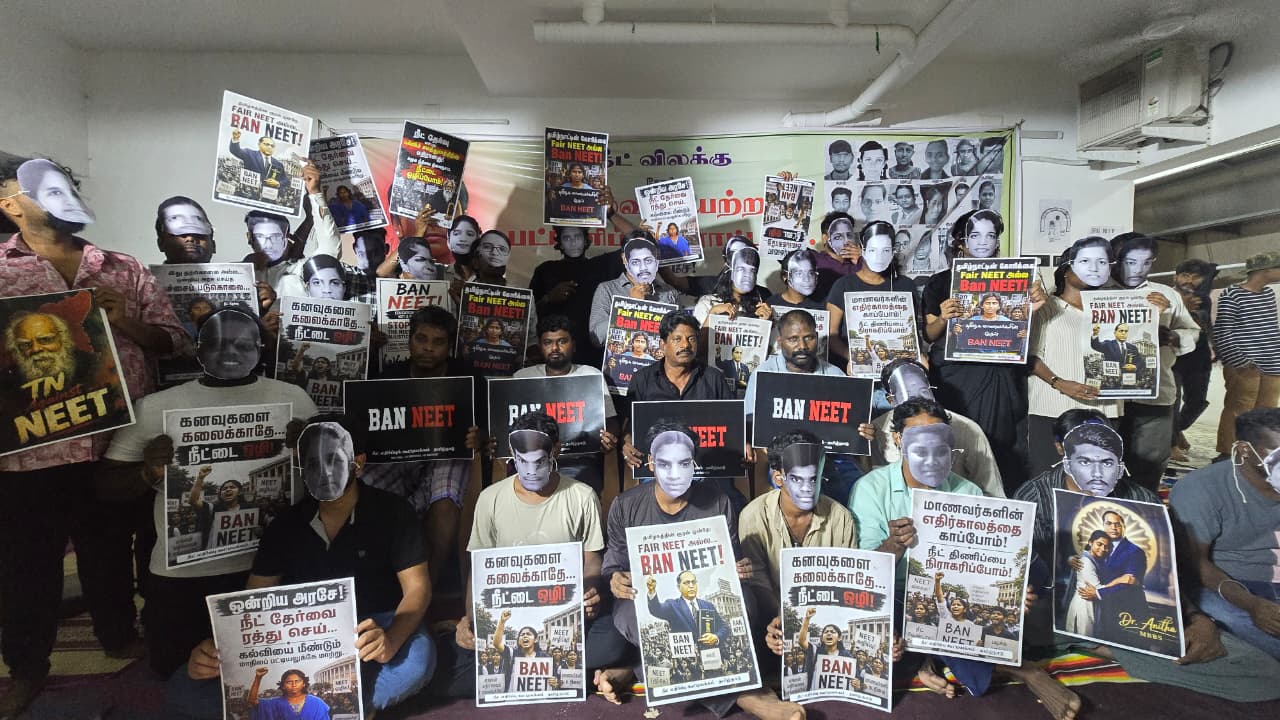
The federation argues that NEET favours students who can afford expensive private coaching and additional years of preparation, placing students from rural, government-school and marginalised communities at a great disadvantage. The Joint Movement Against NEET has similarly argued that the examination has deepened inequalities in access to medical education and contributed to the expansion of the private coaching industry. Its press statement also cited nearly 40 student deaths in Tamil Nadu, including those of Anitha, Pratheeba and Anukreethika, which it linked to examination pressure, systemic inequalities and unequal access to opportunities.
The federation is also demanding that states be allowed greater freedom to determine medical admissions, including the use of Plus Two examination marks, and that education be moved from the Concurrent List back to the State List.
Dhanasekar said the hunger strike began after the protesters were denied permission to hold a peaceful public demonstration, despite an assurance reportedly given during earlier anti-NEET protests.
School Education Minister A Rajmohan visited the protest site on Wednesday, reiterated the government’s opposition to NEET and appealed to the protesters to withdraw their fast, Dhanasekar said. “We will end the hunger strike only if the government allots us a public place to continue our agitation peacefully,” he said.
Anitha’s name remains at the heart of the anti-NEET struggle
Do you remember S Anitha?
During the month-long protests against NEET at Delhi’s Jantar Mantar, her name was repeatedly invoked by protesters from Tamil Nadu. For the anti-NEET movement, her memory is not merely commemorative. It is political.
Anitha was a Dalit student from Ariyalur district and the daughter of an agricultural daily-wage labourer. She studied in a Tamil Nadu government school and was a brilliant student, scoring 1,176 out of 1,200 marks — 98 per cent — in the Class XII State Board examination in 2017. Her medical cut-off score was 196.75 out of 200, marks that would have comfortably secured her a medical seat under Tamil Nadu’s earlier admission system.
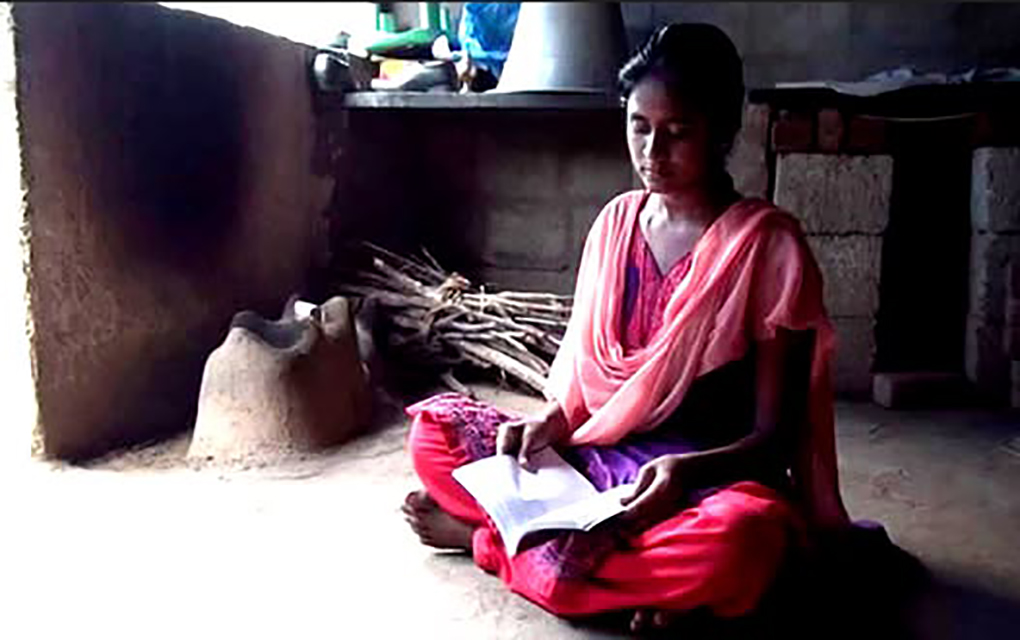
Anitha dreamt of becoming a doctor. According to her brother Manirathnam, her mother died of an illness when Anitha was seven, an experience that contributed to her determination to become a doctor and provide medical care to the poor.
But her dreams were crushed when the system shifted the goalposts overnight. NEET became the mandatory basis for medical admissions in 2017. Anitha could not clear the national test with a high enough score to secure a government medical seat.
Anitha actively opposed the implementation of NEET. She had also become involved in the legal challenge to NEET and was one of the petitioners in the Supreme Court proceedings concerning Tamil Nadu’s demand for exemption of state board students from the exam. It was argued that a single national test penalised rural, state-board, and economically disadvantaged students, who lacked access to expensive private coaching centres. The Supreme Court, however, did not grant the requested exemption and dismissed the petition, directing the state to proceed with NEET-based admissions.
On September 1, 2017, a devastated 17-year-old Anitha died by suicide. Her death triggered widespread protests across Tamil Nadu and became a defining moment in the state’s opposition to NEET.
The Anti-NEET movement regards Anitha as Tamil Nadu’s first victim (martyr) of the oppressive and discriminative central exam system.
Manirathnam, has continued to carry his sister’s struggle into the present campaign. He had also joined the recent protests against NEET exam paper leaks at Jantar Mantar in New Delhi. Speaking during the protests he said the controversy could not be resolved merely by fixing examination irregularities.
“Paper leaks, impersonation, centre allocation issues, repeaters, it is a full-and-full failure model. Resignation of Dharmendra Pradhan is just step one. That is not enough. We want NEET to be banned and exemptions granted because NEET is against marginalised people, village-level students, and economically weaker sections,” he said.
That distinction lies at the heart of the present agitation in Chennai. While protests in Delhi have focused heavily on alleged paper leaks, examination irregularities and accountability, the Anti-NEET Federation argues that the problem goes deeper than the integrity of the examination.
It does not want a “clean NEET”; it wants NEET abolished.
The movement’s argument is that replacing a minister, tightening examination procedures or preventing paper leaks cannot address the inequalities embedded in a centralised entrance examination.
For the protesters, Anitha’s story represents the difference between demanding a more efficient NEET and demanding an end to NEET altogether.
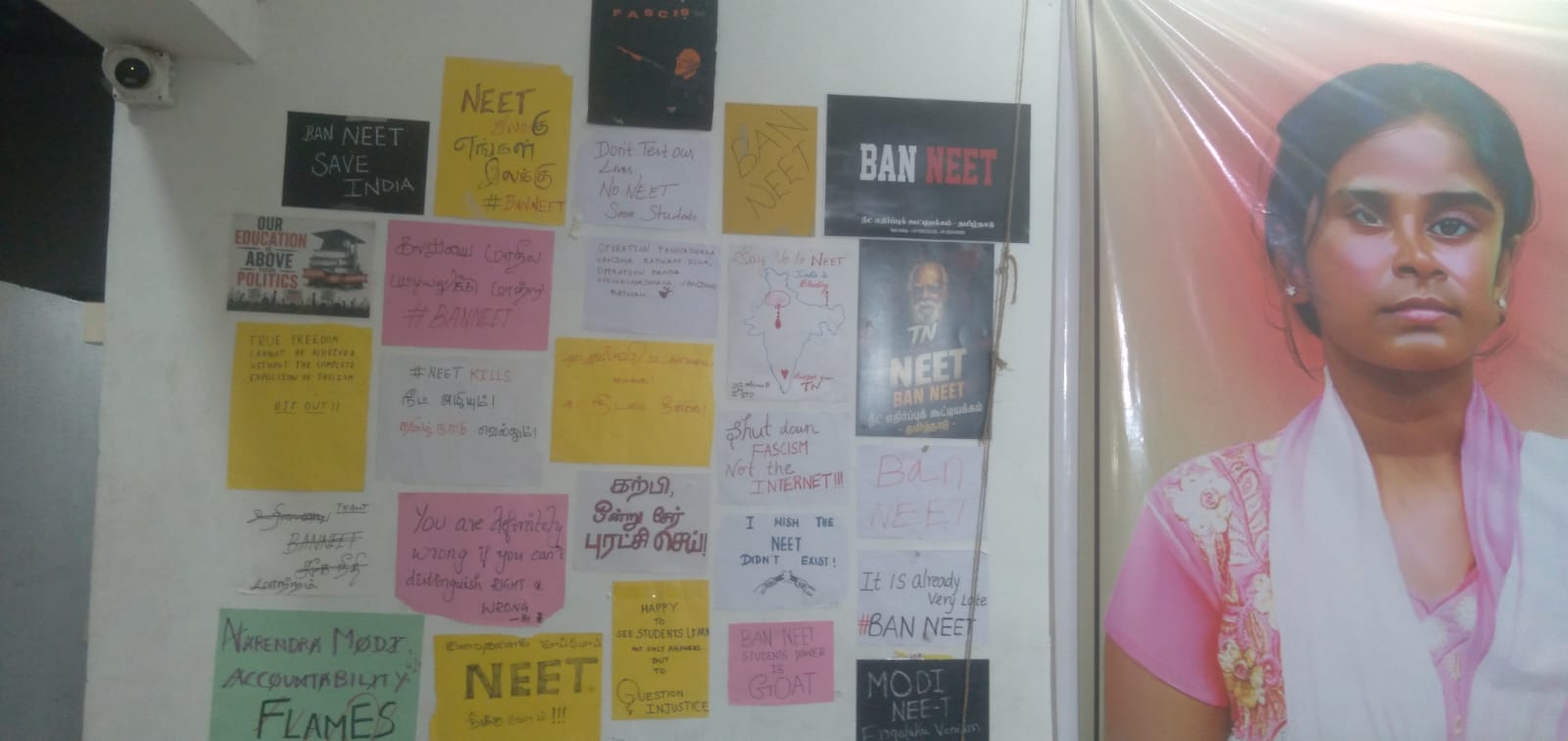
Her death became a powerful symbol in Tamil Nadu, but the anti-NEET movement argues that her story has not acquired the same national visibility as the more recent demands for a leak-free or transparent examination. In their view, this has narrowed the national debate to the question of how NEET is conducted rather than whether such a centralised examination should exist at all.
Beyond NEET
The Joint Movement Against NEET is therefore linking the demand for abolition of the examination with a larger question of educational federalism.
The movement wants states to regain greater control over education and medical admissions, arguing that local educational conditions, curricula and social inequalities cannot be adequately addressed through a single national entrance examination. Its press statement calls for the restoration of education to the State List and for an end to what it describes as the centralisation and commercialisation of medical education.
The current hunger strike comes amid renewed national controversy over NEET and demands for accountability over alleged examination irregularities. The Anti-NEET Federation views recent political developments, including the resignation of Union Education Minister Dharmendra Pradhan, as insufficient to address what it regards as the structural problems created by the centralised examination system.
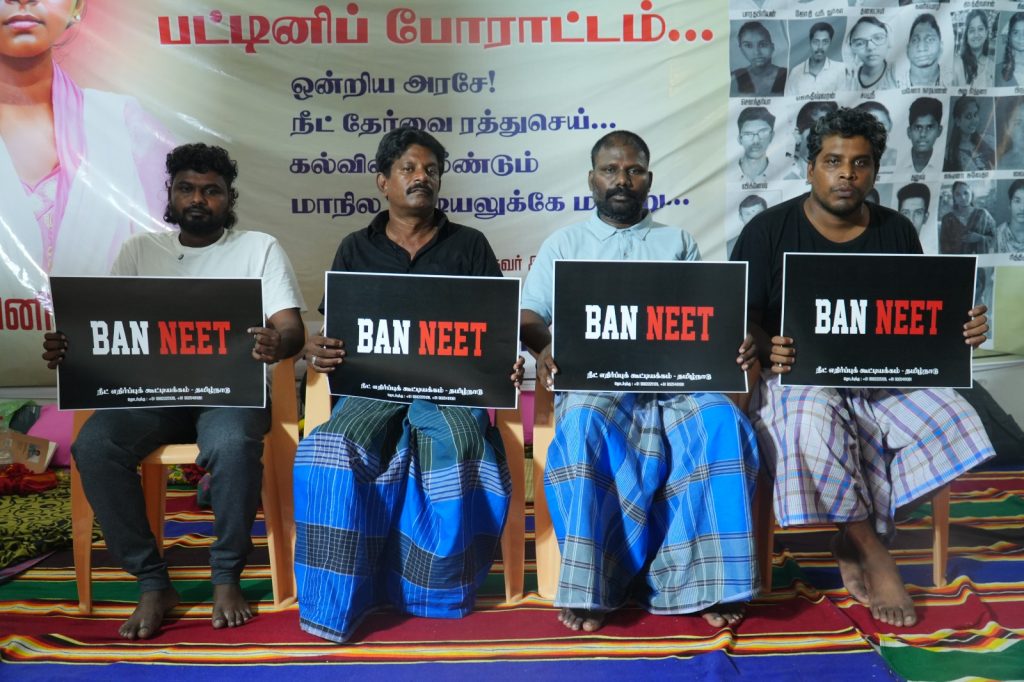
For the protesters in Chennai, the issue is therefore not simply who administers NEET or how securely the examination papers are handled. It is whether a single centrally controlled entrance examination should determine access to medical education for students from vastly different educational and social backgrounds.
The hunger strike is set to continue until the protesters’ demands are addressed.
In memory of Anitha, the movement’s message remains unequivocal: abolish NEET and decentralise education.
The article is based news reports and the press letter by Joint Movement Against NEET. All images are courtesy the protest activists.
Read the press letter here.