
‘Compensation for victims’ families, no prosecution of protesters, and a public apology from the police for their brutality’—these were the demands the Cockroach Janta Party (CJP) settled for, on oral assurances alone, when it called off the historic protest against corruption in India’s public education sector following the resignation of Dharmendra Pradhan. A week after protesters vacated Jantar Mantar and the streets of Central Delhi, the Narendra Modi administration has already gone back on its word.
New Delhi, 1 Aug 2026
Mouli Sharma
The decision by the Union government to go back on the promises it made to CJP leaders on 25 July 2026 has drawn criticism from the movement’s supporters, and from the organisations and members of the public who took part in the agitation against paper leaks between June and July 2026.
Apart from the resignation of Dharmendra Pradhan—which came earlier that day—the outfit had put forth three non-negotiable demands: compensation of ₹1 crore for the families of the students reported to have died by suicide since the 2026 NEET paper-leak cycle, the withdrawal of “all the FIRs filed against the protesters, not just in Delhi but in all BJP-ruled and BJP-allied states,” along with a commitment that no fresh cases would be filed against protesters, and a public apology from the Rapid Action Force (RAF) and the Delhi Police for their alleged use of violent crowd-control methods during the 20 July march to Parliament and at the height of the protests at Jantar Mantar.
Union Ministers JP Nadda and Jitendra Singh acted as interlocutors for the Centre in discussions with the Abhijeet Dipke-led CJP. On the evening of 25 July, after a third round of talks, the Centre accepted the first two of these demands—compensation and the withdrawal of FIRs—in exchange for the party calling off the protest and asking supporters to “immediately withdraw” from the Jantar Mantar protest site. The demand for a public apology was never conceded; by the CJP’s own account it was still pending when the protest was withdrawn.
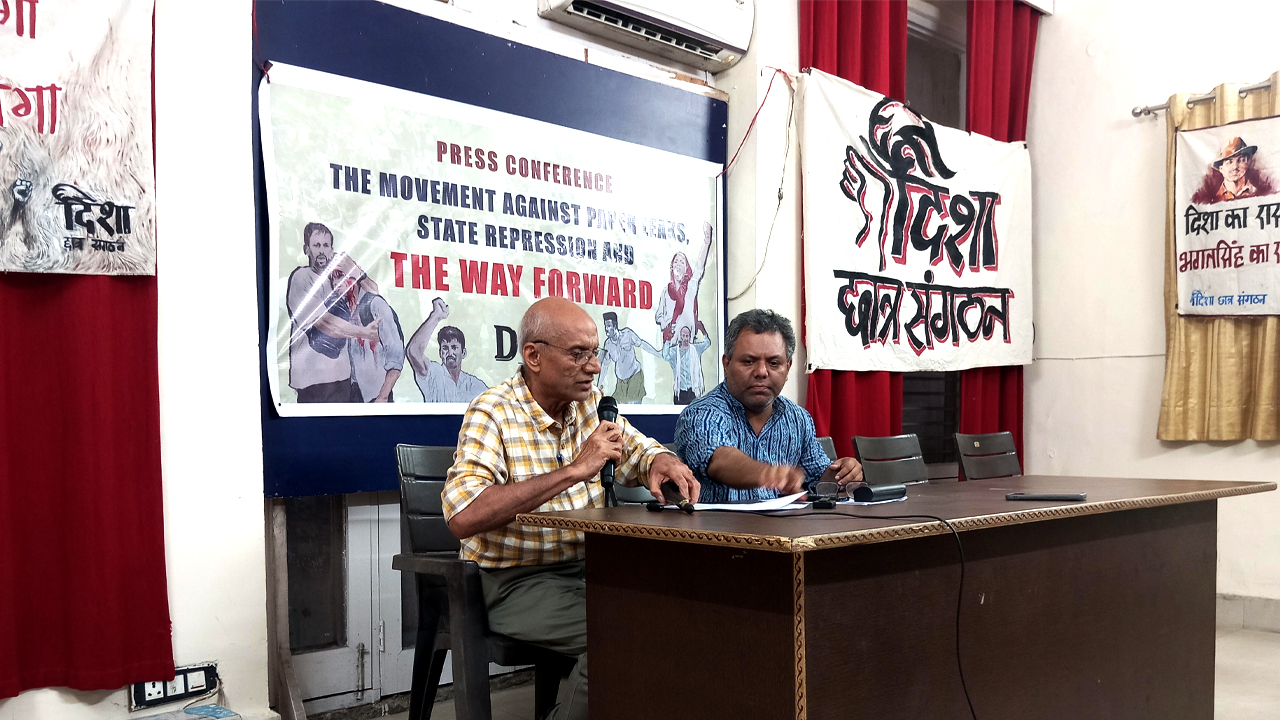
Within days, the government had begun to hollow out both of the concessions it did make, earning the CJP leadership flak for placing faith in the government without a written agreement. It now says that only FIRs filed before 6 p.m. on 26 July will be withdrawn, that FIRs lodged by private complainants are exempt, and that action will continue against students with pre-existing cases, while the promised compensation remains undelivered. At a press conference on 1 August 2026, organised by the Disha Students’ Organization (DSO) at the Indian Women’s Press Corps (IWPC) in Delhi, activists, journalists, academics and advocates slammed the government’s failure to pay the promised compensation, withdraw the FIRs or even investigate the conduct of the RAF, as well as the naivety of the CJP leadership in calling off the protest in the first place.
“Without consulting the public, without consulting student organisations, without consulting students, the CJP leadership called off the protest,” said student activist Chiranshu of the DSO. “This turn of events is not the least bit surprising.”
Veteran journalist John Dayal, Supreme Court senior advocate Colin Gonsalves, Professor N Sachin of the University of Delhi, DSO member Naureen and DSO central council member Sarthak, Advocate Manik Gupta, and activist Soumya of the All India Democratic Students’ Organisation (AIDSO) addressed the conference.
Advocate Manik Gupta told the conference that he had himself been assaulted and detained by the Delhi Police. He said he went to the Nizamuddin police station on 23 July to inquire about students who had been detained, allegedly on the suspicion that they were on their way to the protests; when he asked on what grounds they were being held, the police attacked and detained him too. He has since registered a medico-legal case and is moving the Supreme Court. Injured students, he alleged, were prevented from obtaining medico-legal examinations, with politicians pressuring doctors at hospitals, and those who did obtain them were targeted with FIRs.
Recent developments, such as the ongoing debate on ‘linguistic hygiene’, the use of pellet guns against protesters in Delhi and the alleged use of AK-47 rifles by the Bihar police, the controversial political history of Pralhad Joshi, who has been given additional charge of the education ministry, as well as the larger concerns within the movement against corruption in the education sector (such as the continuing mass closure of government schools, the much-maligned National Education Policy of 2020 and the failure to scrap the National Testing Agency (NTA) outright) which the speakers said remain unaddressed despite the significant symbolic victory of the protests, formed the basis of the conference, titled ‘The Movement Against Paper Leaks, State Repression, and the Way Forward’.
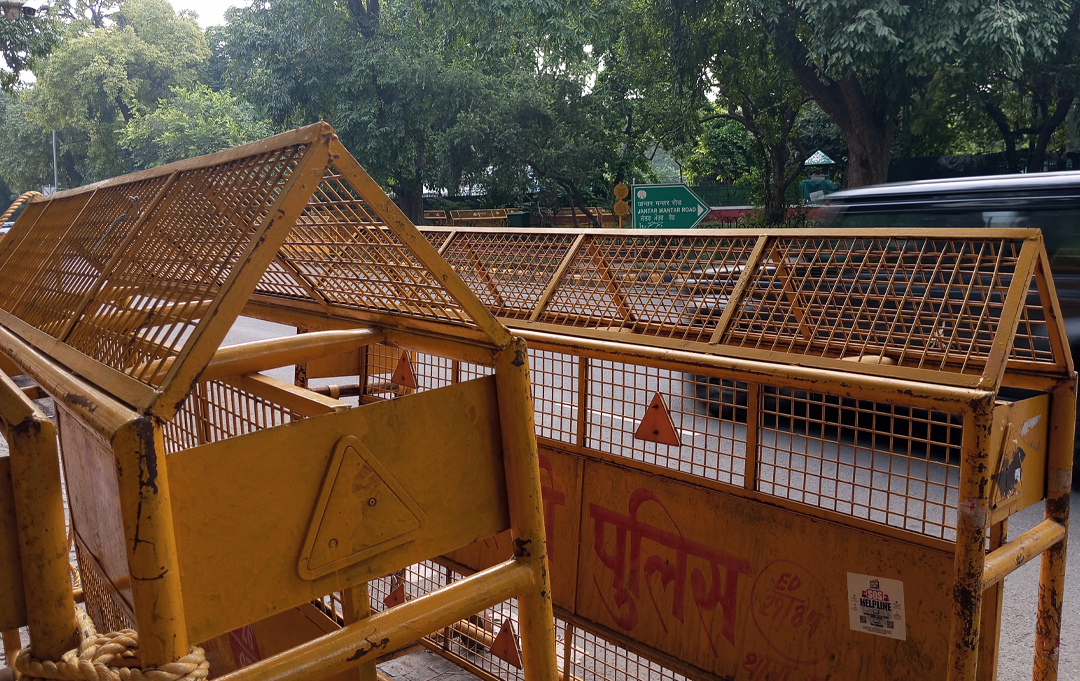
The barricades at Jantar Mantar road that now lay pushed to the sides crowding the walkways.
The conference concluded with DSO urging the CJP to resume the protests immediately, until the government fulfils its promises. It also proposed that progressive and student organisations—according to senior journalist Revati Laul, it was these organisations that formed the bedrock of the entire movement, and the ‘quiet power’ behind the more visible faces of the protest, the CJP and Sonam Wangchuk—join the CJP in forming a central “co-ordination committee” to democratically continue what may well be a long battle for systemic change. DSO also proposed the resignation of Union Home Minister Amit Shah, as a consequence of the police excesses seen during and after the protests, as the movement’s new central demand.
The official press release can be read here.
Mouli Sharma is an author and journalist from New Delhi. She has been featured in publications like The Mooknayak, GroundXero, Frontline, Maktoob Media, The Observer Post, The Leaflet, Nivarana, The Polis Project, Article 14, NewsClick, SabrangIndia, Think Global Health, etc.

Thanks for this Update. Yes Protest has to be go on untill All charges will be take down