
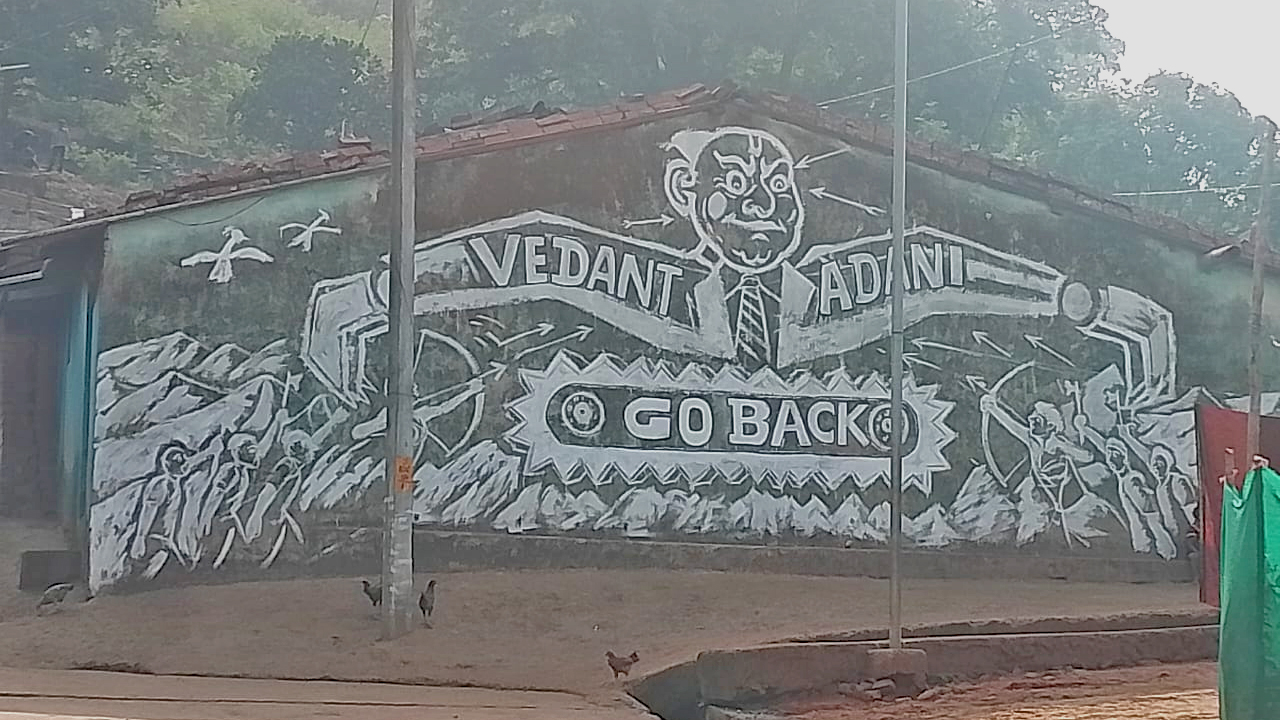
A looming crisis is threatening the lives and livelihoods of Adivasi communities across the Eastern Ghats. The biodiversity, nature, and environment of the Eastern Ghats are hurtling towards destruction. Yet, the struggle of the indigenous communities to save the Eastern Ghats continues.
Update: 20 June, 2026
The brutal police crackdown on Kantamal village in early April brought much national attention to the anti-mining movement in Sijimali. It also triggered a chain of developments – the most alarming being the government’s undeterred steps to pursue mining, even as solidarity poured in from every corner of the country. While public hearings got announced for Kutrumali and Kodingamali, auctions are also being planned for eleven more mining ventures along the same Eastern Ghats. Meanwhile, our previous update noted how Sijimali was turning into an undeclared conflict zone — a grim portent of the events that soon followed.
The Cost of Defying the Prohibitory Order
On 3 April, the Rayagada police announced prohibitory orders from loud speakers in Kantamal village. People were prohibited from assembling in groups of more than four within 100 meters of the approach road being constructed to the mining area. As construction work began with a massive presence of police force, villagers gathered in large numbers and blocked their entry into the area. Villagers assert that neither environment clearance nor gram sabha consent had been done as per due process. A petition seeking the halt of the construction of the approach road is also pending in court. Ma Mati Mali Surakhya Mancha’s response was an open defiance of prohibitory orders in the true spirit of civil obedience. This led to a brutal crackdown on the night of April 6-7.
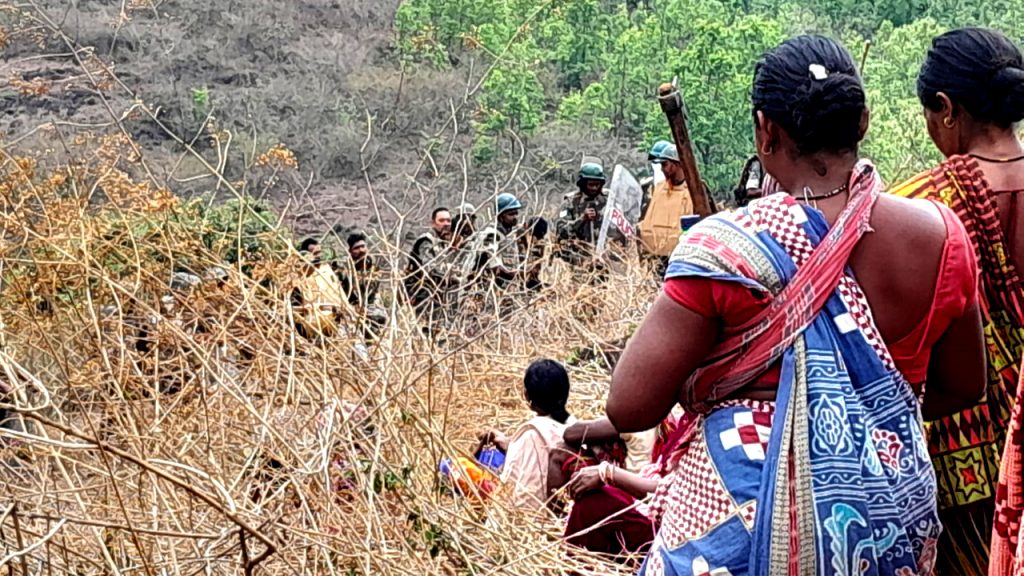
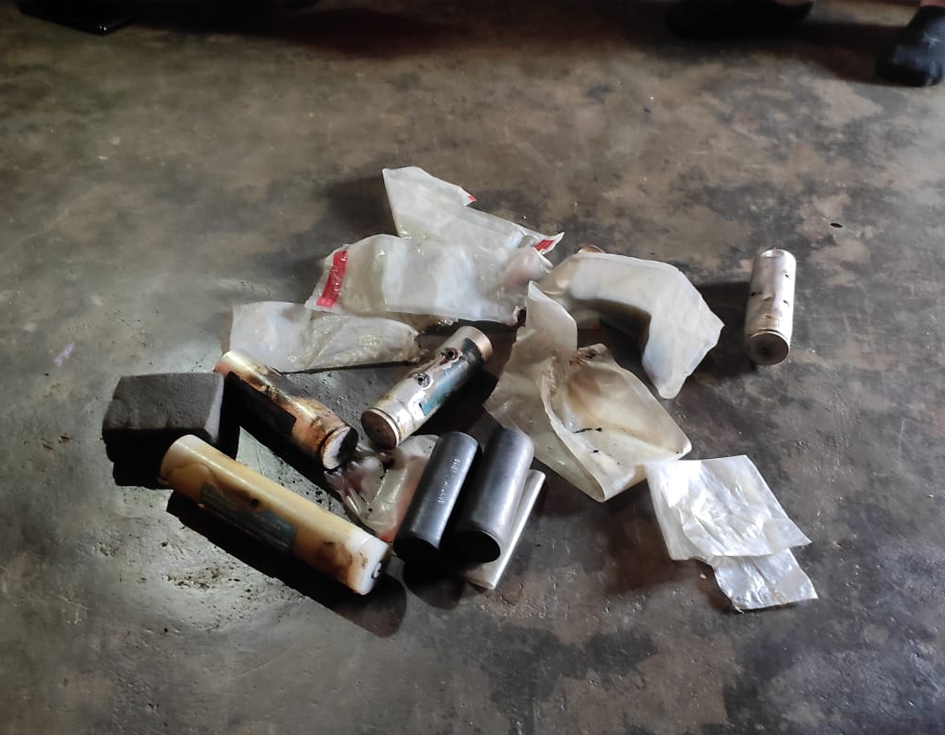
After three days of the peaceful protest blocking the entry point, the police descended upon Kantamal village at around 2.30 AM on the night ofApril 6-7 and surrounded the entire village. There were many half-masked persons accompanying the police. People came rushing out of their homes; many were injured by police lathis. Two women sustained head injuries. The police fired tear gas shells. A tear gas shell was aimed on an asbestos roof and it fell on those sleeping inside. A trader had his vehicle destroyed beyond repair. They also killed a cow. It was reported to us that initially many villagers thought they were attacked by thieves. However, they confronted the police. The police meanwhile had come with many buses probably to arrest and pick up villagers as they had done in Talaampadar. The violence continued till 7 AM when the police left after some blank firing. More than seventy people were injured and the entire village was enraged by the audacity and force used by the district administration. People were unable to seek medical assistance.
The one constant refrain of the villagers is that they did not feel any fear. Some women said that it was only towards the morning that they felt physical pain, exhaustion and sadness. They wailed in unison for Tij Raja, Niyamraja, Khandual Raja and all other deities and beseeched them to come and protect them now just as they had always protected the hills and deities. According to a young man, the deities heard their cries and sent all political parties and the entire media to their remote village so that the world got to know the painful injustice inflicted on Adivasis and Dalits in Sijimaliin the greedy effort to dig the earth for bauxite.
Solidarity and Support for the Movement
As news of the police crackdown on Kantamal reached the outside world on Tuesday morning, April 7, it sparked shock and disbelief at the scale of state-led illegality on behest of the corporates. It prompted an unprecedented outpouring of solidarity through protests, statements, padyatras and visits to Sijimali.
In Bhubaneswar, around 60 organizations and individuals from Concerned Citizens Forum immediately sent an Open Letter to Chief Minister Mohan Majhi condemning how Adivasis and Dalits are facing constant police repression for resisting mining operations. The forum demanded the revocation of the prohibitory order and the 2023mining lease as well. It demanded the withdrawal of the entire police force in the area and an end to drone surveillance. It demanded the withdrawal of all criminal cases foisted on villagers and release of those in jail. On the next day, April 8, there was a spirited protest condemning the police repression and demanding an end to all mining.
Samjawadi Jan Parishad was present throughout the meetings and rallies that took place in the aftermath in Sijimali, demanding cancellation of the mining lease with Vedanta, withdrawal of fabricated cases on people and release of prisoners, including Lingaraj Azad and Suresh Sangram.
Four Left parties – CPM, CPI, CPI (ML) Liberation and All India Forward Block –met the Governor and registered their protest. On 10 April, a 10-member delegation from these parties visited the area, heard testimonials and gave a memorandum to the Rayagada District Collector.
On 13 April, four Left parties made a strong appeal to the Odisha Governor. These were SUCI (Communist), CPI (ML), CPI (ML) Red Star and CPI (ML) New Democracy. These four parties held protests across multiple blocks, sub-divisional offices and in several district headquarters against the alleged repression and transfer of protected land for corporate interests without due process in Sijimali. They also demanded an immediate halt to land acquisition for mining and other corporate projects in regions such as Mali Parbat (Similiguda), Serubandha (Pottangi), Nageswarimali (Nandapur), Patana (Keonjhar), and Lanjiberna (Sundargarh).
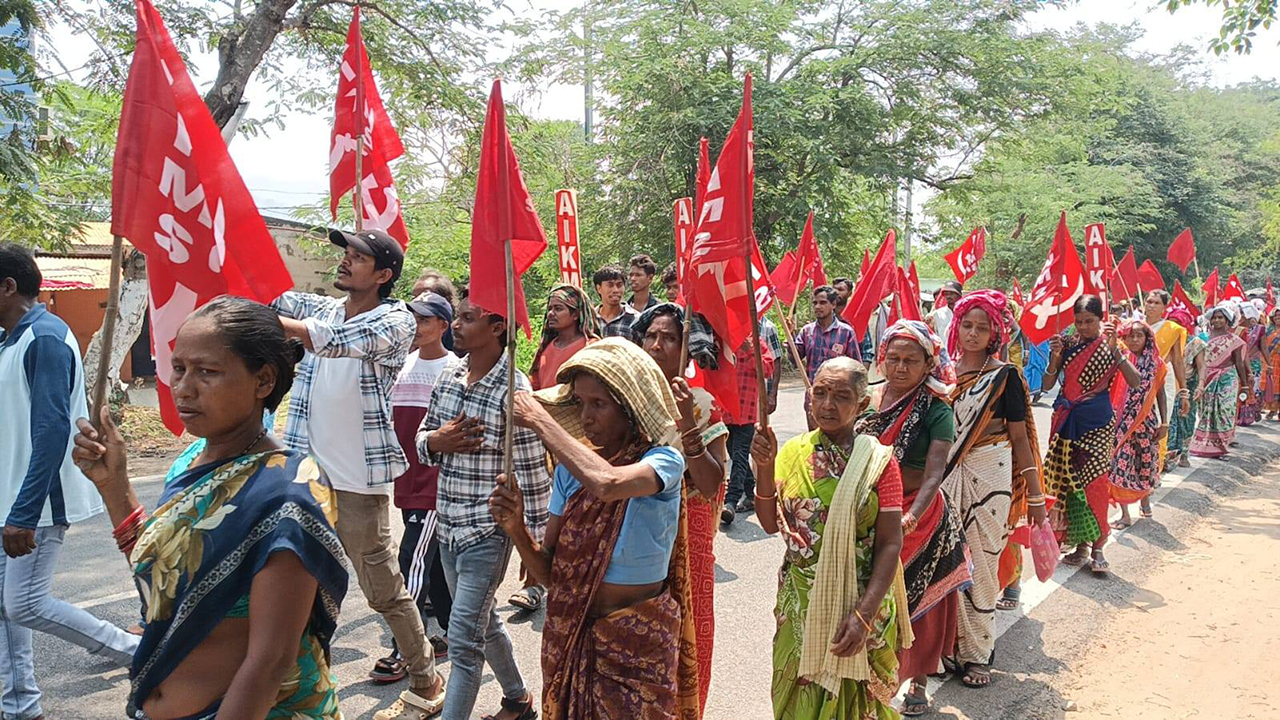
Mainstream parties like the Congress, BJD and even BJP visited the area. The National Youth Congress carried out a one-week padyatra in May 22-28. This is in sharp contrast to 2023 and the stony silence of all parliamentary parties when the bauxite mining project was announced, and there had been arrests and brutal repression on the same people for opposing the project.
Even the mainstream and social media unequivocally condemned the brutal violence inflicted on villagers to facilitate state- and corporate-backed bauxite mining. The response was remarkably wide for its breadth, drawing concern and condemnation from across political parties, civil society groups, activists, researchers, and the media.
More recently, on June 13, All India Kheth Mazdoor Kisan Sabha (AIKMKS) held a rally and a public meeting in solidarity to protect Sijimali and Kutrumali. It was held at Kumbharput, bordering Rayagada and Koraput districts.
The Police Narrative
The Rayagada police filed a number of FIRs against the villagers’defiance of prohibitory orders and the police repression on Kantamal on April 6-7. The police also addressed the press. The following is a brief outline of these events.
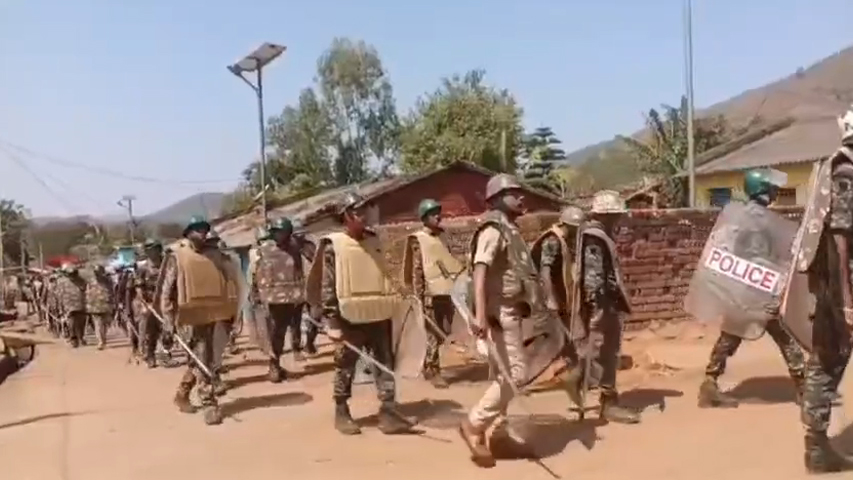
The Executive Magistrate lodged an FIR at 11.18 PMon April 6 against people for violating the prohibitory order of April 3 as well as for having attacked government employees and construction workers with “deadly weapons”. Around 60 villagers were named along with 300 “others”. On the basis of this FIR, twelve platoons of police armed with rifles, tear gas shells and lathis made entry into Kantamal in the middle of the night with several Boleros and buses. The SP addressed the press the next day and said the police entered Kantamal to serve notice and apprehend an absconding accused. The very next morning, headlines of most newspapers and the breaking news on TV channels was about how villagers of Kantamal attacked the police. The orchestrated media clamour lasted barely a day before the truth emerged,and now the same media questioned the police version. People’s organizations and the media laid bare the ruses used to justify the massive police operation carried out in the name of apprehending one person.
The FIRs lodged by the police state how there were three teams: one stationed at the entrance of Kantamal, the second at the rear end of the village, and the third at Bandel that is 700 metres away on the road leading to Kantamal. The entire village had been surrounded.
One FIR named Dr Randall Sequeira from Bhawanipatna.He had provided treatment to those injured on April 9. The same FIR named nine other leading members of Ma Mati Mali Surakhya Manch from nearby villages. It is alleged they led the attack on the police on April 6-7. Yet, none of the 10 were there in Kantamal that night.
As the FIRs reveal, there were 12 platoons of police, 15 buses, and 20 Boleros surrounding Kantamal. Those who were present on the night of April 6-7 and supervised the entire operation included not only the Kashipur administration but also SDMs, Additional Tahsildars, IICs, Inspectors and Sub Inspectors from neighboring blocks.
From April 5 to April 7, 156 villagers were named in FIRs along with a total of 800 others. The numbers increase if we take into account the three FIRs of the previous weeks. On March 11, in Talaampadar, 21 had been arrested with 40-50 others. Similarly, an FIR, dated March 8, named 40 people with 300 others. Notably, there have been 24 arrests, 217 named and 1140 others, in a span of one month – March 8 to April 8. The criminalization of the entire people’s movement is evident in these FIRs.
Arrests and Bails
Prior to the police crackdown, on March 25, the Kalahandi police had arrested the President of Samajwadi Jan Parishad Lingaraj Azad and Suresh Sangram from their residences in Bhawanipatna. As active supporters of the anti-mining movement led by Ma Mati Mali Surakshya Manch, on March 23 both were present at the protest site at Kurkutti near Pulingpadar. Villagers were protesting against Kalahandi police and administration cutting down trees and using bulldozers to level the land as a rehabilitation site for those who will be displaced from Tijmali village for Vedanta’s project. They face charges under multiple sections of the BNS, including unlawful assembly, attempt to murder and dacoity.
Both were granted bail on April 18. However, just before their release, a fresh case of extortion was foisted on Lingaraj Azad to malign him on one hand and to prolong his incarceration. The case is now pending in the High Court.
- On April 18, Suresh Sangram from Bhawanipatna was released from Bhawanipatna District Jail.
- On 21 April, Labanya Naik and Padman Naik of Bantej village were released from Bhawanipatna District Jail.
- On 24 April, nine women from Talaampadar village were released from Bhawanipatna District Jail.
- On 18 May, Umakant Naik of Bantej village was released from Rayagada District Jail.
- On 23 May, Umuru Majhi of Talaampadar village was released from Bhawanipatna District Jail.
- On 19 May, the Bhawanipatna District Court rejected the bail applications of the eleven men from Talaampadar. They appealed to the High Court.
- On 10 June, the eleven men from Talaampadar secured bail at the lower court. They got the statutory default bail as the police had not yet filed the chargesheet within the statutory 90 days.
Often, there are delays in being released from jail because high amounts of money, like Rs 30, 000, is expected as surety besides land deeds. Delays are caused by the sheer callousness of the police while picking up villagers at random and naming them erroneously. For example, Umuru Majhi could not be released on 24 April with the other women from Talaampadar as there was confusion about her real name. So she spent an extra month in jail.
Complaint Letter to IG, Odisha
In response to these attacks on them through lawfare, the villagers have often questioned: Can they not also file an FIR? When their own district police launch a violent attack on them, whose door can they knock on for justice? How can they go to the very same police station to file an FIR against the IIC and higher officials?
On May 18, villagers sent a letter to the IG, the highest police command in the state describing the violence perpetrated by the Rayagada police on the night of April 6-7. Those who had received grievous injuries described the ordeal of that night that went on until the morning. The letter names many of the district administration officials present and the police officers and respective police stations. It states how the police were accompanied by many masked persons in half-uniform. It describes the torturous effect of tear gas on infants and children who were crying, coughing and vomiting. Many villagers were left breathless with streaming eyes. They were giddy and unable to speak for two days. Women were manhandled by male police personnel.
Protests Brewing in the Kutrumali Foothills
The auction process for Kutrumali began in November 2022. In February 2023, the Odisha Government declared Kalinga Alumina Limited (an Adani Group company) as the preferred bidder and issued a letter of intent. The estimated bauxite reserve in Kutrumali is 127 million tonnes. According to the company’s Environmental Impact Assessment (EIA) report, a total of 1734 acres of land is required for mining. Of this, forest land accounts for 491 acres. Another 2 acres of forest land is needed for constructing a connecting road. Besides this, 181 acres of individual patta land will be acquired. The rest consists of barren land (1046 acres), grazing land, and homesteads. These lands are in Kerpai Panchayat of Thuamul Rampur block (Kutrumali, Majhigaon, Melrapha, Muralimuhin, Podapai, Salabali, Taijhola), Mandibishi Panchayat of Kashipur block (Alutunga, Padelguda, Sapai, Lelingpadar), and Karpa Panchayat of Kalyansinghpur block (Hechkana, Hirasuli, Sadlas, Singpata). If mining takes place, 200 people from 82 families will be displaced. The report also states that 7,20,000 liters of water will be used daily for mining, which will be drawn by digging an intake well in the Nargul stream flowing 2 kilometers north of the mining area. The company will extract the bauxite reserves at a rate of 4 million tonnes annually, and the mine will operate for 29 years. A total of Rs 425 crore will be invested in the project, generating 246 permanent jobs.
For the environmental clearance of this project, the Odisha State Pollution Control Board published a notice on April 8, 2026, stating that public hearings would be held at two locations. It stated that public hearings would be organized in Thuamul Rampur on May 12 and in Kashipur on May 13. On April 23, activists from Bhubaneswar immediately appealed to the OSPCB authorities to halt the public hearing given the prevailing tense situation caused by the police repression at Talaampadar and Kantamal. The delegation presented a memorandum to the Member Secretary Manoj V. Nair. It highlighted that tension prevails in the Sijimali area due to police repression in Talaampadar and Kantamal. The public hearings should be stopped until normalcy returns. It also pointed out that the locations currently finalized for the public hearings are approximately 50 kilometers away from the affected villages, which is a violation of public hearing guidelines. Public hearings should be held where the people reside so that they can fearlessly express their opinions after they had their gram sabhas. Following this, other groups, including Sarpanches from the Kutrumali area, also appealed for the cancellation of the public hearings.
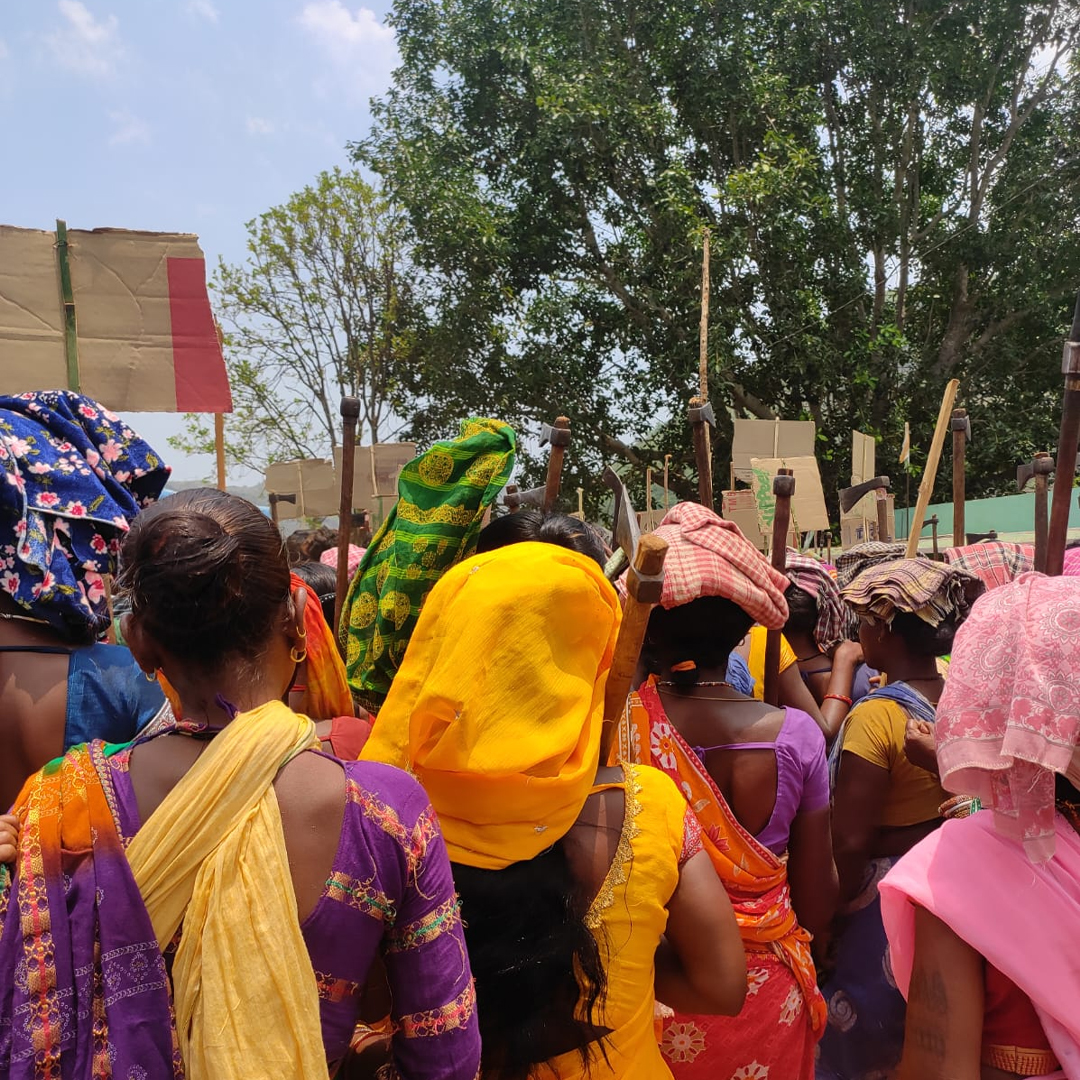
Reactions against the public hearings also emerged in the mining-affected villages of Kutrumali. From their experience with the Sijimali public hearing, they knew that even if they expressed their dissent, the report would claim that public opinion was in favour of the project. Therefore, deciding to boycott the public hearings, Mati Mali Surakhya Mancha made a call for a padayatra (foot march) around Kutrumali that started on May 3. Senior activists from the Sijimali, Khandualamali, and Niyamgiri movements, along with intellectuals from other regions, participated in it. At the end of the padayatra, a parallel public hearing was organized in Kerpai on May 12. The following resolutions were passed unanimously:
“Firstly, all the villages affected by the Kutrumali bauxite mining are situated in a Scheduled Area. Under the 5th Schedule of the Constitution and the PESA Act, any activity causing harm in a Scheduled Area requires the approval of the Gram Sabha of the concerned area. However, this rule was not followed before leasing out Kutrumali to Adani Group’s “M/s Kalinga Alumina Limited”.
Secondly, the use of forest land for mining requires the approval of the Gram Sabha and village-level institutions under the Forest Rights Act, 2006. But no Gram Sabha has been held for this, nor has consent been taken.
Thirdly, to protect the environment and natural resources which are the primary sources of our livelihood—such as farming dependent on streams, trees and leaves, medicinal plants, soil and rocks, sacred groves of deities, air, and wildlife—we, all the residents of the region, have been continuously demanding a ban on bauxite mining in the Sijimali, Kutrumali, and Majhingmali hill ranges.
Fourthly, the proposed venues for the public hearing for the environmental clearance of the Kutrumali bauxite mine are located approximately 30 to 50 kilometers away from the affected villages, making it impossible for people to travel such distances to participate. In our opinion, the decision of the State Government and the State Pollution Control Board to conduct the public hearing at such a distance is an anti-people effort aimed to protect the interests of the Adani group.
Fifthly, a mass movement has been ongoing for a long time resisting Vedanta’s proposed mining in the Sijimali area. Despite the mass movement being carried out in a peaceful and democratic manner, prohibitive orders under Section 163 of the BNS were imposed for road construction starting April 3. From April 6 midnight until the morning of April 7, the entire area was terrorized by a brutal and inhuman police crackdown. In such a scenario, we feel that the decision to hand over the Kutrumali bauxite mine to the Adani company is a planned conspiracy by the government, the company, and the police-administration.
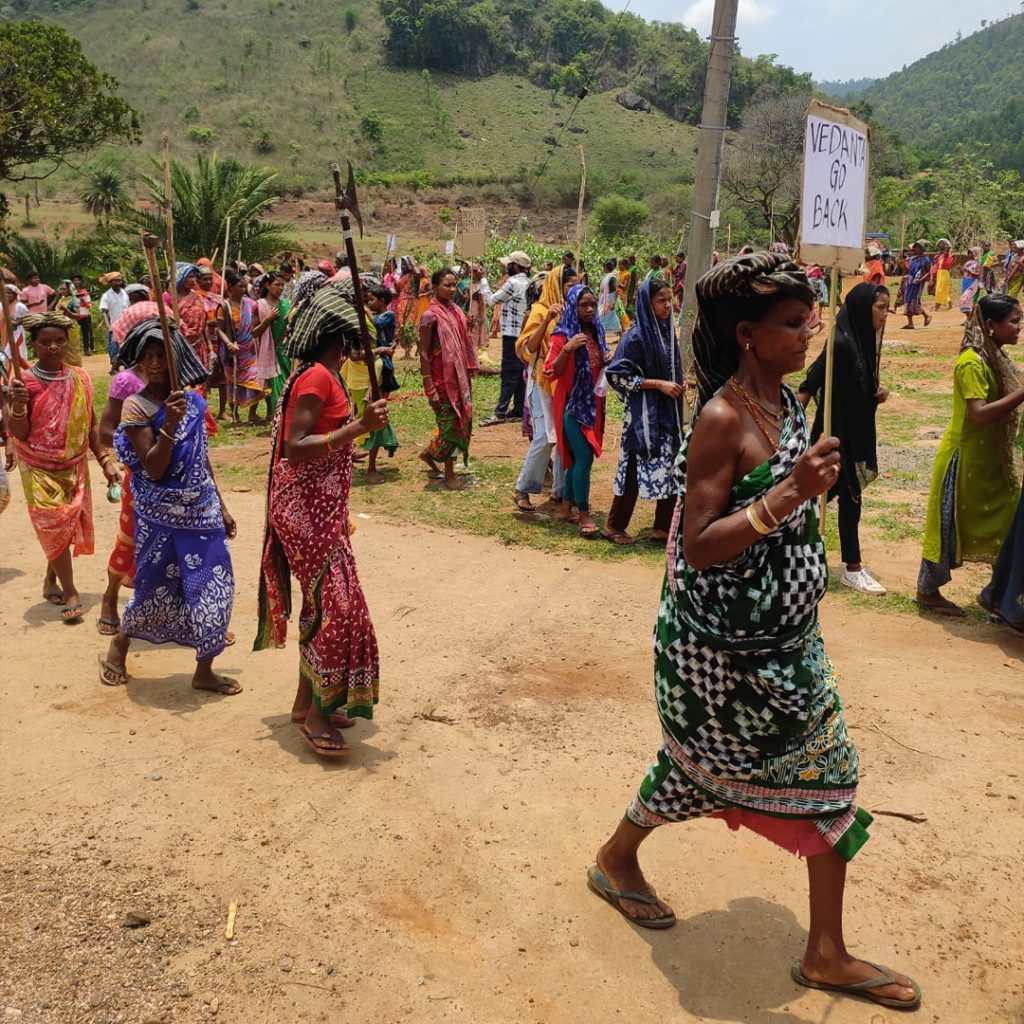
In this context, through today’s public hearing, we the local residents of the Kutrumali area and the villagers who will be affected by the proposed bauxite mining, take a collective resolution through this public hearing to cancel the mining lease to protect our livelihoods, environment, and socio-cultural identity.”
Eventually, the State Pollution Control Board issued public notices on May 5 stating that the public hearings at both locations have been postponed.
Hope Amid Dark Clouds over the Eastern Ghats
Today, along with the Sijimali-Kutrumali-Majhingmali area, movements are underway in many places of the Eastern Ghats mountain range — such as Nandapur (Nageshwari hill), Pottangi (Serubandha), Mali Parbat (Semiliguda) — to save the hills, dongars, streams, and forests from the perils of bauxite mining. Voices of protest are rising against the expansion of the Kodingamali bauxite mine in Lakshmipur block. Similarly, people are beginning to protest against the Karnapodikonda bauxite mine in Narayanpatna block that is leased to Vedanta. However, the government is proceeding unilaterally with power and coercion.
Two weeks after the police crackdown on Kantamal, on April 21, the Railway Department issued a notification that a railway line would be constructed from the Sijimali-Kutrumali mining area to Tikiri railway station to facilitate bauxite transportation.
On May 5, 2026, the MoEF&CC granted final forest clearance for the construction of the approach road to the mining area. The matter was pending in the NGT where villagers had challenged the Stage 1 clearance.
On May 15, a Lanjigarh court ordered the attachment of the properties of Lada Sikaka, a prominent leader of the Niyamgiri Surakhya Samiti.
On May 29, 2026, the Steel and Mines Department of the Odisha Government issued tenders for the auction of 5 new bauxite mines. These are Karlapat (Kalahandi district) and Nunapaimali, Tikrimali-Budharajamali, Tikriguda-Maliguda, and Nangalmadhimali (Rayagada district).
Newspaper reports reveal that Vedanta and Adani have been continuously acquiring land to set up new alumina refineries in Kalyansinghpur and Kolnara blocks of Rayagada district.
On June 3, the Odisha Pollution Control Board published a notification to organize a public hearing to increase the production capacity of the Kodingamali bauxite mine from 3 million tonnes to 4.2 million tonnes annually. The public hearing will be held on June 21.
Taken together, these developments point to a looming crisis threatening the lives and livelihoods of Adivasi communities across the Eastern Ghats. The biodiversity, nature, and environment of the Eastern Ghats are hurtling towards destruction. Yet, the struggle of the hill people to save the Eastern Ghats continues.
On June 5, World Environment Day, there was a huge mass meeting at Banguruguda near Semiliguda in response to a call given by Koraputia Jana Surakhya Sangha and the Center for Climate Justice. Thousands of people came from different anti-mining mass movements from Mali Parbat, Serubandha, Balda, Sijimali, Kutrumali, Niyamgiri, Deomali, Karnakondamali, and Odisha’s first anti-bauxite mining movement in Gandhamardan. There was a unanimous demand for a ban on all new bauxite mining projects in the Eastern Ghats mountain range.
Mati Mali Surakhya Mancha issued a pamphlet on occasion urging for the unity of all movements of the Eastern Ghats mountain range.
Protecting the Eastern Ghats for future generations is not just the responsibility and duty of the people of the hilly regions, but is the constitutional and moral duty of us all.
Compiled by: Siddharth Kar and Ranjana Padhi
Contact Email ID: formountainsandforests@gmail.com