
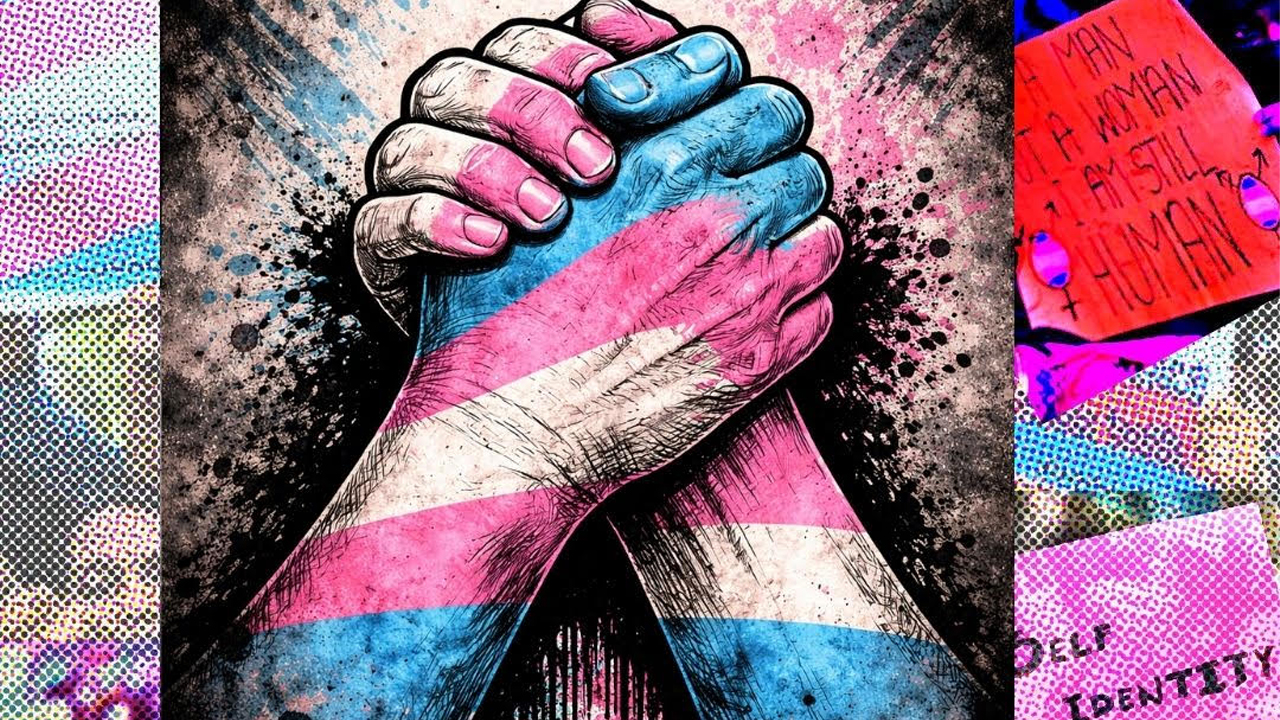
NWMI says far from protecting the rights of transgender persons, the amendments undermine self-identification, criminalise support systems, and erase diverse transgender identities across India.
𝐆𝐫𝐨𝐮𝐧𝐝𝐱𝐞𝐫𝐨 | 𝟐5 𝐌𝐚𝐫𝐜𝐡, 𝟐𝟎𝟐𝟔
The Network of Women in Media, India has condemned the Transgender Persons (Protection of Rights) Amendment Bill, 2026, calling it regressive and demanding its immediate repeal. The Bill was introduced in the Lok Sabha by the Union Minister for Social Justice and Empowerment, Dr Virendra Kumar on 13 March 2026, and passed despite serious opposition to its provisions on 24 March 2026.
In a statement issued on Tuesday, NWMI said the Bill undermines the rights of transgender persons rather than protecting them. NWMI alleged that the amendments dilute the right to self-identification recognised by the Supreme Court in the NALSA vs. Union of India. According to the statement, the Bill restricts legal recognition to certain socio-cultural identities such as Hijra, Kinner and Aravani, excluding several transgender and gender-diverse persons.
The organisation also raised concerns about provisions that criminalise “inducement”, “allurement” and “undue influence”, arguing that these could penalise individuals and groups providing support, shelter or assistance to transgender persons. It warned that such measures may adversely affect survivors of violence seeking safe spaces.
NWMI further criticised the proposed retrospective application of the amendments, stating that it could strip many individuals of legal recognition obtained over the past decade.
The group noted the lack of consultation with transgender communities prior to the Bill’s introduction and flagged limited mainstream media coverage of the issue.
Expressing solidarity with transgender, gender-diverse and intersex persons, including media professionals, NWMI urged news organisations to support employees who may be affected by the changes.
NWMI called on the government to withdraw the amendments, stating that they risk institutionalising discrimination and reversing progress made in recognising transgender rights in India.
The Full Statement is published here.
NWMI Stands in Solidarity with Trans and Queer Persons, Demands Repeal of Amendments to Trans Bill
The Network of Women in Media, India, condemns THE TRANSGENDER PERSONS (PROTECTION OF RIGHTS) AMENDMENT BILL, 2026, which was introduced in the Lok Sabha by the Union Minister for Social Justice and Empowerment, Dr Virendra Kumar on 13 March 2026, and passed despite serious opposition to its provisions on 24 March 2026. Far from protecting the rights of transgender persons, the amendments seek to persecute trans persons across India.
By: NWMI
Published On: March 24th, 2026
The Network of Women in Media, India, condemns THE TRANSGENDER PERSONS (PROTECTION OF RIGHTS) AMENDMENT BILL, 2026, which was introduced in the Lok Sabha by the Union Minister for Social Justice and Empowerment, Dr Virendra Kumar on 13 March 2026, and passed despite serious opposition to its provisions on 24 March 2026. Far from protecting the rights of transgender persons, the amendments seek to persecute trans persons across India. The underlying message that the Union Government seems keen on sending out is that the state will only recognise a transgender person if they remain within the bounds of religio-cultural structures and on the edges of society. Other sections of the Bill persecute and criminalise even the few who it recognises as transgender. There is no word meanwhile on provisions the communities have been demanding for years, including horizontal reservations in education and employment.
The stated aim of the amendment Bill is to undo the right to self identification that transgender persons currently have in India, thanks to the Supreme Court of India’s judgement in the NALSA vs Union of India judgement of 2014 – which was later codified in the Transgender Persons (Protection of Rights) Act, 2019. The government now says it will only recognise socio-cultural trans identities like Hijra, Kinner, Aravani, Jogta, etc. This negates decades of activism/advocacy in trans rights rooted in ground work, and there should be no going back.
There are many problems with this. Firstly, these socio-cultural identities came about as a result of the discrimination that transgender persons face in society; the aforementioned communities collectively protect those who are shunned by society and have their own structures as a means of survival. They depend on ‘traditional’ sources of income – begging, sex work, select cultural practices – because ‘traditionally’, that’s all they have been allowed to do by society. For the state to insist that these are the only trans identities it will recognise is nothing but codification of discrimination.
Second, these socio-cultural identities mainly comprise transgender women and some intersex persons belonging to a limited set of communities. Historically, transgender men and gender diverse persons have not been able to organise or exist in socio-cultural identities due to heavy discrimination and oppression. By insisting that only socio-cultural identities will be recognised, the state wants to erase the reality of trans masculine persons, trans feminine persons who do not belong to socio-cultural identities, as well as those who don’t fit the binary gender expectations of patriarchy. Different states in India have different levels of and communities of trans femme and trans masc persons. Even a traditional trans woman in Tamil Nadu who identifies herself as a Thirunangai will be outside the scope of the Bill, as will Shivashaktis from Telangana, Andhra Pradesh, and Karnataka. It also does not include socially marginalised yet traditionally accepted identities from different parts of North East India, including the Nupa Manba and Nupi Manbi communities from Manipur, Sumanglik communities in Manipur, cross dressing and queer performers in Bhaona and Baul communities in Assam and Tripura. Trans masculine, agender and gender queer identities are included within the tribes of other North East states. For instance, the Lamgingshai community in Meghalaya have traditionally supported the queer community, and Adivasi communities in tea garden areas support trans masculine persons.
Third, the Bill makes it clear that the government wants to enforce these amendments retrospectively, which means that thousands of people who have been able to accrue some societal and legal dignity for themselves between 2014 and now will be stripped of their identification cards and legitimacy.
In sum, the amendments affect people across the country, across the lines of caste, religion, race, language, geography, age, ability, educational qualification, profession – that is, across every line one can imagine that can be drawn between human beings. The fact is that LGBTQIA+ persons are present in all families, all educational institutions, all workplaces, all neighbourhoods, all villages and all cities.
Time and again, over the decades, we have reported on the gender-based oppression and violence that vulnerable bodies like women and trans persons, as well as others along the spectrum of gender identities, face in their natal and/or marital families and other similar spaces of what should otherwise offer safety and comfort.
By criminalising “inducement”, “allurement” and “undue influence”, the 2026 Bill does not allow for adult survivors of such violence the right to protect themselves and choose bodily safety and mental peace. Instead, it criminalises a whole range of supporters: those that offer crisis intervention, offer shelter or protection, and enable trans individuals to transition and live with dignity. This may include cisgender partners, support groups, supportive parents of below 18 trans persons, community based organisations comprising other transgender people, Hijra gharanas and other socio-cultural families of choice, and mental health professionals.
The Bill takes the feminist movement for autonomy, self-determination and consent back by several decades. It disregards the very real threat that natal families pose to trans folks, and it ends up perpetuating the violence against them.
Only a law that ensures that marginalised people can fight for their rights when these are denied enables them to live authentically – visibly – in society. With the regression that this amendment Bill proposes, the NWMI is worried that thousands of fellow citizens who have come out in their families and workplaces, trusting the state’s promise of protection, will be forced out of work and denied financial security as the state reneges on its promise.
Mainstream media coverage of the Bill has been limited, with a few notable exceptions. This is despite strong advocacy from queer and trans journalists, writers and activists for several decades.
We stand in solidarity with all trans, gender diverse (i.e., gender non-binary, gender non-conforming, gender-fluid, genderqueer, gender exploring, gender questioning et al) and intersex persons, especially colleagues from the media field, who are understandably in personal distress due to these amendments, and request all news organisations to be supportive to employees and colleagues who are likely to be legally affected if the Bill is passed. We condemn the fact that this amendment Bill was introduced in Parliament without any consultations with transgender communities anywhere in India, and stand strongly against the state-sanctioned discrimination that such a law will reintroduce. We demand that the Bill be repealed with immediate effect.
The Network of Women in Media, India
24 March 2026
Resources:
A Glossary of terms to address the LGBTQIA+ community (English and Tamil)
LGBTQIA+ Media Reference Guide (English)