
The ‘left’ parties and ‘progressives’ of Assam worked hard to legitimise the NRC in Assam only to hand fascists the justification to conduct a process of disenfranchisement that they will run as they see fit.
Shyamoli Jana
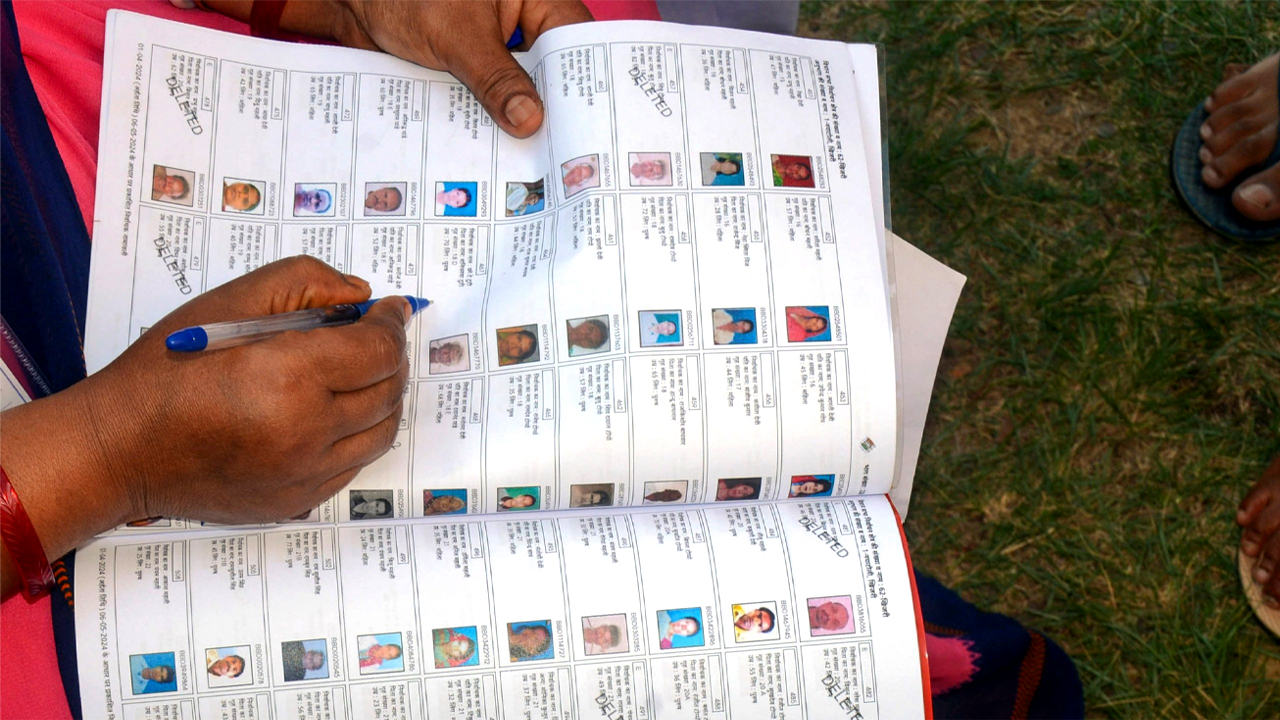
The Special Intensive Revision (SIR) process in Bengal has unfolded entirely predictably, creating massive chaos and an environment of stress and panic among the population. The first draft of voter rolls released during the SIR had 58 lakh names removed as ‘absentee, shifted, or suspected dead’ (ASSD). This list did not corroborate the Bharatiya Janata Party’s (BJP) propaganda about Rohingya and Muslim ‘infiltrators’ and created serious discontent among the Matua population, many of whose names were left out of the first draft. Now the Election Commission of India (ECI) is serving notices to people whose names are on the first draft, disputing their inclusion in the voter rolls. The Supreme Court noted on January 19, 2026, that approximately 1.4 crore individuals have been served SIR hearing notices, out of which 1.36 crore notices were based on what the ECI described as “logical discrepancies”. With around 500 hearing venues and over one crore cases, the entire SIR process is a nightmare.
However, the subject of this article is not the horror of the SIR process. This process, reminiscent of how the preparation of the updated National Register of Citizens (NRC) unfolded in Assam, is happening exactly as intended. The goal of the SIR, as well as the NRC, is to cause mass disenfranchisement and terror among the population, and engineer electoral victories for the BJP. Asking a pauperised population, large sections of which are not literate and experience calamities like floods, fires, and evictions routinely, to submit multiple documents is not an exercise to detect illegal immigration. It is a process of stripping citizens of citizenship, robbing the poorest of their basic rights under the Indian Constitution, and above all, paving the way for unbridled exploitation of the working class. Yet, the rhetoric about illegal immigrants from Bangladesh persists, causing violence against Bengali migrant workers all over the country that often results in video-taped lynchings. The purpose of this article is to discuss how certain ‘progressive’, ‘intellectual’, and ‘leftist’ sections of this country put their stamp of approval on the BJP’s project of disenfranchisement and electoral engineering in the name of standing with an “oppressed nationality”, and helped amplify the xenophobic rhetoric against Bengalis that has now spread all over the country.
The National Register of Citizens update – the precursor to the SIR
Yes, I am talking about the rhetoric surrounding the updating of the National Register of Citizens (NRC) of Assam, the precursor of the SIR. After the BJP introduced the Citizenship Amendment Bill (CAB) in 2016, many saw the combination of the NRC and the CAB (which is currently an Act) as a way to disenfranchise Muslims, which was also a perception encouraged by BJP ministers. Many Muslim and progressive organisations protested against CAB. There was a petition titled “India: Stop Deleting Muslims” on Avaaz that garnered close to 8 lakh signatures in a few days prior to the publication of the draft NRC list. The NRC office, in response, launched a counter-campaign.
There were massive protests in Assam against the Citizenship Amendment Bill, but for reasons entirely different from those behind the Avaaz petition. Assam’s anti-CAB protests were fuelled primarily by an anti-Bengali-immigrant sentiment, often indistinguishable from an anti-Bengali sentiment, expressions of which were seen in the past in the Bongal Kheda movement, in the Nellie massacre, in the BTAD massacre, to name a few. The fear driving the anti-CAB movement in Assam was that the CAB would be used to protect Hindu Bengali immigrants in Assam.
Progressives rushed to defend the NRC
Progressive voices in Assam amplified the xenophobia that was the driving force behind the public support in Assam for the NRC and against the CAB. Mayur Chetia wrote, after the publication of the first draft of the NRC that excluded 4 million people, in an article titled “If not NRC, then what?”:
“Those who are demanding that NRC should be rolled back should seriously think about the full implications of what they are saying. (Here I am not talking about those people who have some criticism about this or that aspect of the NRC process, but who, at the end of the day, believe that NRC can and should be saved)… But the arguments above should at least make you think twice about the real problems in taking an altogether anti-NRC position, given the fact that no alternative has been offered so far.”
The ‘progressive’ website Raiot churned out one article after another defending the NRC, and also, importantly, criticising the CAB on the ground of its possible use in granting citizenship to Hindu Bengali immigrants. An article by the Raiot Collective covering a press conference by Forum Against Citizenship Act Amendment Bill, a group in Assam consisting of professors, advocates, writers, IAS and IPS officers, journalists, among others, states (emphasis mine):
“It is also a fact that the governments at the centre and the state, bound to their determination to grant citizenship en bloc to Hindus from neighbouring Bangladesh, apparently find the NRC a serious obstacle to this plan of theirs. Hence, they appear to be creating all sorts of legal hurdles and distractions on the course of NRC updating process…
Now that the complete draft of the NRC is nearing completion and publication, there is an uproar from certain linguistic and religious bodies from outside the state that publication of NRC will result in catastrophic violence and disorder.
We believe that such propaganda is designed to torpedo the process of updating NRC as a bulwark of social peace and harmony in Assam. Further, we are convinced that knowingly or unwillingly, these will frustrate the legitimate aspirations of the indigenous peoples of Assam for a secure existence of their identity and culture.”
In other words, the article dismissed concerns of Bengalis and Muslims as rubbish, declared that there was an effort by the government to grant Hindu Bengalis from Bangladesh citizenship, and hailed the NRC as a “bulwark of social peace and harmony”. We have all seen what a bulwark of social peace it was. The SIR in Bengal is a rerun of the same script, except now that script has wider acceptance in the country.
Perhaps the most famous anti-CAB voice in Assam was the late singer Zubeen Garg, who sang the campaign song for the BJP in 2016, as well as the jingle for the NRC exercise. There was no attempt by the anti-CAB movement in Assam to sideline people like Zubeen; on the contrary, he was hailed as a hero who was using his star power for the movement. In the so-called ‘national’ media, no distinction was made between the anti-CAB movement in Assam and in the rest of the country, even though the former was driven by a genuine fear of disenfranchisement of the Muslim community, whereas the latter was marked by the anxiety that, through the CAB, some Hindu Bengali immigrants might just bypass deportation or detention camps. Further, in the rest of the country, opposition to the CAB was combined with fierce opposition to the NRC. In Assam, the anti-CAB protesters were fervent defenders of the NRC.
A particularly remarkable instance was the arrest of Sharjeel Imam, a student from Jawaharlal Nehru University (JNU), in 2020, on fabricated charges of inciting the Delhi riots, where the police under Home Minister Amit Shah played an active role, with video footage showing cops beating up Muslims in the streets. A viral video showed Faizan, a 23-year-old Muslim man, being thrashed by Delhi police constables and being made to sing the national anthem. Faizan died following the thrashing, and the CBI has now dropped the murder charge against the two constables, Ravinder Kumar and Pawan Yadav. Sharjeel remains in prison to this date, while his bail pleas keep getting denied and his case remains pending in court. Prior to Sharjeel’s arrest, he called for a ‘chakka jam’ preventing the entry of goods into Assam, in order to make the state commit to protecting Bengalis in Assam, who he astutely predicted would be at great risk of being targets of the ongoing xenophobic campaigns. His prediction, backed by the history of violence in Assam, proved to be true. So far, we have seen the Himanta Biswa Sharma government of Assam carrying out mass evictions in Bengali areas, stopping the issuing of Aadhaar cards to non-SC and non-ST adults, easing access to gun licences in areas with ethnic-communal tension, and driving masses of Bengalis into makeshift camps, while his followers boast about creating “Gaza-like” conditions for “miyan” (Bengali Muslim) people, and the mainstream media hails his “freeing of 1.5 lakh bighas” through eviction.
Sharjeel’s arrest was condemned by all sections of progressives; however, many added a word of caution about his call for a ‘chakka jam’ and his opposition to the NRC in Assam. A statement by a body called the Assam Study Circle from Sharjeel’s own university, while condemning his arrest, had the following to say (emphasis mine):
“…we would like to state our categorical differences with Imam’s statements about the current situation in Assam and the north-east. We believe it exposes a genuine lack of an empathetic appraisal of the microscopic issues which are crucial to understand that there are clear and nuanced differences between the fight in mainstream India and in the NE against the CAA… Phrases (‘wahan toh qatl-e-aam chal raha hai’… ‘pata chalega ki 6-8 mahino mein saare Bengaliyon, chahe Hindu ho ya Musalman, ko mar diya jayega’) that were irresponsible and made sweepingly may not hold much water as far as ground reality is concerned but nonetheless can have repercussions on not only how the reality of the situation in Assam is misinterpreted to fit only a single-track narrative but also on how people in Assam and NE see their issue being represented in the mainland… While the existence of detention centres needs to be condemned for the purpose set aside by the current BJP regime and extensive discussion needs to be encouraged from a humanitarian perspective, the image that such centres have always ever been the cages for only the Muslim community is an overstep…” Again, unlike Imam, we do believe that faith in the constitution is what has brought people together and is fueling our spirit to safeguard the ideals…”
It is hard to miss that the statement condemns the detention centres’ specific use by the BJP government and not their use in general. Its attempt to somehow improve the grim image of detention centres by emphasising their religion-neutrality is bone-chilling in its comfort with one of the worst ongoing atrocities of “independent” India. While Imam’s timeline about the “qatl-e-aam” of all Bengalis of Assam within six months is indeed an overstatement, his alarm was far from misplaced, as the current situation in Assam shows without a shred of doubt. The Assam Study Circle’s eagerness to dismiss Imam’s concerns as way out of proportion is nothing but an attempt to hide the truth of ethnic tensions in Assam, as their complete absence of any acknowledgement of historic and ongoing attacks on the Bengali poor and Miyans in Assam shows.
Left-communist parties put their stamp on the exercise to disempower the working class
One should also not miss the role various left political parties played in legitimising a fascist disenfranchisement drive like the NRC. While participating in the anti-NRC movement in the ‘mainland’, major and many minor left parties supported a “proper NRC” exercise in Assam. A procedure that demands reams of documents from the poorest of the country is anti-poor by design. The NRC that happened is already ‘proper’, as it did its job of putting an entire population through a meat-grinder. The demand for a ‘proper NRC’ is a sleight of hand employed both by the left and the ‘progressive’ elite. A joint statement by multiple parties was issued on the eve of the publication of the draft NRC, which left out 4 million people, whose signatories included the BJP and the Indian National Congress as well as the Communist Party of India, the Communist Party of India (Marxist), and the Communist Party of India (Marxist-Leninist). The statement, issued on July 29, 2018, articulated that the signatories would commit to cooperating in every way in the preparation of a draft NRC and included a request to maintain peace while the draft NRC was being prepared. This appeal for peace came at a time when discontent was high among the population following a devastating flood in Assam causing massive loss of lives and belongings, and suicides due to the stress caused by the NRC process were not infrequent. Instead of organising the masses tormented by an outrageous process, the left-communist parties promised to cooperate with this torment and tried to quell the outrage.
In an excellent Bengali handbook prepared by Naya Antorjatik Prokashani titled “Oshome NRC Batil Koro”, a collection of quotes from Ajker Deshobroti, the Bengali mouthpiece of CPI-ML (Liberation), exposes the shameful stance of the party, a sample of which is given below (translation mine):
“The Assamese people are worried about the CAB… unfortunately, this proposed amendment threatens to upend the stability of the state, because its implementation would radically change the demographic profile of the state. It would affect the property ownership of current citizens, job opportunities in government posts, budget allocation for development, and, on top of it all, the election of representatives to the government.” (Amitabha Sengupta, Ajker Deshobroti, May 31, 2018)
In what world is this a statement resembling anything related to a communist position? This is an echo of the crassly xenophobic, anti-poor, migrant-blaming position pushed by the right wing, which wants to find a scapegoat to blame for the misery that its capitalist-imperialist policies inevitably result in. In its statement, the Communist Party of India (Marxist) reiterated that foreigners have no place in the country if they have immigrated illegally (Ganashakti, August 3, 2018, as quoted in Oshome NRC Batil Koro), adding fuel to the anti-immigrant rhetoric of the right wing. The Assam CPI(M) state committee issued a statement condemning what they termed the BJP’s attempt to grant citizenship to Hindu Bangladeshi refugees. The Socialist Unity Centre of India (Communist) recommended kicking out those who came to India after March 24, 1971, but in accordance with international laws (Ganadabi, May 18, 2018). The conversation around the NRC, as well as the SIR, is centred around the question of illegal immigration by both the right and the left parties. In a sane world, the question of illegal immigration would be recognised as the red herring that it is, one that aims to punish the most vulnerable of the world for the crimes of the most powerful. Instead, we see participation in the xenophobic frenzy from the left and the right alike.
Conclusion
The NRC update process of Assam, as well as the SIR, showed the glaring absence of organisational power of the toiling masses of the country, who are the biggest victims of both processes. The prominent ‘left’ parties ostensibly representing the interests of the working class, as well as several ‘progressive’ voices, exposed themselves as echoing the right wing when it came to this issue. There is little outrage or conversation outside Assam about the ongoing eviction drives, while ‘progressives’ try to find ‘nuance’ in the rhetoric that is employed to justify targeting the working class of certain ethnicities and religions in the name of protecting ‘indigenous’ rights. Once it is accepted that Assam is justified in demanding an NRC due to illegal immigration, one is inevitably faced with the question: why should such a process not be welcome in the rest of the country? The ‘left’ parties and ‘progressives’ of Assam worked hard to legitimise the NRC in Assam, only to pave the way towards this question to which they now have no meaningful answer, as they have already acceded to the right-wing framing of the issue of illegal immigration and, consequently, handed fascists the justification to conduct a process of disenfranchisement that they will run as they see fit. This is why, instead of organising the population to resist the implementation of the SIR—similar to the nationwide anti-NRC protests that temporarily halted the BJP’s aspirations of carrying out a nationwide NRC—we see hand-wringing, where they criticise harassing people in the name of the SIR but not the SIR process itself, as if the harassment is not integral to the process. In the history of Indian leftism, it is truly a low point where fascists, prominent ‘left’ parties, and ‘progressives’ are openly collaborating against the working class, which is organisationally in disarray.
The author is a social activist. Opinion expressed is personal.