
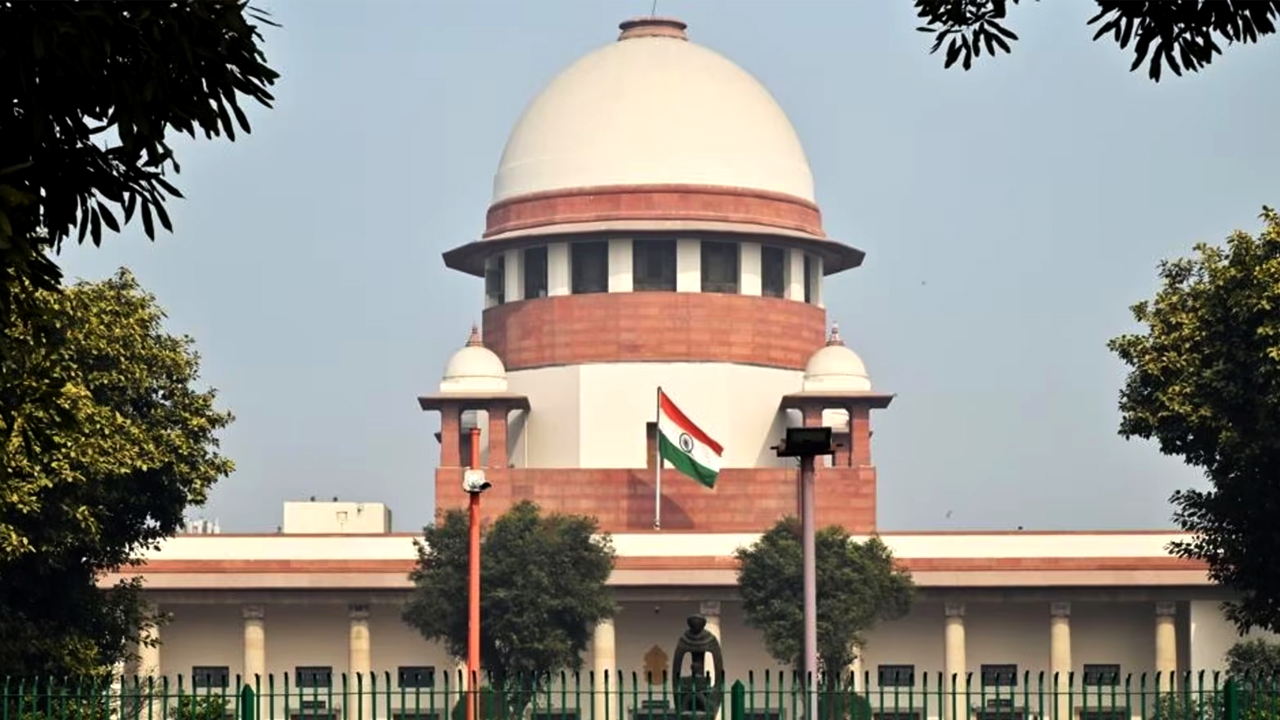
A Press Statement by the People’s Union for Democratic Rights (PUDR) examines how the SC’s order reinforces the political use of anti-terror law to suppress dissent. PUDR notes that while five individuals have secured relief after years of incarceration, the Supreme Court’s order ultimately advances the interests of a State that prefers persecution over prosecution.
Groundxero | January 7, 2026
Six years after the registration of 751 FIRs relating to the events surrounding the anti-CAA protests and the violence in North-East Delhi in February 2020, the Supreme Court has delivered its first substantive order in the sole case prosecuted under the Unlawful Activities (Prevention) Act (UAPA). The order, passed by a two-judge bench on 5 January 2026, addresses bail pleas in FIR 59/2020—registered by the Crime Branch and investigated by the Delhi Police Special Cell—currently pending before a designated UAPA court.
In its order, the Supreme Court set aside a common Delhi High Court judgment dated 2 September 2025 and granted bail to five accused persons—Gulfisha Fatima, Shifa-ur-Rehman, Meeran Haider, Md Saleem Khan, and Shadab Ahmad—while rejecting bail for Umar Khalid and Sharjeel Imam.
By all accounts—except that of the Delhi Police—the events between December 2019 and February 2020 were democratic protests and mass mobilization against the Citizenship Amendment Act. The violence that erupted in late February 2020, resulting in loss of life and widespread destruction, has never been impartially investigated. Accountability has been singularly imposed on activists associated with the anti-CAA movement, while political figures from the ruling BJP party such as Kapil Mishra, Anurag Thakur, Ragini Tiwari, and allied groups have not been subjected to serious investigation despite their public calls for violence and intimidation.
At the centre of the legal contest has been the UAPA—its invocation, interpretation, and its use as a tool of prolonged incarceration. The State’s claim is of a grand conspiracy beginning in December 2019 that allegedly culminated in the February 2020 violence, framing democratic protest, free speech, and mobilisation as acts of terrorism.
After nearly six years of incarceration, the grant of bail to the five activists is undoubtedly a moment of relief for them and their families. However, the denial of bail to Umar Khalid and Sharjeel Imam, and more importantly the principles articulated by the Court in doing so, raise grave concerns. The order reflects how political persecution has been allowed to shape UAPA bail jurisprudence, undermining the constitutional guarantee of personal liberty under Article 21.
A Press Statement by the People’s Union for Democratic Rights (PUDR) examines how the order reinforces the political use of anti-terror law to suppress dissent. PUDR notes that while five individuals have secured relief after years of incarceration, the Supreme Court’s order ultimately advances the interests of a State that prefers persecution over prosecution. By weakening constitutional safeguards, legitimising vague terror allegations, and normalising excessive bail conditions, the judgment marks a defining—and deeply troubling—moment in India’s democratic and legal landscape.
Press Statement by People’s Union for Democratic Rights
Six years after registration of 751 FIR’s for what has been referred to as the anti-CAA protests / “Delhi riots” of December 2019 to March 2020 (with damage to property and loss of lives from end February), the Supreme Court (2 judge bench) has delivered its first substantive order in the only UAPA terror case registered in this matter (FIR 59/2020 registered by Police Station Crime Branch and investigated by the Special Cell with proceedings pending before a Special UAPA court in Delhi). Eighteen persons face potential trial (arguments on framing of charges are underway) for offences including the commission and funding of terrorist acts and conspiracy.
On 5 January 2026, the Supreme Court set aside the omnibus Delhi High Court order of 2 September 2025 for multiple accused persons and granted bail to five (Gulfisha Fatima, Shifa ur Rehman, Meeran Haider, Md Saleem Khan and Shadab Ahmad) and rejected the bail of two (Umar Khalid and Sharjeel Imam). Of the remaining eleven persons accused, only four remain in custody: Khalid Saifi and Athar Khan (who did not appeal the 2 September order), Tasleem Ahmad (denied bail by an order of 2 September by a separate bench of the Delhi High Court and not appealed) and Saleem Malik (withdrew his bail plea from the Supreme Court in May 2024).
By all accounts – except for that of the Delhi Police – the events of December 2019 to March 2020 were organized protests to question the State, its intent and actions around the Citizenship Amendment Act and those it choose to exclude and victimize.
The violence in end February and the circumstances under which it resulted has not been fairly investigated to date with the entire liability foisted upon those part of the anti-CAA protests. Kapil Mishra, Anurag Thakur, Ragini Tiwari and allied groups and individuals have not been investigated for their role. Following the arrests of anti-CAA protestors – students, activists and volunteers – and those not associated with the protests at all, the fight for narrative has shifted to the courts where the UAPA and its interpretation has been front and center. The claim of the State is that a larger conspiracy to commit terrorist acts – beginning from December 2019 – was in place that culminated in the violence of end February 2021.
After close to six years, the release of five persons by this bail order is a substantial relief to them, their families and friends. But the denial of bail to Umar Khalid and Sharjeel Imam and the principles laid down by this order are of concern. Political persecution has been allowed to influence UAPA bail jurisprudence and the application of Article 21 of the Constitution.
PUDR highlights three aspects of this order as attention must continue on UAPA, its use and the judicial response.
First, the Court emphasized the individual role of the accused, identified Umar Khalid and Sharjeel Imam as “masterminds” and “architects” of the conspiracy whose continued custody may be required to “safeguard broader security interests” and “secure ongoing prosecutorial objectives” and thus denied them bail. In doing so, the Court “properly situated” the larger bench (3 judges) decision Supreme Court in KA Najeeb that mandated bail in cases of prolonged incarceration on the strength of Article 21 of the Constitution. The Court in its 5 January order has moved away from this principle on grounds of UAPA being a special statute and the nature of allegations and role of accused even though it notes the “realistic trajectory of the trial” as a ground to be considered. But, how does the court evaluate the role of the accused? The Court states: “the inquiry is one of statutory plausibility, not evidentiary sufficiency”. Thus, the Constitutional protections of bail are now subject to invocation of the terror law and the allegations of the investigating agency and not a close scrutiny of the material relied upon. The Court, contrary to the two-judge bench bail order in Vernon Gonsalves, states that “probative value” or admissibility of the evidence is not to be considered. The accused have approached the courts through a slow process of bail hearings with Umar Khalid approaching the Supreme Court for the second time. Denial of bail to Umar Khalid and Sharjeel Imam and the reasoning on delay and role of accused is of serious concern.
Second, the Court found that the definition of terrorist act under Section 15 of UAPA is not to be limited to only “conventional modes of violence” or “immediate physical violence” but is broader in light of the phrase “by any other means of whatever nature” used in the section. What was the reason for the Court to briefly allude to this definitional question? The case of the accused seeking bail was that a protest was being construed as a terrorist act. Speech and organizing around issues cannot be considered terrorism. In a few paragraphs – that will require further scrutiny and debate in a statute riddled with vagueness already – the Court has essentially evaded the fundamental question raised by the accused from the beginning: should UAPA even apply? Why are the eighteen accused persons being set up in a terror case – as opposed to the individual cases relating to violence and destruction of property that some of them are already facing? The very application of UAPA is suspect and appears politically motivated and a method to ensure further incarceration. Rather than merely deal with the question of interpretation in a few abstract paragraphs, the Court ought to have applied the existing jurisprudence that there must be strict scrutiny on the application of terror laws. But, it is here that we must recognize that the Court is merely continuing on the path already set by an earlier bench of the Supreme Court which while not interfering with the Delhi High Court order granting bail to Asif Iqbal Tanha, Devangana Kalita and Natasha Narwal, frowned upon the analysis of the High Court that UAPA was being wrongly applied to the facts of the case and stayed the operation of that part of the High Court order i.e. other accused were excluded from benefitting from the Delhi High Court order.
Third, stringent bail conditions are imposed. Three conditions may be highlighted for their complete overreach and curtailment of the rights of the accused now granted bail. Condition (vi) bars the accused from associating with any group or organization “linked” to this case, Condition (viii) bars the accused from participating or attending any programme/meeting/rally/gathering AND condition (ix) bars the accused from circulating any post, poster etc. In effect, the accused are barred from any social or political activities – rights that those presumed innocent must fully enjoy AND through bail conditions the groups / organizations named by the investigating agency (none of which are proscribed unlawful associations or terrorist organizations) stand isolated and on notice.
PUDR notes that except for relief to the five persons granted bail, the order of the Supreme Court serves the political interests of a State that favours persecution over prosecution.
Deepika Tandon and Shahana Bhattacharya
(Secretaries)
pudr@pudr.org